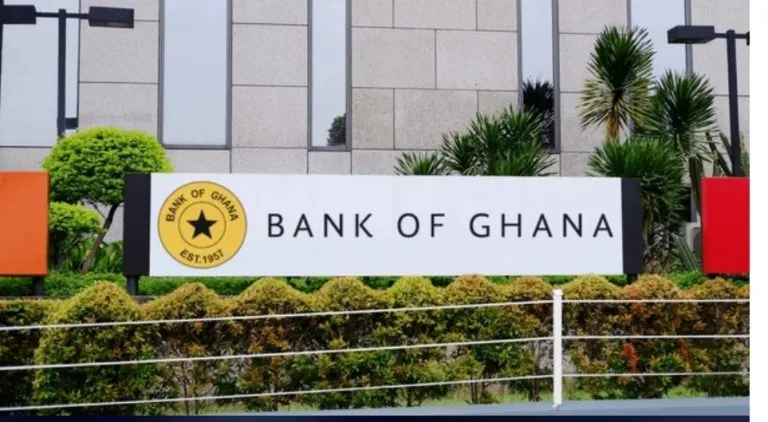


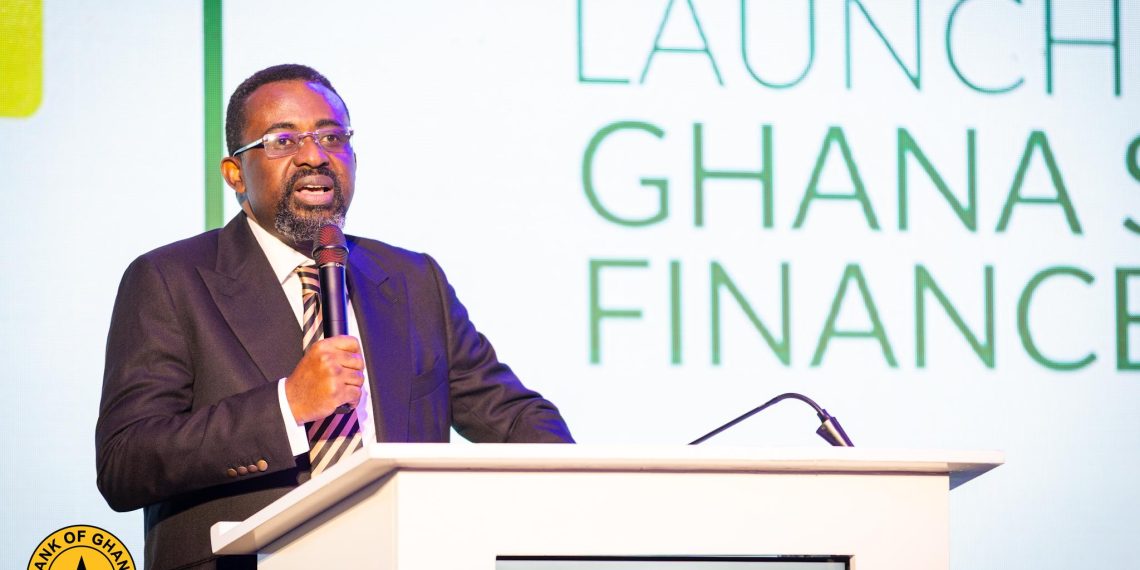
Sustainable finance is no longer just a policy discussion but a critical pillar of Ghana’s financial stability, economic resilience and long-term growth, Governor of the Bank of Ghana, Dr. Johnson Pandit Asiama, has said.
Speaking at the launch of Ghana’s Sustainable Finance Roadmap in Accra on Tuesday, June 30, 2026, Dr. Asiama noted that the global financial landscape is changing rapidly, requiring regulators and financial institutions to rethink how they identify, price and manage risks.
According to him, climate change and other sustainability challenges are increasingly affecting economies and financial systems worldwide, making sustainable finance an essential component of modern financial regulation.
“Sustainable finance is increasingly central to financial stability, long-term investment and economic resilience,” he stated, adding that global investors are paying greater attention to sustainability standards when making investment decisions.
Dr. Asiama explained that recent flooding incidents in Ghana have highlighted how environmental challenges can quickly evolve into financial risks, affecting property values, insurance claims and the security of loans.
He stressed that Ghana cannot afford to treat climate-related risks as future concerns, warning that the country’s financial system could become vulnerable if regulators fail to prepare adequately.
“The instruments and structures of the past were not built for these challenges. Meeting them requires us to rethink how we supervise, how we price risk and how we plan,” he said.
The Sustainable Finance Roadmap, launched as a collaborative framework for Ghana’s financial sector regulators, seeks to coordinate sustainability efforts across the banking, insurance, pensions and securities sectors.
Dr. Asiama noted that while each regulator has a distinct mandate, sustainability and climate-related risks cut across the entire financial system and therefore require a coordinated response.
“A risk that moves across the whole system cannot be managed by any one institution acting alone,” he remarked.
The roadmap is built around three main pillars: Environmental, Social and Governance (ESG) integration, climate-related risk management, and financing sustainability initiatives. These pillars are expected to guide financial institutions in embedding sustainability considerations into their operations and decision-making processes.
The Governor said the launch marks another major step in the Bank of Ghana’s efforts to integrate sustainability into the country’s financial sector.
He recalled that the central bank began laying the foundation for sustainable banking in 2015 by bringing together stakeholders from the banking industry and environmental sector. This initiative later resulted in the introduction of Ghana’s Sustainable Banking Principles and Sector Guidance Notes in 2019, which were voluntarily adopted by all commercial banks operating in the country.
With support from international partners, including the International Finance Corporation (IFC) and the Swiss Secretariat for Economic Affairs (SECO), the Bank of Ghana subsequently developed a compliance framework to monitor implementation.
According to Dr. Asiama, compliance with the sustainable banking framework has continued to improve, reaching an average of 73 per cent by September 2025.
He added that the Bank of Ghana further strengthened its sustainability agenda in 2024 by launching a four-year Strategic Plan on Sustainability and Climate-Related Risks and introducing a Climate-Related Financial Risk Directive for regulated institutions.
Beyond managing risks, Dr. Asiama believes sustainable finance presents significant opportunities for Ghana.
He said the country can use sustainable finance to attract new sources of international capital, fund critical infrastructure projects, support the transition to cleaner energy and deepen financial markets.
“Our purpose as regulators has always been the safety and soundness of the financial system. But soundness in this era means more than absorbing today’s shocks,” he said.
The Governor argued that a strong sustainable finance framework could position Ghana as a regional leader, making the country an attractive destination for investors seeking credible sustainability-focused opportunities.
“Done well, this is not a cost we carry. It is a market we open,” he added.
While describing the launch of the roadmap as a significant milestone, Dr. Asiama stressed that its success would ultimately depend on effective implementation by regulators and financial institutions.
He commended the various institutions and stakeholders that contributed to the development of the roadmap, including the Ministry of Finance, National Insurance Commission, National Pensions Regulatory Authority, Securities and Exchange Commission, Institute of Chartered Accountants, Ghana, and the Chartered Institute of Bankers.
As Ghana seeks to strengthen financial stability while building resilience against climate-related risks, the Sustainable Finance Roadmap is expected to serve as a guide for directing investment and financial resources toward sustainable development.