

Standard Chartered Bank Ghana’s move to divest its Wealth and Retail Banking operations is not just another corporate restructuring. It is a significant turning point for Ghana’s banking sector, with implications that go far beyond one institution. At its core, this development raises deeper questions about regulation, ownership, competition, and the long-term direction of financial services in the country.
What Standard Chartered is doing in Ghana reflects a broader global strategy. The bank is gradually stepping away from retail banking segments in selected markets where it considers operations too small, costly, or not aligned with its long-term priorities. Across Africa and other emerging markets, the group has been reshaping its footprint focusing more on corporate, commercial, and institutional banking, while reducing exposure to mass retail operations.
From a business standpoint, the logic is straightforward. Retail banking in many emerging markets has become expensive to maintain. Regulatory requirements have tightened, technology costs continue to rise, and competition from mobile money platforms and fintech companies has significantly changed customer behaviour. For global banks, the returns on smaller retail operations are often no longer attractive compared to large-scale corporate and investment banking.
But while this strategy may make sense for a global financial institution, it presents a more complex challenge for Ghana. The key issue is not just that Standard Chartered is exiting retail banking, but what happens to its customers, its workforce, and its market share once it does.
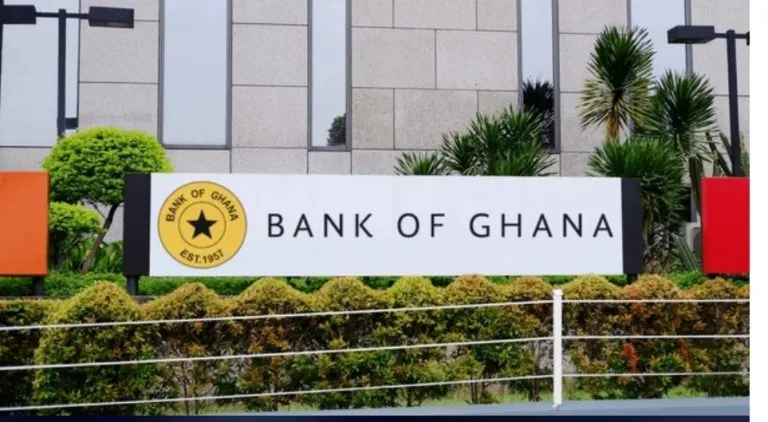
This is where the role of the Bank of Ghana becomes central. The decision on who acquires or assumes Standard Chartered’s retail and wealth portfolio is not a routine approval process. It is a strategic regulatory moment that could shape the structure of Ghana’s banking sector for years to come.
One possible direction is encouraging strong local banks to acquire the portfolio. This would align with Ghana’s long-standing ambition to deepen indigenous participation in the financial sector. A well-capitalised Ghanaian bank acquiring the business could immediately gain access to an established customer base, wealth management systems, and a portfolio of deposits and loans that would otherwise take years to build.
However, this option carries real risks. Not all local banks may have the financial strength, systems capacity, or governance structures needed to absorb a complex retail and wealth banking franchise without weakening their own stability. For this reason, the regulator must be careful not to equate local ownership with automatic suitability.
Another option is a purchase and assumption arrangement, where another bank takes over the retail deposits, loans, and related obligations while Standard Chartered retains its corporate and investment banking operations. This approach could ensure continuity for customers and staff while maintaining stability in the wider banking system. However, the identity and strength of the acquiring institution would still be critical.
A third possibility is acquisition by a regional banking group. Over the past decade, pan-African banks have expanded aggressively across the continent, building strong retail and commercial banking networks. Institutions from Nigeria, South Africa, and other African markets already operate in Ghana and could potentially absorb the business.
Such a move could bring operational stability, capital strength, and technological capacity. Regional banks often have deeper experience in African retail markets and may be better positioned to manage the transition smoothly. However, it also raises a strategic question for Ghana: should the exit of a global bank simply lead to greater regional consolidation, or should it be an opportunity to strengthen domestic financial ownership?
Beyond ownership considerations, the Bank of Ghana faces a more fundamental responsibility: ensuring that any acquiring institution is fully fit and properly vetted. This includes assessing capital adequacy, governance standards, risk management systems, technology infrastructure, and compliance frameworks. The goal is not only to complete a transaction but to protect depositors, borrowers, and wealth management clients throughout the transition.
Customer confidence will be especially important. Banking is built on trust, and any uncertainty around ownership changes can easily lead to anxiety among depositors and investors. Clear communication will be essential customers need to know what happens to their accounts, their investments, their loans, and the continuity of services they rely on.
Equally important is the question of staff. Banking transitions often result in restructuring, overlapping roles, and potential job losses. Ghana has recent experience of banking sector consolidation, and the human impact of such changes remains a sensitive issue. While regulators cannot control employment decisions directly, they can require acquiring institutions to present credible transition plans that address staff retention, redundancy arrangements, and pension obligations.
An alternative and more innovative option would be to explore a partial listing or public offering of the retail and wealth banking business. This would allow institutional investors, pension funds, and even retail investors in Ghana to own a stake in the business. It could deepen participation in the capital market and ensure that the value of the franchise remains within the domestic economy. However, this option would be technically complex and would require careful structuring, valuation, and regulatory coordination.
If none of these options prove viable, a controlled wind-down remains the final possibility. But this would be the least desirable outcome, as it could reduce competition in the banking sector and lead to a loss of valuable financial infrastructure that could otherwise be preserved through acquisition.
What makes this situation particularly important is that it reflects a broader global shift in banking. International banks are rethinking their presence in retail markets across Africa. The rise of digital financial services, mobile money platforms, and fintech innovation has permanently altered how customers interact with financial institutions. Traditional branch-based banking is becoming less central, while digital-first financial ecosystems are taking over.
In this environment, global banks are becoming more selective about where they operate. Many are choosing to focus on high-return corporate banking rather than mass retail services in emerging markets. Standard Chartered’s decision in Ghana is part of this global realignment.
For Ghana, the challenge is how to respond strategically rather than passively. This is not just about approving a buyer. It is about deciding whether such transitions can be used to strengthen local financial capacity, deepen capital markets, protect consumers, and maintain stability in the banking sector.
The Bank of Ghana must strike a careful balance. It must avoid politicising the process, but it also cannot treat it as a routine transaction. Its responsibility is to ensure financial stability, protect depositors, safeguard jobs where possible, and maintain a competitive and resilient banking environment.
Ultimately, the Standard Chartered retail banking exit is not a crisis. It is a signal. It signals how global banking priorities are changing and how African financial markets must adapt. It also presents Ghana with a rare opportunity: to decide whether such transitions will simply result in new foreign ownership, or whether they can be leveraged to build stronger domestic financial institutions.
The outcome will depend on regulatory judgment, institutional readiness, and strategic clarity. What is certain is that this is more than a business decision it is a defining moment for the future structure of Ghana’s banking sector.
Source: Norvanreport