
The Bank of Ghana is making a deliberate shift in how it views money sent home by Ghanaians abroad and more importantly, how that money should work for the economy.
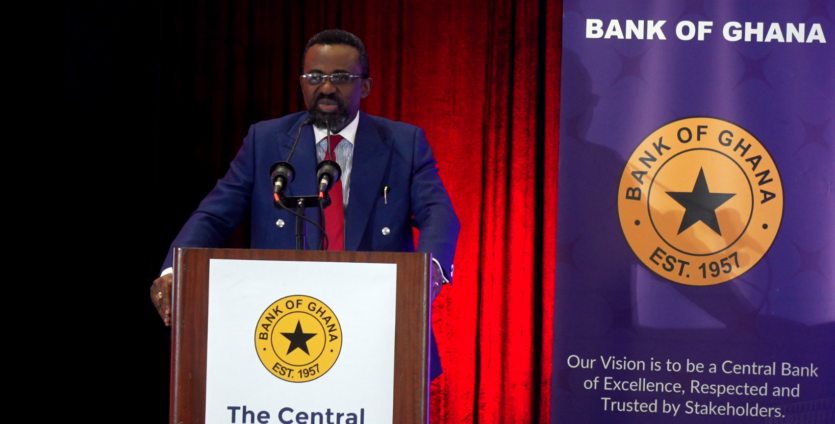
At a roundtable with members of the Ghanaian diaspora in the Washington, D.C., Maryland, and Virginia (DMV) area, Governor Dr. Johnson Pandit Asiama laid out a clear message: remittances should no longer be seen mainly as family support. They should be treated as a strategic source of long-term investment capital.
For years, diaspora inflows have played a quiet but critical role in supporting households paying school fees, covering healthcare costs, and cushioning families during difficult times. But the central bank now wants to move beyond that. The focus is shifting toward turning those same inflows into structured investments that can support Ghana’s broader economic transformation.
“The Ghanaian diaspora is a strategic asset,” the governor said, stressing that its role goes far beyond sending money home. According to him, diaspora communities represent a key source of foreign exchange, a channel for innovation and skills transfer, and a bridge to global capital markets.
That framing signals a deeper policy shift. Instead of treating remittances as informal or consumption-driven flows, the Bank of Ghana is positioning them as part of Ghana’s capital formation strategy.
The numbers explain why this shift matters. Ghana recorded about $4.6 billion in remittances in 2024, rising sharply to nearly $7.8 billion by the end of 2025. At roughly 6 percent of GDP, these inflows now surpass foreign direct investment in real terms. In other words, diaspora money is already one of the most important pillars of Ghana’s external sector—the question now is how to make it work harder.
The central bank’s strategy rests on three main pillars: formalisation, financial innovation, and trust.
On formalisation, the goal is to ensure that more remittance flows pass through regulated financial channels. This improves foreign exchange stability, enhances transparency, and allows policymakers to better track and utilise these inflows within the financial system.
On innovation, the Bank of Ghana is looking beyond basic transfer services. It is exploring diaspora bonds, structured investment vehicles, and foreign currency-denominated products that can give Ghanaians abroad more direct and meaningful ways to invest back home. The bank is also considering fintech-driven solutions including digital ledger and tokenisation models to reduce transaction costs and improve the speed and traceability of cross-border flows.
But perhaps the most critical element is trust.
Interest in investing back home exists across many diaspora communities, but turning that interest into real capital requires confidence confidence in the systems, the institutions, and the returns. The governor acknowledged this, emphasizing the need to make investment pathways simple, credible, and rewarding.
The choice of the DMV area for the roundtable was also strategic. It is one of the most economically active Ghanaian diaspora hubs in the United States, home to professionals across finance, technology, healthcare, and entrepreneurship. For the central bank, engaging such a community is not symbolic it is practical.
Beyond Ghana, the Bank of Ghana is also studying how other countries have successfully mobilised diaspora capital. Countries like Mexico, the Philippines, and India have developed targeted financial instruments and digital platforms that connect remittance inflows to investment and development financing. Ghana’s aim is to adapt these lessons to fit its own financial system.
Still, the broader ambition goes beyond products and policies. It is about changing how the country thinks about its diaspora.
“The diaspora is not peripheral to our economy,” the governor noted. “It is central to our external stability and investment strategy.”
He pushed the idea even further by describing the diaspora as “domestic investment abroad.” It is a subtle but powerful shift in thinking one that reframes remittances not as emotional transfers, but as an extension of Ghana’s economic base beyond its borders.
That shift, however, comes with a challenge. Ghana cannot simply ask for more investment. It must build the systems, credibility, and opportunities that make such investment worthwhile.
The central bank appears aware of this. Its next phase, as outlined by the governor, is not just about increasing remittance inflows, but about converting those inflows into long-term, productive capital.
If successful, the payoff could be significant: more stable foreign exchange, deeper capital markets, and a stronger link between Ghana and its global citizens. If not, remittances will likely continue but largely as household support, rather than as a driver of national development.
Either way, the message from the Bank of Ghana is clear. The era of passive remittances is no longer enough. The focus now is on building diaspora confidence and turning that confidence into investment.