

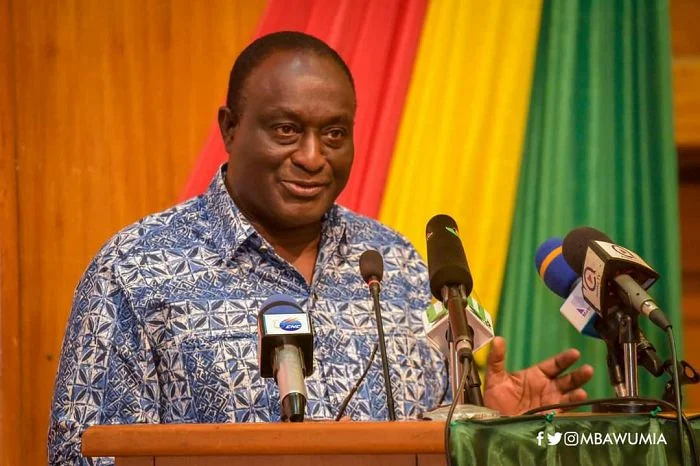
Former Trade and Industry Minister Alan Kyerematen has proposed a one-year suspension of all small-scale mining activities in Ghana as part of a broader plan to tackle illegal mining and restore the country’s degraded water bodies and forest reserves.
Mr Kyerematen made the proposal while outlining his economic transformation framework, KENOMICS, arguing that the distinction between licensed and illegal mining has become increasingly difficult to enforce.
“Let’s impose a one-year temporary ban on small-scale mining activity,” he said during a public lecture.
“Within that one-year period, we have to reclaim all the land and then also restore our water.”
Under the proposal, the moratorium would cover both licensed and unlicensed small-scale mining operations. The period would be used to conduct a forensic audit of mining licences, reclaim degraded lands, restore polluted water bodies and reorganise informal miners into properly regulated corporate entities.
Mr Kyerematen said Ghana’s existing licensing system could not always guarantee that operators were working within the concessions assigned to them.
He alleged that some licence holders were allocated areas with little or no gold and subsequently moved their equipment and workers to locations where they had no legal authority to operate.
“People who are holding small-scale licences, the areas that have been given to them, they know there’s no gold there,” he said.
“So they use their licence to operate in areas where they do not have the right to mine.”
He said the proposed forensic audit should determine where each licence holder operates and whether mining activities comply with the conditions attached to their licences.
“You have a licence. Go and show us where you mine,” Mr Kyerematen said.
“If you go and review the forensic audit and you have mined responsibly, your licence is restored.”
The proposed review would also examine the ownership of mining operations, environmental compliance, production records and the use of excavators and other heavy equipment.
Mr Kyerematen said operators that pass the audit would be allowed to resume mining after the one-year suspension, while those found to have violated their concession boundaries or environmental obligations could lose their licences.
He also proposed reorganising informal miners into formally registered companies and providing them with equipment, technology, training and regulated concessions.
“You bring them together, you create a company for them,” he said.
“You give them all the machinery they need, the technology they need and then also the training, and then give them the licence.”
According to Mr Kyerematen, the approach could enable young people currently working as informal miners to become owners of legitimate mining businesses.
“Within one year, these boys can become owners of mining companies in Ghana,” he said.
The proposal is intended to address both the environmental damage caused by illegal mining and the economic realities facing communities that depend heavily on small-scale mining for their livelihoods.
Mr Kyerematen also questioned the economic argument for prioritising gold production when mining activities are destroying water bodies and farmlands.
“If you are saying that you want to support our cedi, and so we use money to buy gold to mobilise reserves and use it to support [the currency], by the time you finish supporting your currency, there will be no life for me to enjoy,” he said.
Ghana’s gold sector remains an important source of foreign exchange and export earnings. However, illegal mining has also been linked to the destruction of farmlands, pollution of rivers and degradation of forest reserves.
A nationwide suspension of small-scale mining would therefore carry significant economic and social consequences, particularly for workers and businesses that depend directly or indirectly on the sector.
Mr Kyerematen’s proposal would require the government to establish clear rules for the audit, seizure and return of mining equipment, as well as mechanisms to prevent selective enforcement.
The corporate model he proposes would also require transparent ownership structures and effective monitoring to ensure that formal companies do not become vehicles for influential individuals to continue unauthorised mining.
The mining proposal forms part of KENOMICS, Mr Kyerematen’s broader economic framework aimed at moving Ghana from economic stability to sustained growth and prosperity.
The framework proposes an enterprise-driven economy “with African characteristics”, alongside greater domestic processing of gold, cocoa, oil and other natural resources.
It also includes proposals for expanding non-traditional exports, supporting manufacturing, agriculture and tourism, improving access to venture capital for small businesses and reducing the cost of borrowing.
Mr Kyerematen has argued that Ghana has remained heavily dependent on raw commodity exports despite decades of economic reforms and periods of growth.
His mining proposal therefore seeks to combine environmental restoration with greater local ownership and formalisation of the sector.
Whether a complete one-year suspension of small-scale mining can be implemented nationwide remains a significant policy and administrative question.
But the proposal puts the structure of Ghana’s mining sector at the centre of the debate over how the country can protect its natural resources while ensuring that communities that depend on mining have sustainable economic opportunities.
“What was supposed to be a blessing has now become a curse,” Mr Kyerematen said.