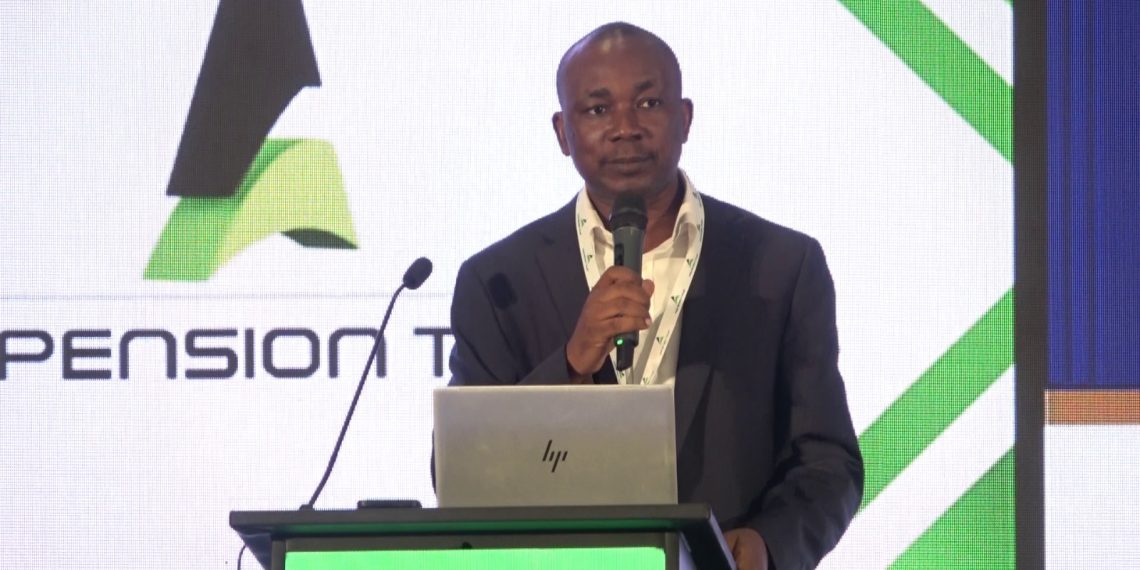
Economist, Professor Godfred Bokpin, has projected that Ghana could find itself back in an International Monetary Fund (IMF)-supported programme by 2033 if the country fails to address long-standing structural weaknesses in its economy.
Speaking at the 2026 Axis Pension Trust Pension Strategy Conference, he argued that Ghana’s recurring economic challenges mirror those that have historically pushed the country into IMF arrangements, stretching back to its early post-independence years.
According to him, the factors that led to Ghana’s previous engagements with the IMF have not fundamentally changed over time.
“The reasons Dr. Kwame Nkrumah cited for approaching the IMF are not substantially different from the reasons we cited in 2022 for our current programme,” he said.
Prof. Bokpin warned that Ghana’s repeated recourse to IMF support reflects a deeper inability to fix underlying structural problems in the economy. He stressed that without deliberate reforms, the country risks repeating the same cycle.
“If we were learning from past programmes with determination, we should be able to identify why we have been going there that often. I can assure you there is a way you can predict that if these things persist, we will be there,” he noted.
He further disclosed that based on their analysis, Ghana could be fully positioned for another IMF-supported programme between 2032 and 2033, even after exiting the current arrangement.
“When government announced that they were exiting the programme, we did our analysis and concluded that Ghana will be fully ready for another IMF-supported programme by 2032 or 2033,” he added.
The economist also cautioned that such a scenario could coincide with growing pressure on Ghana’s pension system, warning that delayed reforms may intensify fiscal risks in the future.
Prof. Bokpin pointed to persistent macroeconomic challenges such as volatile commodity prices, rising public debt, and weakening foreign reserves as key factors that continue to expose the economy to instability.
He also referenced Ghana’s long struggle with inflation, noting that it has historically been volatile, citing how it rose sharply in the mid-1960s after the introduction of the cedi.
While acknowledging that inflation has been more stable in recent years, he maintained that Ghana’s economic structure still makes sustained price stability difficult without deep reforms.