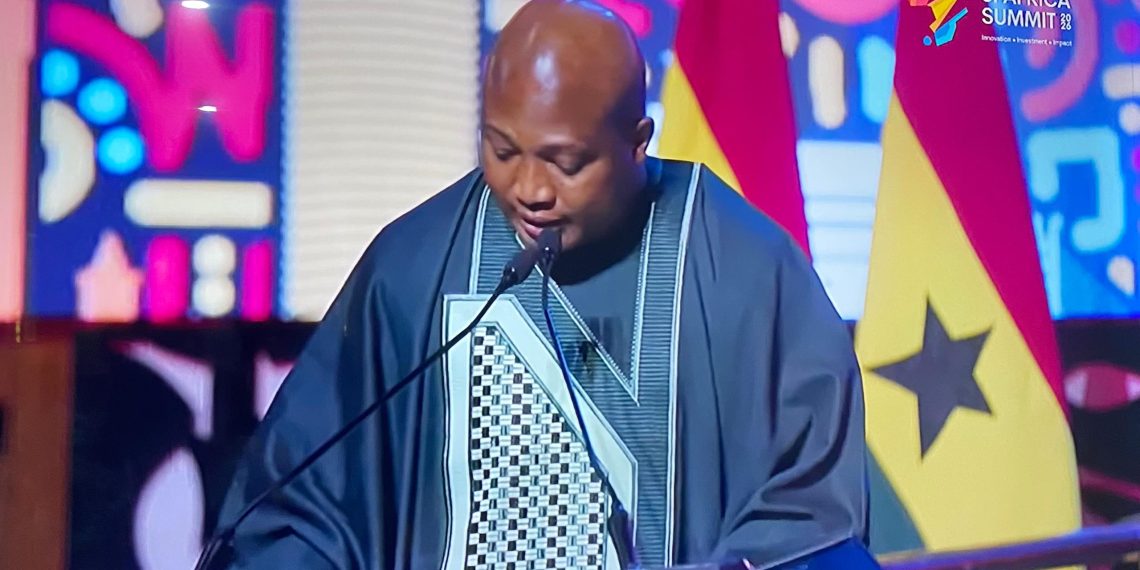
Ghana has renewed its call for stronger financial cooperation among African countries, urging the continent to rely more on its own financial systems and institutions as global borrowing conditions become increasingly difficult.
Speaking at the 3i Africa Summit 2026, Foreign Affairs Minister Samuel Okudzeto Ablakwa said Africa must deepen regional financial integration and channel more domestic resources into continental development initiatives instead of depending heavily on foreign financing.
Delivering a keynote address on the theme “Regional Financial Integration for Nation Development,” the minister said Africa’s long-term economic transformation would depend on the continent’s ability to build stronger financial institutions, harmonise regulations and expand cross-border payment systems.
He pointed to Ghana’s support for the African Continental Free Trade Area (AfCFTA) and the Pan-African Payment and Settlement System (PAPSS) as examples of efforts aimed at reducing Africa’s dependence on foreign currencies in trade.
The PAPSS platform, launched in Accra and managed by the African Export-Import Bank (Afreximbank), allows businesses across Africa to settle transactions in local currencies, helping to lower transaction costs and ease cross-border trade barriers.
According to Hon Ablakwa, stronger financial integration is necessary if Africa is to tackle the continent’s growing infrastructure deficit, industrialisation challenges and climate financing needs.
He noted that Africa requires between $1.3 trillion and $1.6 trillion annually to achieve the United Nations Sustainable Development Goals and the African Union’s Agenda 2063 targets.
Against this backdrop, Ghana continues to support proposals encouraging African countries to commit a portion of their sovereign reserves to African-owned financial institutions to help mobilise long-term development funding.
Hon Ablakwa argued that redirecting part of Africa’s reserves into continental development banks and financial institutions could significantly reduce the infrastructure financing gap facing many countries.
The minister also criticised international credit rating agencies, saying African economies are often subjected to unfair sovereign risk assessments that lead to excessively high borrowing costs despite economic indicators that compare favourably with some developed countries.
He said African governments are currently working toward harmonising tax systems, banking regulations and financial supervision frameworks to improve investor confidence and support cross-border investments.
Touching on regional monetary cooperation, Hon Ablakwa highlighted ongoing discussions surrounding the proposed ECOWAS single currency project, describing it as an important step toward improving trade and financial stability within West Africa.
On the digital front, he praised Ghana’s progress in mobile money interoperability and digital payment innovation, saying financial technology continues to expand access to financial services for small businesses, women and young entrepreneurs.
“Technological innovation must contribute to integration rather than fragmentation,” he said.
Hon. Ablakwa added that Ghana’s foreign policy engagements are increasingly focused on attracting investments into transport infrastructure, energy systems and financial networks needed to support continental trade and industrial growth.