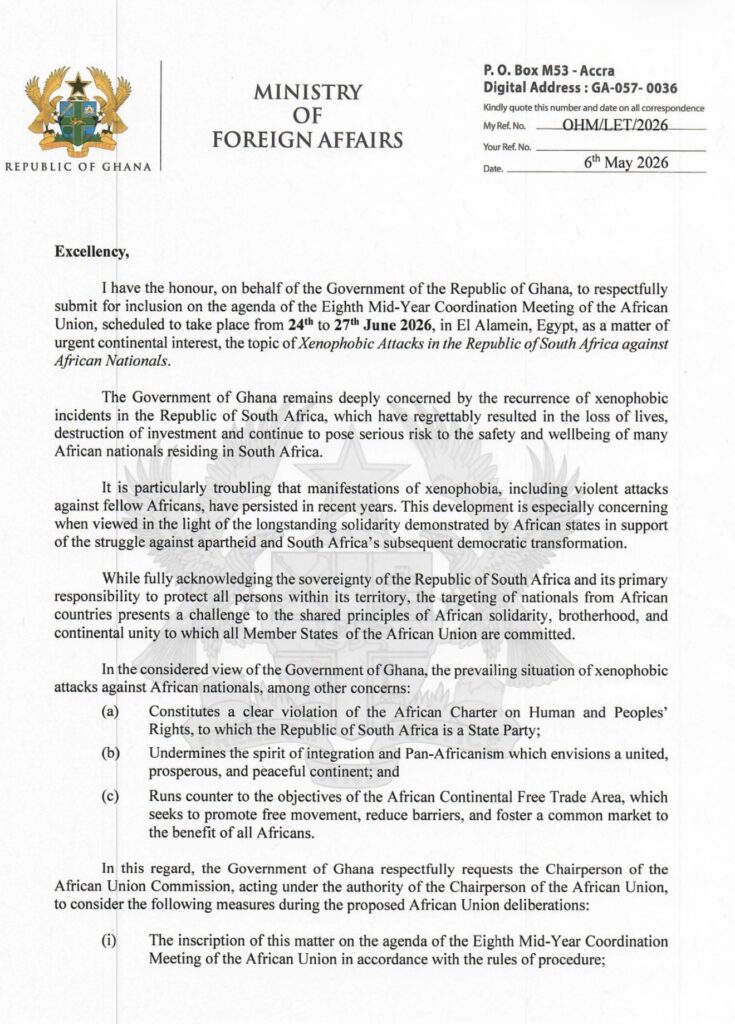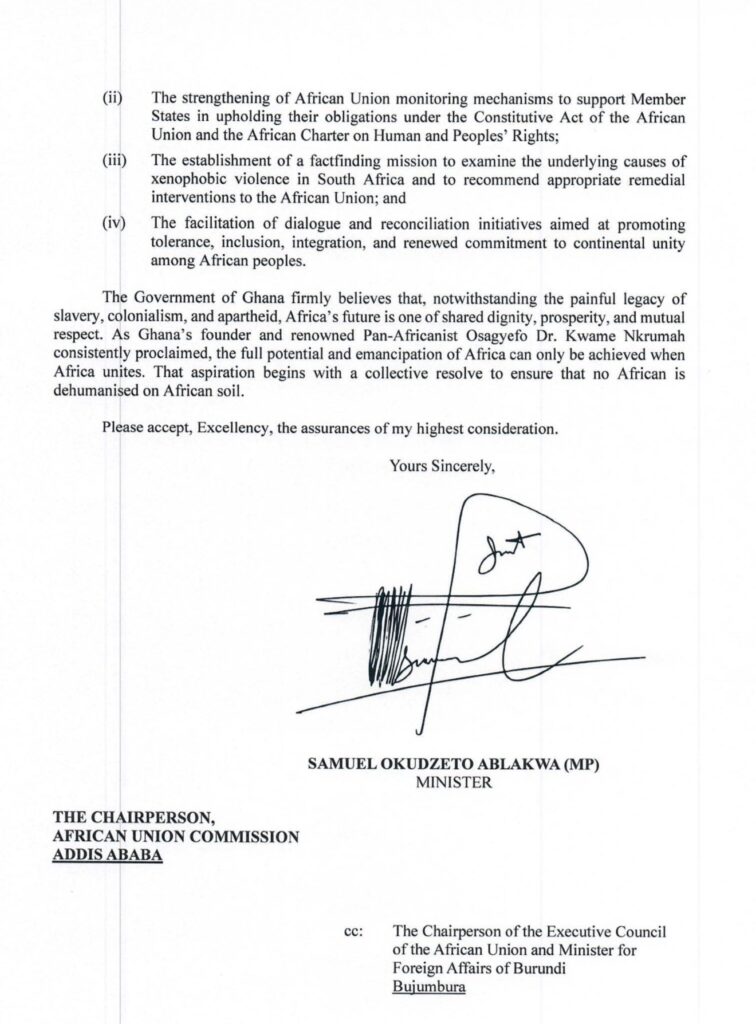


Ghana has formally appealed to the African Union (AU) to place the recurring xenophobic attacks against African nationals in South Africa high on the agenda at the upcoming Eighth Mid-Year Coordination Meeting in Egypt.
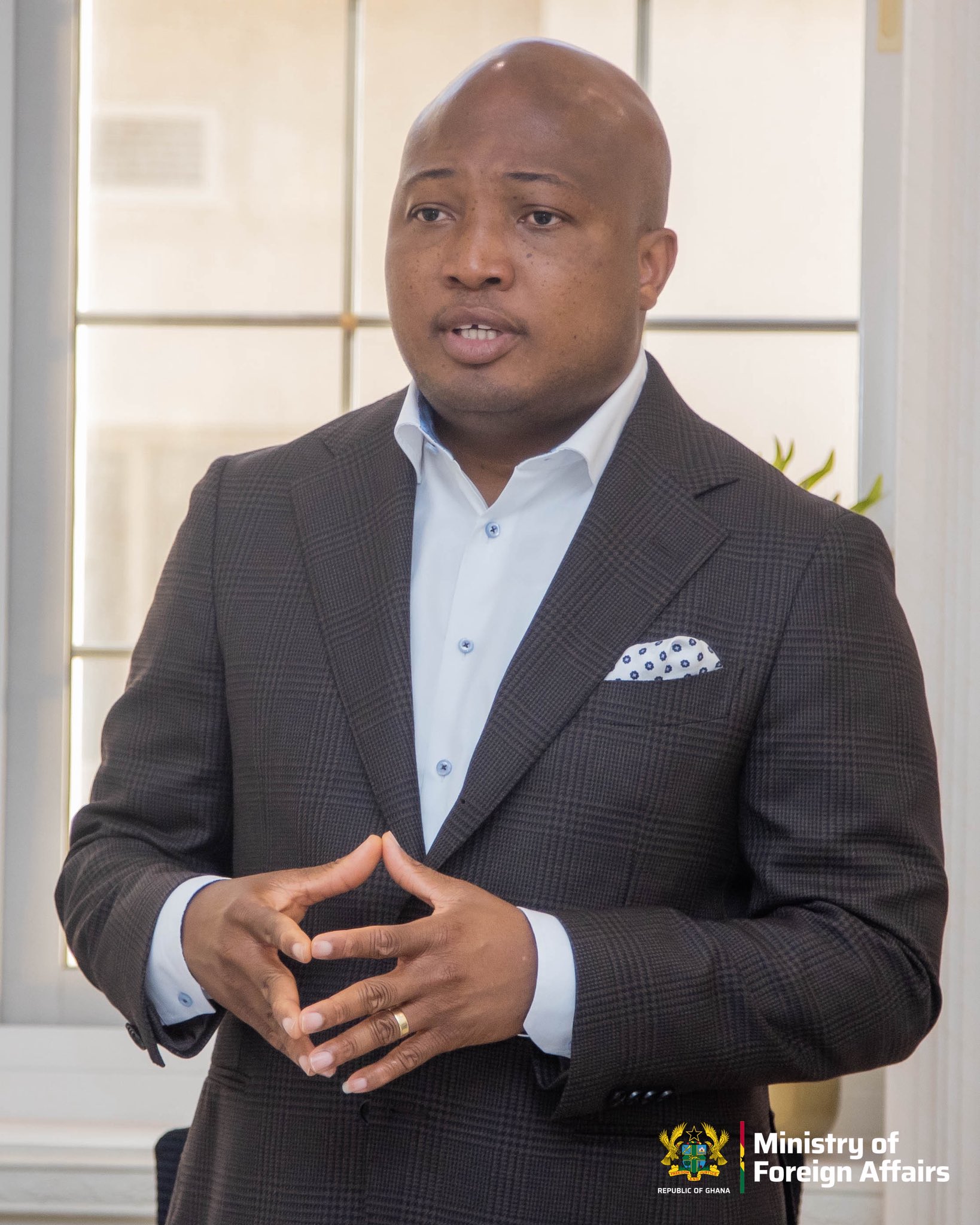
In a letter dated May 6, 2026, Ghana’s Minister for Foreign Affairs, Samuel Okudzeto Ablakwa, urged the Chairperson of the African Union Commission to treat the issue as a matter requiring urgent continental attention during the summit scheduled for June 24 to June 27 in El Alamein.
The Ghanaian government expressed deep concern over the continued reports of violence and hostility targeting African migrants and businesses in South Africa, warning that the situation threatens lives, investments, and the broader vision of African unity.
According to the letter, the persistence of xenophobic attacks undermines the ideals of solidarity, brotherhood, and cooperation that underpin the African Union and the Pan-African movement.
“It is particularly troubling that manifestations of xenophobia, including violent attacks against fellow Africans, have persisted in recent years,” the statement noted.
Ghana argued that such incidents are inconsistent with the African Charter on Human and Peoples’ Rights and also contradict the spirit of the African Continental Free Trade Area (AfCFTA), which seeks to promote integration, free movement, and stronger economic ties across the continent.
As part of its proposals to the AU, Ghana called for stronger monitoring mechanisms to ensure member states comply with their obligations under the AU Constitutive Act and continental human rights frameworks.
The government also proposed the establishment of a fact-finding mission to investigate the root causes of xenophobic violence in South Africa and recommend measures to address the problem.
In addition, Ghana urged the AU to promote dialogue, reconciliation, tolerance, and inclusion among African citizens as part of efforts to strengthen continental cohesion.
The letter stressed that Africa’s painful history of slavery, colonialism, and apartheid should serve as a reminder that the continent’s future must be built on mutual respect, dignity, and shared prosperity.
Referencing Ghana’s first President, Kwame Nkrumah, the government said Africa’s full liberation and development can only be achieved through unity and by ensuring that no African suffers discrimination or violence on African soil.