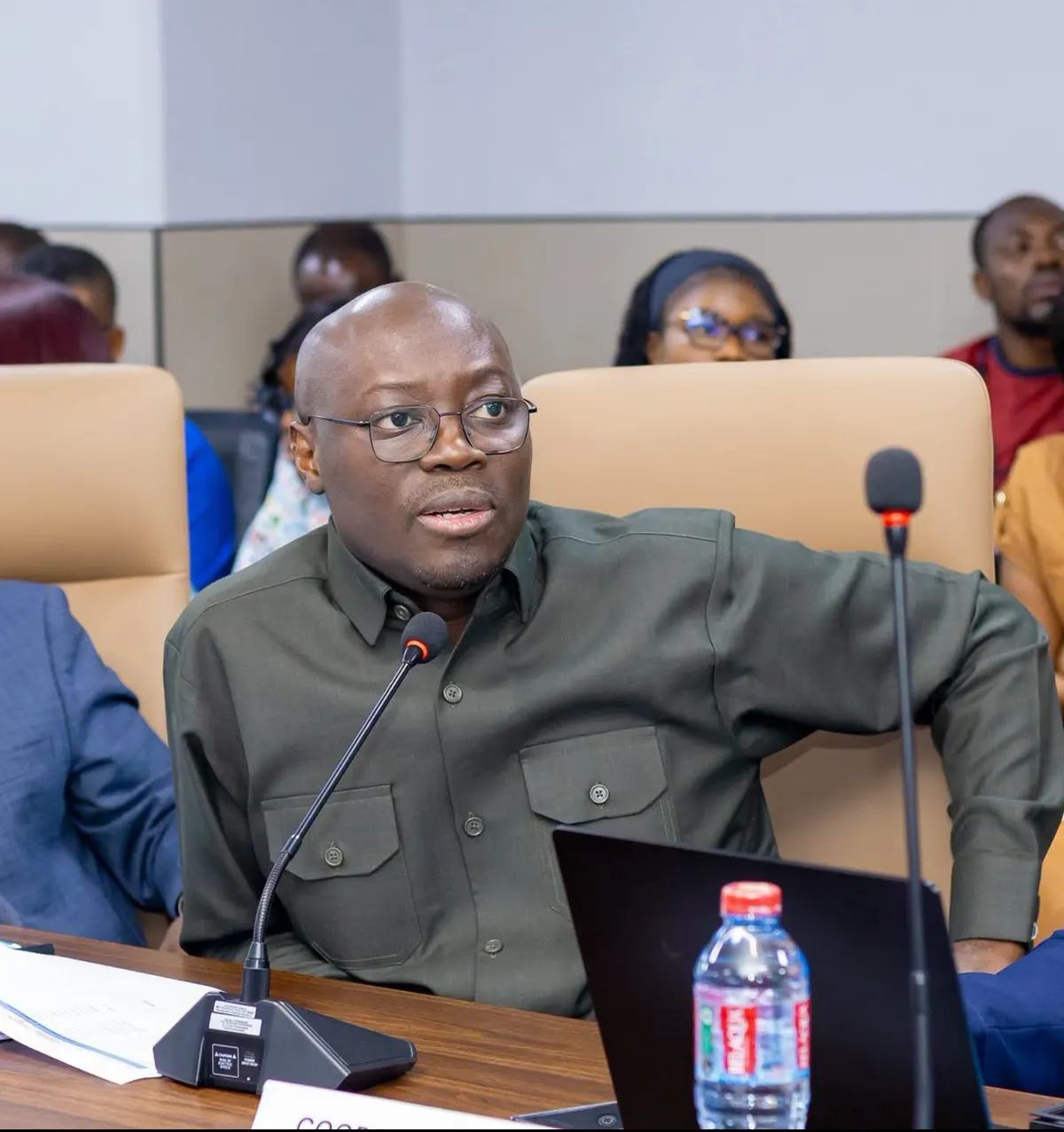


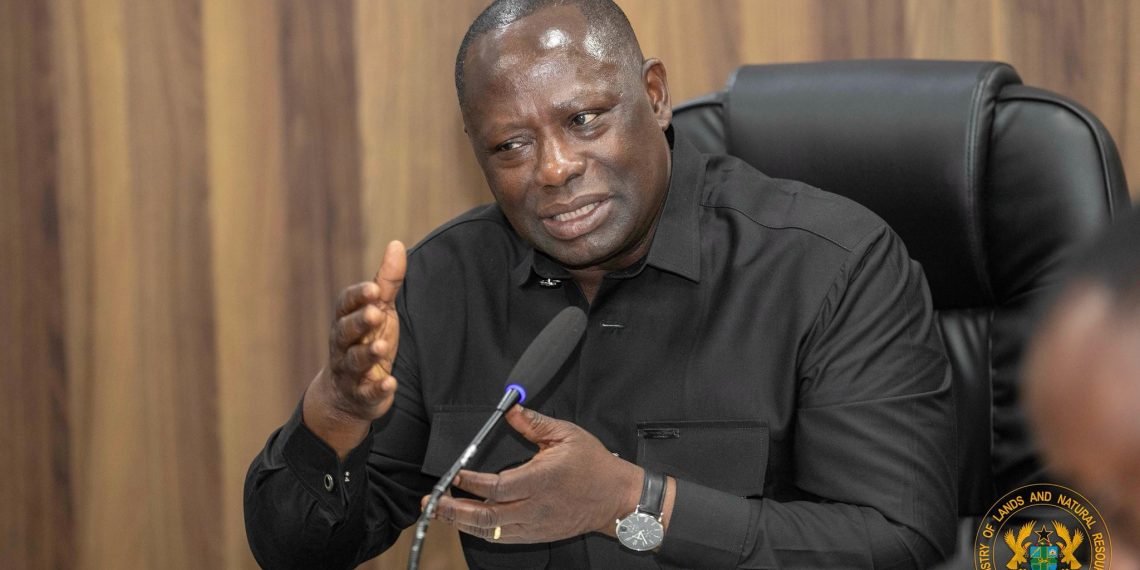
Lands and Natural Resources Minister Emmanuel Armah-Kofi Buah has defended the government’s tougher approach to mining regulation, insisting that no mining company, regardless of its size or financial strength, is above Ghanaian law.
“No mining company is bigger than Ghana,” Mr Buah said during a strategic working visit and policy dialogue between the Ministry of Lands and Natural Resources and IMANI Centre for Policy and Education in Accra.
His comments come amid government’s ongoing regulatory action involving Adamus Resources, with the dispute raising broader questions about how Ghana can enforce its mining laws while maintaining investor confidence in the sector.
According to Mr Buah, concerns about Adamus were first raised in a report by the Chief Inspector of Mines in the region. The Ministry subsequently sent a separate team from Accra to independently assess the situation, after which, he said, additional concerns were identified.
“We have a country. We have institutions. The Minerals Commission is supposed to be the policeman in the industry,” the Minister said.
Mr Buah alleged that mining activities had taken place in some areas without the required permits and that portions of concessions had been handed over to operators whose activities were not properly authorised.
He stressed that the size or importance of a mining company could not justify breaches of Ghana’s laws.
“If we are prosecuting the small guys for committing some acts, everybody must respect the institutions,” he said, arguing that enforcement must apply equally to both large mining companies and smaller operators.
The Minister also said the issues surrounding Adamus went beyond operational and environmental concerns to include taxes, royalties, annual statutory fees and other obligations owed to the state.
He maintained that he was satisfied with the decisions taken by the Ministry.
“As we speak today, I am convinced I made the right decisions,” he said.
However, Mr Buah acknowledged that legally empowered institutions could review the Ministry’s actions and potentially reach a different conclusion. He indicated that government would respect legitimate review processes.
That position is significant because Ghana’s mining industry depends heavily on investor confidence. Mining projects require substantial capital and long-term commitments, making regulatory certainty, due process and predictable enforcement important considerations for investors.
The Adamus case has therefore become a test of how Ghana balances two important priorities: ensuring that mining companies comply fully with national laws while creating an environment in which legitimate investors can operate with confidence.
Franklin Cudjoe, founding president and chief executive of IMANI Africa, suggested that government could consider giving Adamus a final opportunity to address any identified breaches and return to compliance.
Mr Buah indicated that government remained open to engagement if the company demonstrated a genuine commitment to correcting the issues identified and preventing them from happening again.
Such an approach could allow government to maintain the credibility of its enforcement efforts while giving companies an opportunity to remedy breaches where possible.
For Ghana, the wider issue goes beyond Adamus. As the country seeks to attract more investment into mining while demanding greater tax revenues, environmental responsibility and local economic benefits, the credibility of its regulatory institutions will become increasingly important.
A weak enforcement system could allow companies to escape their obligations, while unpredictable enforcement could create uncertainty for investors.
The real test, therefore, will be whether Ghana can enforce its mining laws consistently, regardless of the size of the company involved, while ensuring that government decisions remain transparent, evidence-based and subject to independent review.
Mr Buah’s declaration that “no mining company is bigger than Ghana” may be a strong statement of government authority. But its lasting impact will depend on whether that principle is applied fairly and consistently across the mining sector.
For Ghana, the goal should be clear: strong institutions capable of protecting the country’s mineral resources and public interest without undermining the confidence needed to attract responsible, long-term investment.