

Ghana’s growing petroleum refining capacity is not yet enough to protect consumers from international fuel price shocks, the Centre for Environmental Management and Sustainable Energy (CEMSE) has cautioned.
Executive Director of CEMSE, Benjamin Nsiah, says expanding local refining must go hand in hand with reliable crude supply, commercially viable refinery operations and stronger strategic planning if Ghana is to achieve meaningful energy security.
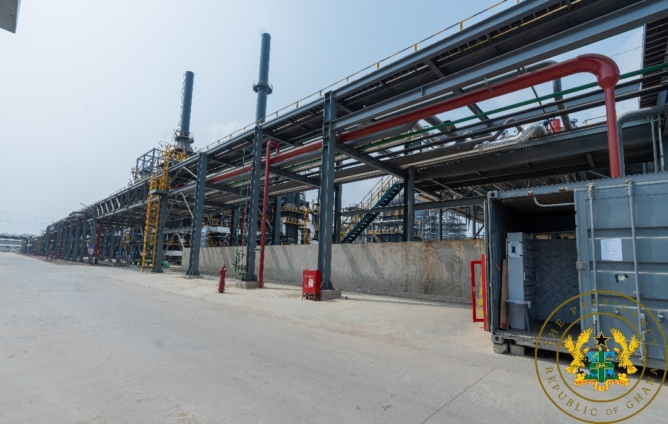
His comments come as government works to revive the Tema Oil Refinery (TOR) and expand the privately owned Sentuo Oil Refinery as part of efforts to reduce the country’s dependence on imported finished petroleum products.
Energy Minister John Abdulai Jinapor has indicated that TOR and Sentuo could eventually meet about 70% of Ghana’s domestic demand for refined petroleum products once their planned expansion programmes are completed.
Sentuo currently operates at about 40,000 barrels per day and is being expanded towards a target capacity of 100,000 barrels per day.
However, Mr Nsiah argues that installed refining capacity should not be mistaken for protection from global oil price movements.
According to him, local refineries will still depend largely on crude oil priced against international benchmarks. This means increases in global crude prices can still translate into higher prices for locally refined petrol, diesel and other petroleum products.
He explained that while local refining can reduce some costs, improve supply security and retain more economic activity in Ghana, it cannot completely eliminate the impact of international oil prices.
The distinction between refining capacity and actual production is therefore critical.
A refinery may have the technical capacity to process 100,000 barrels of crude per day, but without reliable feedstock, adequate financing and efficient operations, it may operate well below that level.
Mr Nsiah has previously called for a more reliable mechanism to supply locally produced crude to Ghanaian refineries, particularly TOR.
In May, he urged changes to the petroleum framework to ensure a consistent allocation of domestic crude to local refineries, warning that restoring refinery capacity without securing feedstock could leave the facilities underutilised.
Government has since taken steps in that direction, with TOR receiving one million barrels of Jubilee crude in July as part of efforts to restore consistent refinery operations and increase domestic processing.
Despite the limitations, Mr Nsiah’s position does not undermine the case for expanding Ghana’s refining industry.
Importing finished petroleum products exposes the country to international refining margins, shipping costs and supply disruptions. Increasing local processing could allow Ghana to retain more value through employment, logistics, taxes and other economic activities linked to the petroleum industry.
Domestic refining could also strengthen physical energy security by reducing Ghana’s dependence on foreign refineries and making the country less vulnerable to shipping disruptions, refinery outages and geopolitical developments.
But the commercial viability of the refineries remains important.
TOR, in particular, has faced financial challenges that could affect its ability to independently finance crude purchases and maintain consistent operations.
Sentuo, although privately operated, also faces the need to secure reliable crude supplies, manage financing and operational costs, and remain competitive in Ghana’s deregulated downstream petroleum market.
Ghana’s petroleum prices remain influenced by global crude and refined-product benchmarks, the exchange rate, taxes and statutory margins.
Consequently, expanding domestic refining does not mean pump prices will remain insulated from international developments.
Ghana could therefore process more fuel locally and still experience price increases when global crude prices rise sharply or the cedi depreciates.
For this reason, the broader objective should be to strengthen energy security and reduce dependence on imported finished products rather than promise permanently cheaper fuel.
Mr Nsiah’s concerns also point to the need for Ghana to strengthen its strategic fuel storage capacity.
A well-managed strategic reserve could provide a buffer during periods of global supply disruptions or sudden price increases. Fuel purchased and stored ahead of major shocks could give authorities greater flexibility in managing how quickly international price increases are passed on to consumers.
Local refining and strategic storage could therefore complement each other, with refineries improving domestic production capacity while reserves provide additional supply flexibility.
Ultimately, Ghana’s refining strategy will depend on how well the country connects domestic crude production, refinery capacity, storage infrastructure, foreign-exchange management and downstream pricing.
The success of the current push to expand refining capacity will not be measured simply by the number of barrels Ghana can theoretically process, but by whether those barrels can be produced consistently, competitively and at sufficient scale.
For Mr Nsiah, increasing refining capacity can strengthen Ghana’s energy security, but energy security should not be confused with immunity from global fuel price shocks.