

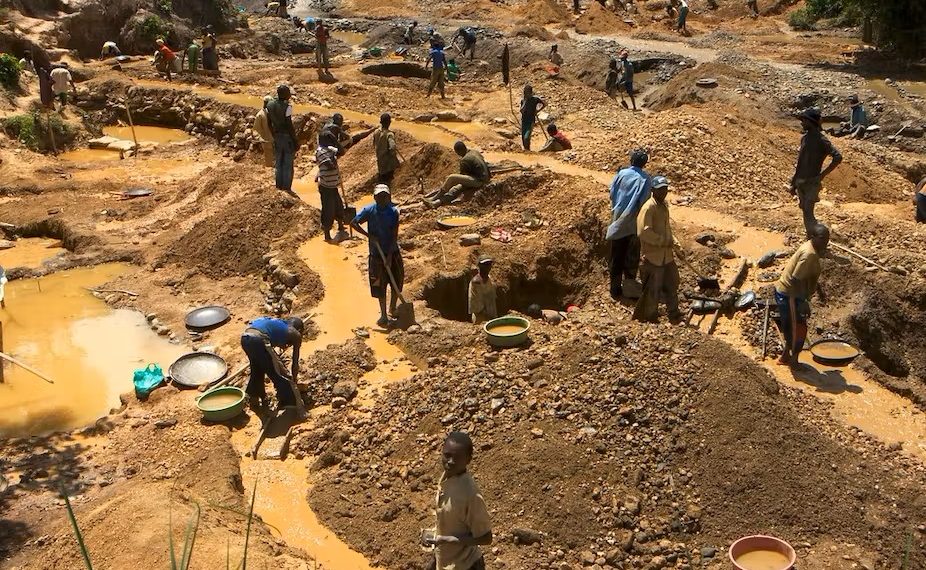
The Ghana Coalition Against Galamsey (CAGG) has challenged the government’s assertion that the era of impunity in illegal mining is over, arguing that weak enforcement, selective action and unresolved accountability continue to threaten the country’s forests, rivers and mining communities.
In a statement issued in Accra on Monday, July 20, 2026, the Coalition said it had reviewed the Minister for Lands and Natural Resources, Emmanuel Armah-Kofi Buah’s Accountability Series presentation on the forestry and mining sectors and acknowledged that some progress had been made. However, it maintained that much more needed to be done to win the fight against galamsey.
“Ghana’s forests, rivers and mining communities are not protected by press briefings. They are protected by sustained, fearless and uniform enforcement,” the Coalition stated, stressing that the law must be applied equally across all regions and against all offenders.
The Coalition welcomed Cabinet’s decision to revoke Executive Instrument (E.I.) 144, as amended by E.I. 234, which had degazetted portions of the Achimota Forest Reserve. It described the move as one that placed the long-term interests of Ghanaians above short-term political considerations.
Despite that decision, the group warned that many of Ghana’s forest reserves remain under serious threat from illegal mining.
“A cleared red zone is not the same as a safe forest,” it said.
According to the Coalition, critical ecological areas, including the Atewa Range Forest Reserve, Cape Three Points, Afao Hills Forest and the Draw River Forest Reserve, continue to face illegal mining activities.
It called for the Forestry Commission to be better resourced with additional personnel and logistics, while renewing its longstanding proposal for the Commission to be militarised and supported with protected camps within forest reserves.
The Coalition also urged President John Dramani Mahama to fulfil what it described as his 2016 commitment to designate the Atewa Range Forest Reserve as a national park, arguing that the move would leave a lasting environmental legacy.
On the government’s broader anti-galamsey campaign, the Coalition rejected the Ministry’s claim that impunity had ended, pointing to continued illegal mining activities in parts of the Eastern Region, including Apedwa Junction, Anyinam and Osino.
It also cited recent clashes between illegal miners and the National Anti-Illegal Mining Operations Secretariat (NAIMOS) team at Kyebi as evidence that the problem persists.
The group questioned whether enforcement efforts were being applied fairly, asking why the Eastern Region appeared to be receiving what it described as “kid gloves” treatment while farmers and communities along the Birim, Densu and Ayensu rivers continued to suffer the effects of illegal mining.
It further raised concerns about alleged illegal mining activities around Bamboi and Tinga within the Bui Dam catchment area, warning that they pose risks to a key national energy asset.
The Coalition also referenced Samreboi, where it said galamsey-related flooding had displaced more than 1,000 residents.
To strengthen enforcement, the Coalition urged Metropolitan, Municipal and District Assemblies in mining areas to establish checkpoints to monitor the movement of excavators and prevent unregistered equipment from entering mining sites.
It also renewed calls for the suspension of fuel sales to illegal mining operators, accusing the National Petroleum Authority of failing to act decisively despite earlier assurances.
While acknowledging that NAIMOS had conducted more than 200 anti-galamsey operations, the Coalition questioned whether those operations had been carried out impartially.
The group said it had received reports from communities alleging selective enforcement and claims that some confiscated equipment had been returned to illegal miners after payments, including allegations that motorbike owners were paying GH¢15,000 to retrieve seized motorcycles.
It called on NAIMOS to publicly respond to the allegations and provide information on its toll-free complaints line, including the number of complaints received and the actions taken.
The Coalition also criticised the Ghana Police Service, arguing that deploying more than 2,000 Blue Water Guards would have limited impact if police officers and NAIMOS personnel failed to respond promptly to reports from affected communities.
It called on the National Security Council, the Inspector-General of Police and the Presidency to investigate allegations of police complicity or inaction in illegal mining areas and impose sanctions on police commands that fail to enforce the law.
On proposed legal reforms, the Coalition welcomed plans to amend the Minerals and Mining Act, 2006 (Act 703), but insisted that any amendment must include stronger protections for forests, water bodies and mining communities.
It also asked the Ministry for Lands and Natural Resources to share the Cabinet-approved draft of the proposed legislation with civil society organisations before it is presented to Parliament.
The Coalition further called for the publication of the Constitutional Review Committee’s report, arguing that reforms affecting natural resources and environmental governance should be prioritised.
It also expressed concern that, apart from Chairman Wontumi, no alleged galamsey kingpins or politically exposed persons had been successfully prosecuted. The group said updates on EOCO investigations and recommendations contained in the Prof. Frimpong-Boateng report also remain outstanding.
As part of its recommendations, the Coalition called for the publication of daily water-quality reports, monthly updates on the state of Ghana’s rivers and forests, quarterly food safety assessments in mining communities and regular Attorney-General briefings on galamsey-related prosecutions.
The statement was signed by Kenneth Ashigbey, Awula Serwah, Senyo Hosi and Daryl Bosu on behalf of the Ghana Coalition Against Galamsey.
The Coalition concluded that Ghana’s fight against illegal mining should not be measured by official presentations alone but by concrete outcomes such as successful prosecutions, restored rivers, protected forests and consistent enforcement of the law across the country.