

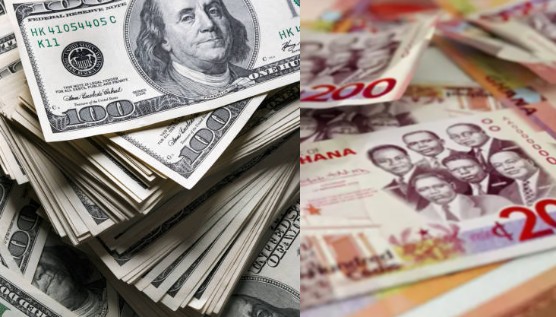
Ghana’s cedi is facing renewed pressure in 2026 after weakening sharply against the US dollar despite the country recording strong external reserves, rising gold holdings and a significant trade surplus.
According to the Bank of Ghana’s May 2026 Summary of Economic and Financial Data, the cedi traded at GH¢11.4125 to the dollar as of May 15, 2026, compared to GH¢10.45 at the end of December 2025. This represents a year-to-date depreciation of 8.4 per cent.
The latest decline marks a major turnaround from the strong recovery the local currency experienced in 2025. During parts of last year, the cedi posted one of its strongest performances in recent years, appreciating significantly against major foreign currencies.
In May 2025, the cedi traded at GH¢10.28 to the dollar, reflecting a year-to-date appreciation of 43 per cent at the time. By the end of December 2025, the local currency had still maintained a strong yearly gain of 40.7 per cent.
However, the current depreciation suggests that sustaining that recovery may prove difficult as demand for foreign exchange continues to rise amid growing imports, debt servicing obligations and increased private-sector activity.
The cedi has also weakened against other major international currencies. Against the British pound, the local currency traded at GH¢15.2055 by mid-May 2026, representing a 7.5 per cent depreciation. It also slipped by the same margin against the euro, trading at GH¢13.2695.
The broader weakness of the cedi is significant because fluctuations in major foreign currencies directly affect fuel prices, imported goods, machinery, travel costs, school fees abroad and external debt repayments.
What makes the situation more striking is that Ghana’s external sector indicators remain relatively strong.
By April 2026, total exports had reached $11.15 billion, while imports stood at $5.87 billion, leaving the country with a trade surplus of $5.28 billion, equivalent to 4.4 per cent of GDP.
Gold continues to anchor Ghana’s export sector, bringing in $6.86 billion by April 2026 and accounting for more than half of total export earnings. Cocoa exports stood at $1.86 billion, while oil exports generated $1.28 billion.
The Bank of Ghana also reported that Gross International Reserves remained strong at $13.95 billion in April 2026, equivalent to 5.5 months of import cover. Under the programme definition, reserves stood at $12.09 billion, covering 4.8 months of imports.
As of May 18, 2026, Gross International Reserves had further increased to $14.42 billion, while Net International Reserves stood at $12.43 billion.
Ghana’s gold reserves also rose from 18.6 tonnes in December 2025 to 22.3 tonnes in April 2026, with the value of those holdings increasing to $3.47 billion. The rise reflects the central bank’s continued strategy of building reserves through gold accumulation to cushion the economy against external shocks.
Despite these positive indicators, pressure on the cedi remains strong, pointing to persistent demand pressures within the foreign exchange market.
One major factor appears to be rising imports. Total imports jumped from $4.06 billion in March 2026 to $5.87 billion in April 2026. Oil imports alone rose to $2.01 billion, while non-oil imports climbed to $3.86 billion, suggesting stronger economic activity is increasing demand for foreign exchange.
Global commodity prices are also adding to the pressure. Brent crude oil averaged $103.2 per barrel in April 2026, representing a 67.4 per cent increase since the start of the year. Higher crude prices could significantly raise Ghana’s fuel import bill and increase pressure on the local currency if the trend persists.
The exchange-rate developments also pose risks to Ghana’s recent inflation gains. Inflation dropped to 3.4 per cent in April 2026, but a weaker cedi could trigger imported inflation through higher fuel prices, food costs, pharmaceuticals and industrial inputs.
For the Bank of Ghana, the challenge now is balancing exchange-rate stability with the broader economic recovery. While reserves are stronger, inflation has eased and interest rates have fallen, the renewed depreciation of the cedi raises concerns about whether the currency can remain stable without continued intervention from the central bank.
The cedi’s performance will also remain critical for investor confidence. While moderate depreciation may be manageable under strong economic fundamentals, a sustained or sharper decline could increase inflation expectations, create uncertainty for businesses and complicate the government’s fiscal consolidation efforts.