

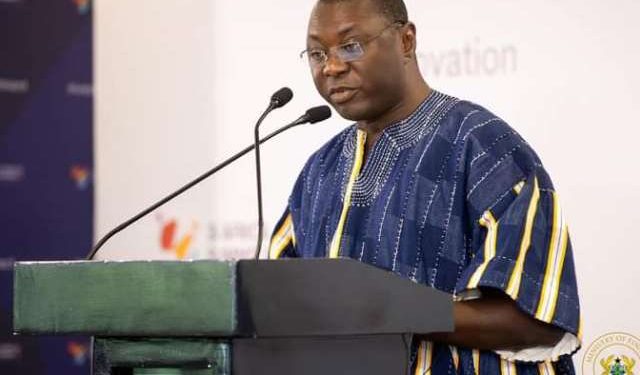
Ghana’s economic outlook could come under renewed pressure following deepening losses at the Bank of Ghana (BoG), with former Finance Minister Dr. Mohammed Amin Adam cautioning that efforts to recapitalise the central bank may significantly increase the country’s debt burden.
The warning comes after the BoG reported a loss of GH¢15.63 billion for the 2025 financial year a sharp jump from the GH¢9.49 billion recorded in 2024. This represents roughly a 65% increase, raising eyebrows at a time when key indicators such as inflation and exchange rate volatility have begun to stabilise.
In a letter addressed to the International Monetary Fund (IMF) on May 2, 2026, Dr. Amin Adam described the central bank’s financial challenges as a looming fiscal risk, particularly as Ghana prepares to exit its Extended Credit Facility programme.
“The Bank of Ghana’s negative equity is effectively a deferred fiscal cost,” he stated, warning that the burden of restoring the Bank’s financial health will ultimately fall on the government.
According to him, the BoG’s balance sheet has worsened considerably, with negative equity now standing at GH¢96.28 billion a figure far exceeding earlier projections under an existing recapitalisation plan between the Finance Ministry and the central bank.
He cautioned that if government resorts to issuing bonds to recapitalise the Bank, it could lead to an increase in public debt, higher interest payments, and added pressure on debt rollovers.
“This position is now worse and without extending the recapitalisation period, the fiscal cost to the government can only rise,” he stressed.
Dr. Amin Adam also pointed to rising operational costs at the central bank, particularly those linked to monetary policy interventions, as a key driver of the losses. He warned that if sterilisation costs continue to outpace the Bank’s income, the situation could deteriorate further.
“Future central bank losses may require additional government support,” he noted, adding that such developments risk undermining the fiscal consolidation gains achieved under Ghana’s IMF-supported programme.
With Ghana nearing the end of its IMF programme, the former Finance Minister urged policymakers and the IMF to treat the BoG’s financial position as a major risk factor. He emphasised the need for future fiscal planning to fully account for the cost of recapitalising the central bank.