

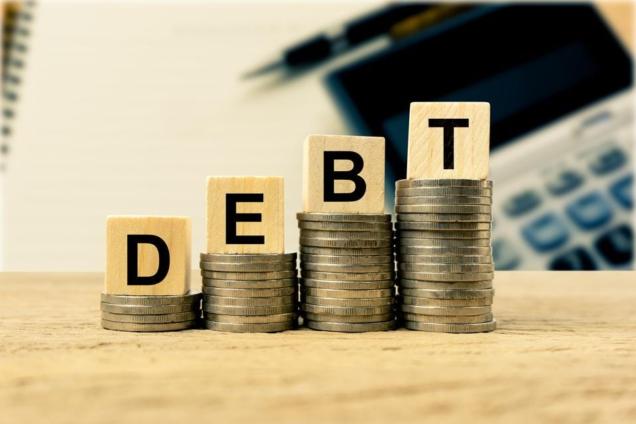
Ghana’s total public debt stock rose to GH¢674.1 billion in February 2026, according to the latest Summary of Economic and Financial Data released by the Bank of Ghana.
In dollar terms, the country’s debt increased from $61.3 billion in December 2025 to $63.1 billion in February 2026.
Despite the rise in the nominal debt stock, Ghana’s debt-to-GDP ratio improved, declining from 44.7% in December 2025 to 42.2% in February 2026. The latest figures suggest stronger economic growth and signs of improving fiscal performance.
The report indicated that external debt remained relatively stable at $29.3 billion, representing 19.6% of GDP during the period under review.
Domestic debt, however, continued its upward trend. It increased sharply to GH¢360.4 billion in February 2026 from GH¢341 billion in January 2026, accounting for about 22.6% of GDP.
The increase in domestic borrowing reflects the government’s continued dependence on the local market to finance budget operations and support economic management.
Meanwhile, Ghana’s fiscal performance showed further signs of recovery. The fiscal deficit-to-GDP ratio stood at 0.3% in March 2026, while the primary balance recorded a surplus of 1.2% of GDP.
Analysts say the improving debt ratio and primary surplus could boost investor confidence and strengthen Ghana’s efforts to restore long-term debt sustainability, especially after the country transitioned from the International Monetary Fund bailout programme to a Policy Coordination Instrument (PCI).