

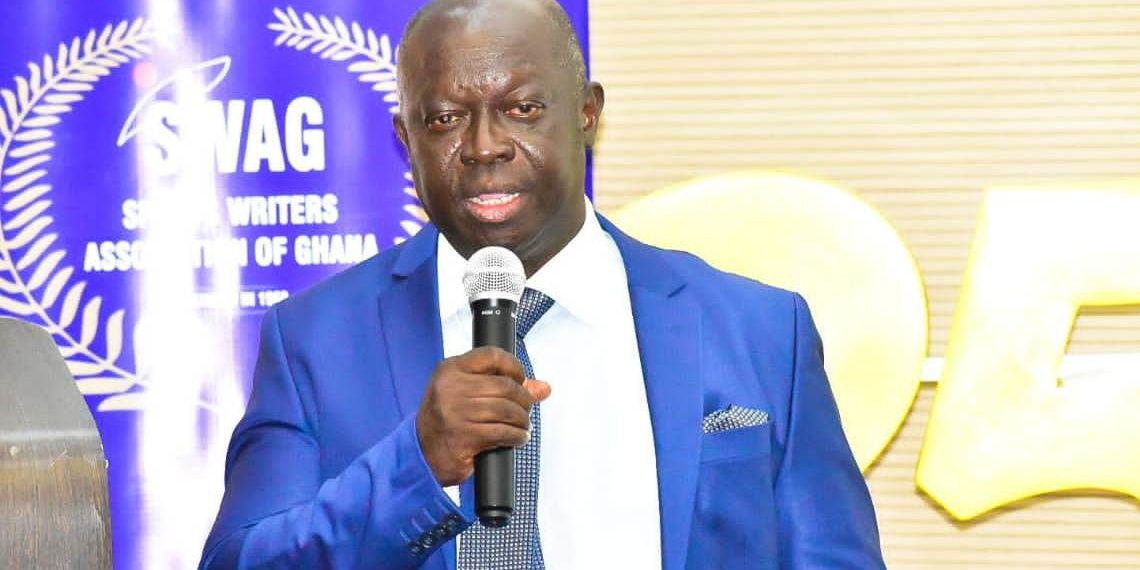
The Sports Writers Association of Ghana (SWAG) has called for a major overhaul of Ghana’s football system, warning the leadership of the Ghana Football Association (GFA) to reverse the declining fortunes of the national teams or step aside.
The call follows the Black Stars’ disappointing start to the 2027 Africa Cup of Nations qualifying campaign, with Ghana losing 2-0 to Côte d’Ivoire in Bouaké before suffering a 4-2 home defeat to The Gambia after taking a two-goal lead.
The results left Ghana without a point from its opening two Group C matches and intensified concerns over the direction of the national team.
In a strongly worded statement, SWAG said the problems facing Ghanaian football go beyond the performance of the Black Stars and cannot be solved by simply changing coaches.
The association pointed to Ghana’s failure to qualify for the 2025 AFCON, the struggles of the junior national teams and what it described as the loss of a clear tactical identity across the national sides.
SWAG’s statement came on the same day the GFA and Carlos Queiroz mutually agreed to terminate the Portuguese coach’s contract.
Queiroz leaves after seven matches in charge, during which Ghana recorded just one victory and suffered four defeats. The latest losses to Côte d’Ivoire and The Gambia further increased pressure on his position.
The coach said ending the relationship was not an easy decision, but both parties considered it the most appropriate course of action in the interest of Ghanaian football.
For SWAG, however, Queiroz’s departure should not become another cycle of appointing and dismissing coaches without addressing the deeper problems within the football system.
The association argues that repeated coaching changes have amounted to temporary solutions while issues surrounding player development, technical appointments, domestic competitions and long-term planning remain unresolved.
It is therefore demanding that appointments to Ghana’s national teams be based on competence, technical ability and proven performance rather than political influence or personal relationships.
SWAG also wants reforms to Ghana’s domestic football structure to strengthen player development and create a clearer pathway from youth football to the senior national team.
The association believes the decline of Ghana’s traditional football development structures, including schools football, youth competitions, domestic clubs and junior national teams, has contributed to the current difficulties facing the Black Stars.
It has also called for greater accountability from those responsible for managing the country’s football.
SWAG says if the current GFA leadership cannot reverse the declining fortunes of the national teams, it should step aside in the national interest.
The demand puts further pressure on GFA President Kurt Okraku and his Executive Council, whose administration has faced increasing scrutiny over the performance of the Black Stars, coaching changes and the state of domestic football.
Okraku has led the GFA since 2019 and was re-elected in 2023. While the association has highlighted investments in areas including youth development, women’s football and infrastructure, the recent performance of the Black Stars has intensified the debate over the effectiveness of the administration.
SWAG has further proposed that, if the GFA leadership fails to implement the necessary reforms, the management of Ghana’s national teams could be transferred to an independent Public Interest Committee.
Such a proposal would, however, raise important legal and institutional questions, particularly because FIFA protects the autonomy of national football associations from government and third-party interference.
The composition, mandate, funding and accountability of any independent committee would therefore need to be clearly defined to ensure that it does not conflict with FIFA’s regulations.
For now, the Black Stars still have an opportunity to revive their AFCON qualifying campaign, with further fixtures expected in November.
But for SWAG, qualification alone may not resolve the broader concerns surrounding Ghana football.
The association’s intervention has shifted the conversation from the departure of one coach to a much bigger question: whether Ghana’s football system itself needs fundamental reform.