

Ghana recorded a merchandise trade surplus of GH¢13.8 billion in the second quarter of 2026, but the sharp rise in imports and growing dependence on gold exports point to underlying weaknesses in the country’s external trade position.
Data from the Ghana Statistical Service show that Ghana exported goods worth GH¢108.5 billion between April and June, compared with imports of GH¢94.7 billion.
Although the country continued to export more goods than it imported in nominal terms, the surplus fell by more than 70% from the GH¢46.1 billion recorded in the first quarter.
The decline was driven largely by a surge in imports. Exports fell by 1.6% from GH¢110.3 billion, while imports increased by 47.5% from GH¢64.2 billion.
In US dollar terms, exports stood at US$9.6 billion, while imports reached US$8.3 billion, resulting in a surplus of US$1.3 billion. This compares with a US$4.3 billion surplus in the previous quarter.
The figures, however, look considerably different when adjusted for price changes.
At constant first-quarter 2021 prices, Ghana recorded a real trade deficit of GH¢14.6 billion, with real exports valued at GH¢26.6 billion against imports of GH¢41.2 billion. The deficit more than doubled from the GH¢6.2 billion recorded in the first quarter.
Real exports declined by 5.4% quarter-on-quarter, while real imports increased by 20.1%. Compared with the same period in 2025, real imports rose by 34.1%, while exports increased by only 2%.
This suggests that Ghana’s strong headline trade position is being supported largely by higher commodity prices rather than a significant expansion in the volume of goods the country exports.
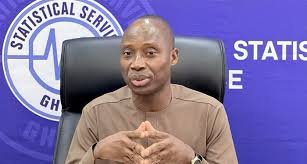
Government Statistician Dr Alhassan Iddrisu noted in the report that “high world prices can flatter the headline,” stressing that “lasting strength comes from making and selling more.”
Gold remained at the centre of Ghana’s export performance, generating GH¢78.4 billion during the quarter and accounting for 72.3% of total merchandise exports.
Crude petroleum followed with GH¢11.6 billion, representing 10.7% of exports, while cocoa beans generated GH¢3.2 billion. Cocoa paste and cocoa butter contributed GH¢2 billion and GH¢1.3 billion respectively.
The five leading export products accounted for 89% of Ghana’s total exports, leaving all other products to contribute just 11%.
Gold’s dominance also increased significantly during the quarter. Its share of export earnings rose from 57.7% in the first quarter to 72.3%, while the share of cocoa beans and processed cocoa products fell from 16.5% to 7%.
The concentration of exports leaves Ghana more exposed to movements in gold prices, production levels and demand in a relatively small number of international markets.
Four countries alone accounted for 99.8% of Ghana’s gold exports. The United Arab Emirates took 41.6%, followed by Switzerland with 22.3%, India with 22.1% and South Africa with 13.8%.
The UAE was Ghana’s largest overall export destination, receiving goods worth GH¢32.7 billion, equivalent to 30.2% of total exports. India and Switzerland followed with GH¢17.6 billion and GH¢17.5 billion respectively.
Overall, Ghana’s top five export destinations accounted for 76.2% of exports, up from 65.7% in the previous quarter.
On the import side, fuel and machinery accounted for a significant portion of Ghana’s spending.
Gas oil was the largest imported product at GH¢12.2 billion, followed by pump parts worth GH¢10.1 billion and super petrol valued at GH¢8 billion. Crude petroleum imports amounted to GH¢5.8 billion, while used vehicles with engine capacities between 1,500cc and 3,000cc accounted for GH¢3.1 billion.
Mineral fuels and oils represented 30% of total imports, up from 22.6% in the first quarter, while machinery and electrical equipment accounted for another 23.5%.
Import costs were also affected by international price movements. Ghana’s import-price index increased by 22.7% quarter-on-quarter, compared with a 4% rise in export prices.
Fuel-import prices alone increased by 54.1% during the three-month period, adding further pressure to the import bill.
China remained Ghana’s largest source of imports, supplying goods worth GH¢20.4 billion, although its share fell from 29.7% in the first quarter to 21.5%.
South Africa followed with GH¢11.8 billion, largely driven by the exceptional GH¢10 billion purchase of pump parts. The United Arab Emirates, the United States and Nigeria completed the top five import sources.
Ghana’s trade position with Africa also changed significantly during the quarter. The country moved from a GH¢12.3 billion trade surplus with the continent in the first quarter to a GH¢4.4 billion deficit in the second.
Exports to African markets fell by 8.6% to GH¢19.2 billion, while imports rose to GH¢23.6 billion.
Much of the reversal was linked to the GH¢10 billion pump-parts consignment from South Africa. Without that transaction, imports from Africa would have been about GH¢13.6 billion, leaving Ghana with a continental trade surplus.
The figures also highlight a different pattern in Ghana’s trade with West Africa.
Ghana’s trade with the sub-region reached a record US$1.33 billion during the quarter, although the country recorded a US$250 million deficit.
Imports from West Africa stood at GH¢8.86 billion, compared with exports of GH¢6.18 billion. Four fuel products accounted for 80.5% of the import bill.
However, Ghana’s exports to neighbouring West African markets were considerably more diversified than its overall export basket. The five largest exports to the region accounted for just 39.4% of sales, compared with 89% globally.
Products such as baby napkins, tiles, plastics, chemical preparations, coated steel sheets, sacks, bags and household articles featured among Ghana’s exports to neighbouring countries.
The figures point to the potential of the West African market for Ghana’s non-traditional exports, particularly manufactured and semi-processed products.
Overall, the second-quarter figures do not show a collapse in Ghana’s trade position. The country still recorded a substantial nominal surplus, while some of the machinery imports could support future productive activity.
However, the sharp fall in the surplus, rising import volumes and heavy reliance on gold expose the vulnerability of Ghana’s current trade structure.
With nearly three-quarters of export earnings coming from gold and a large share of exports concentrated among a few markets, changes in commodity prices or international demand could have a significant impact on the country’s foreign-exchange position.
The figures therefore reinforce the need for greater investment in manufacturing, processing, logistics and regional trade. Ghana’s ability to expand its non-traditional exports, particularly within West Africa, could help reduce its dependence on a few commodities and markets.
For now, Ghana continues to earn more from merchandise exports than it spends on imports. But the second-quarter data show that the strength of that surplus is increasingly tied to the value of what Ghana sells rather than the volume of goods it produces and exports