

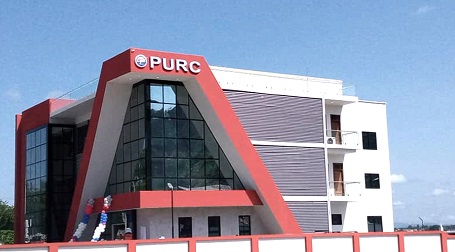
The Public Utilities Regulatory Commission (PURC) has defended the latest electricity tariff increases, arguing that maintaining a reliable and uninterrupted power supply requires significant financial resources that must be shared across consumers, businesses and utility providers.
Speaking on PM Express Business Edition, PURC Executive Secretary Dr. Shafic Suleman said the Commission understands the concerns of households and businesses over rising electricity costs but stressed that the country cannot sustain stable power supply without adequately funding the sector.
According to him, the regulator’s role is to balance affordability for consumers with the financial sustainability of utility providers.
“Our responsibility is to strike the right balance between protecting consumers and ensuring that utility providers have the financial capacity to deliver reliable electricity,” he stated.
The tariff adjustments, which take effect on July 1, have generated concern among manufacturers and businesses, many of whom argue that higher utility costs will increase production expenses and further strain companies already dealing with expensive credit, high input costs and uncertain market conditions.
However, Dr. Suleman said discussions with manufacturers in Tema and members of the international business community suggest that reliability often matters more to businesses than low tariffs.
According to him, many companies are willing to pay for electricity if they can depend on a stable and predictable supply.
Frequent power disruptions can halt production, damage equipment, force businesses to rely on costly backup generators and undermine delivery schedules. For exporters and manufacturers operating under strict deadlines, power instability can have far-reaching financial consequences.
The PURC Executive Secretary revealed that Ghana continues to spend heavily to maintain electricity generation. He disclosed that the country pays approximately US$70 million each month for gas supplied under ENI’s Sankofa project and an additional US$20 million for gas imports through the West African Gas Pipeline and N-Gas.
Beyond natural gas purchases, Ghana also procures crude oil and heavy fuel oil to support thermal power generation, particularly during periods of high demand.
“These costs are unavoidable if we want to keep the lights on and ensure reliable electricity supply,” he explained.
Dr. Suleman noted that keeping tariffs artificially low while generation costs remain high only creates financial challenges within the power sector. Over time, unpaid obligations can affect fuel purchases, payments to independent power producers, maintenance schedules and ultimately electricity supply reliability.
Responding to criticism that tariff increases reward inefficiency, he pointed to improvements in the performance of the Electricity Company of Ghana (ECG) following increased regulatory oversight.
According to him, ECG’s monthly revenue collections have risen significantly, from about GH¢800 million to between GH¢1.8 billion and GH¢2 billion.
While acknowledging that commercial losses remain a challenge, he said the improvements demonstrate that efforts to strengthen revenue collection and operational efficiency are beginning to yield results.
Commercial losses in the power sector include illegal connections, meter tampering, unpaid bills, billing inaccuracies and collection weaknesses, all of which reduce the revenue available to pay generators and fuel suppliers.
Many consumers have argued that those who pay their bills should not be burdened with higher tariffs because of inefficiencies elsewhere in the system. Dr. Suleman acknowledged these concerns and stressed the importance of continued reforms to improve efficiency and reduce losses.
He also assured consumers that mechanisms have been put in place to monitor implementation of the new tariffs from July 1. Regional PURC offices, he said, are prepared to investigate complaints relating to billing, metering and tariff application.
The Commission further emphasized that lifeline consumers remain protected under the current tariff structure. More than 1.3 million low-income electricity users continue to benefit from subsidized electricity rates despite the latest adjustments.
The debate over electricity pricing highlights a broader challenge facing Ghana’s energy sector: balancing affordability with the need to maintain a financially viable and reliable power system.
While consumers and businesses want lower tariffs, the PURC maintains that reliable electricity requires sustained investment in fuel supply, generation and distribution infrastructure.
For many businesses, the issue goes beyond electricity prices alone. Utility costs add to taxes, rent, transport expenses, labour costs and financing charges, all of which influence competitiveness and profitability.
Yet unreliable electricity also carries significant economic costs.
The Commission argues that the long-term solution lies not only in tariff adjustments but also in improving efficiency, reducing losses, strengthening collections and ensuring greater accountability across the power sector.
As the new tariffs take effect, the focus will now shift to whether consumers experience the improved reliability and service quality that the regulator says the increases are intended to support.