


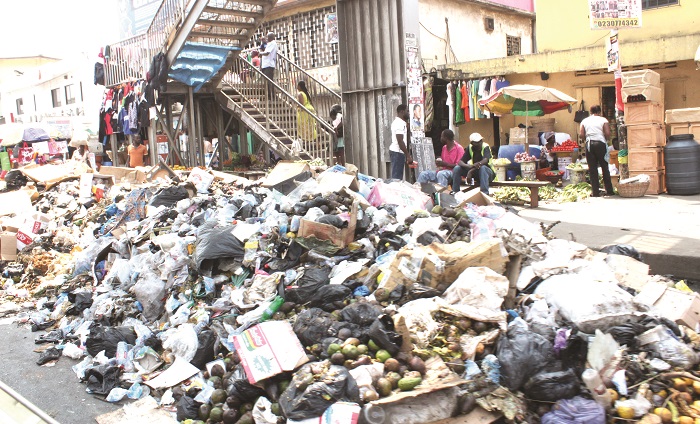
Ghana is losing more than GH¢6.2 billion annually due to poor sanitation and inadequate waste management, according to a new study by the Institute of Statistical, Social and Economic Research (ISSER).
The findings have renewed calls for government to view sanitation spending as a critical economic investment rather than simply a social service responsibility.
The study, presented at a stakeholder engagement in Accra, revealed that sanitation-related diseases such as malaria, cholera, typhoid, pneumonia and diarrhoea result in nearly 31.9 million lost workdays every year. Researchers also estimate that poor sanitation contributes to more than 177,000 deaths nationwide, underscoring the significant human and economic toll of the problem.
According to the report, direct healthcare costs linked to sanitation-related illnesses amount to approximately GH¢5.8 billion annually, while an additional GH¢650 million is lost through reduced productivity, absenteeism and other economic disruptions.
The research, led by Professor Peter Quartey and Dr Kwame Adjei-Mantey, argues that Ghana’s current level of sanitation spending is far below what is needed to address the growing waste management challenges facing cities and communities across the country.
ISSER noted that Ghana spends an average of just GH¢38 per tonne of waste generated, a figure the researchers describe as insufficient to tackle mounting sanitation pressures.
Despite the low investment, the study found that sanitation spending delivers substantial economic returns. Under current expenditure levels, every GH¢1 invested in sanitation generates an estimated GH¢180 in benefits. If spending were increased to levels comparable with lower-middle-income countries, the return could rise to about GH¢556 for every GH¢1 invested.
Researchers project that the economic gains from enhanced sanitation investment could increase from about GH¢58 billion in 2025 to GH¢67.2 billion by 2032. These benefits would come through lower healthcare costs, reduced mortality, improved workforce productivity and fewer workdays lost to preventable diseases.
The report comes as Ghana continues to grapple with recurring floods, poor drainage systems, growing volumes of urban waste and financial constraints facing metropolitan, municipal and district assemblies responsible for sanitation management.
Rapid urbanisation has further intensified the challenge, with population growth in major cities outpacing investment in waste collection, landfill management, drainage infrastructure and recycling facilities.
ISSER argues that the sanitation challenge should no longer be viewed solely as a public health issue but also as a matter of economic competitiveness. Poor waste management, flooding and disease outbreaks impose additional costs on businesses through disrupted operations, reduced productivity and higher healthcare expenses.
The study recommends increased government investment in sanitation infrastructure, improved financing for local assemblies, stronger private-sector participation and greater accountability in waste management contracts.
It also raises concerns about the long-term sustainability of Ghana’s current sanitation financing model, which relies heavily on limited internally generated funds and central government transfers.
According to the researchers, continued underinvestment in sanitation will only deepen economic losses through preventable illnesses, reduced productivity and avoidable deaths. They are therefore urging policymakers to place sanitation higher on the national development agenda and integrate it more deliberately into economic planning, urban development and public health strategies.
The report concludes that Ghana faces a clear choice: invest significantly in sanitation infrastructure and waste management now, or continue to bear billions of cedis in economic losses each year.