

The Minority Caucus in Parliament has launched a fierce attack on the Bank of Ghana (BoG) following the release of its 2025 audited financial statements, accusing the central bank of concealing the full extent of its financial difficulties.
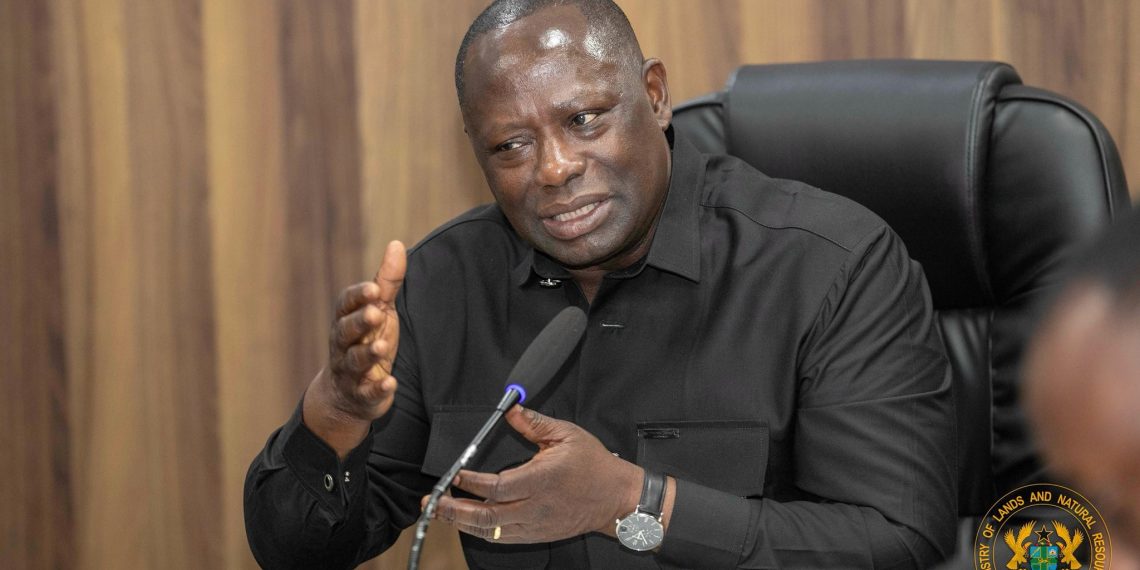
Addressing a press conference in Parliament, the Ranking Member on the Economy and Development Committee, Kojo Oppong Nkrumah, said the Minority’s review of the Bank’s 136-page report confirmed concerns they had repeatedly raised about the direction of the central bank under the current administration.
According to him, the figures presented in the report paint a far more troubling picture than what has been publicly communicated.
“We have come here not to gloat about the things we forewarned, but to share with the Ghanaian people the numbers that the government wanted to hide and the worrying implications those numbers reveal,” he stated.
The Minority also criticised the Majority Caucus for holding a press briefing ahead of the official release of the accounts to defend the anticipated losses.
They described the move as inappropriate and a politicisation of the central bank.
Citing Section 58 of the Bank of Ghana Act, the caucus argued that audited financial statements of the central bank are supposed to be submitted first to the Finance Minister before being laid before Parliament, not presented through partisan political briefings.
“What happened was not only irregular but a blatant attempt to politicise the Bank of Ghana and shape public opinion before the facts were known,” the Minority said.
At the centre of the Minority’s criticism is its claim that the Bank of Ghana has become “policy insolvent,” meaning the institution can no longer sustain its core monetary operations using its normal income streams.
The caucus argued that although the Bank reported operational income of GH¢22.2 billion against Open Market Operation (OMO) costs of GH¢16.7 billion, the figures were heavily supported by a one-off gain of GH¢9.6 billion from gold sales.
According to them, once the gold sale proceeds are excluded, operational income falls to GH¢12.7 billion, leaving the central bank with an estimated GH¢4 billion deficit.
“A central bank that needs to sell gold to avoid insolvency is operating on borrowed time,” Mr Oppong Nkrumah warned.
The Minority further disputed the widely reported headline loss of GH¢15.6 billion for 2025, insisting that the real financial loss is much higher.
They pointed to an additional GH¢19.3 billion captured under Other Comprehensive Income (OCI), arguing that total losses for the year should be closer to GH¢34.9 billion.
When adjusted further to remove proceeds from gold sales, they estimated the Bank’s underlying losses could reach about GH¢44 billion.
“This is the figure they did not want Ghanaians to see,” the caucus alleged, accusing authorities of relying on accounting treatments and asset sales to reduce the size of the reported deficit.
The caucus also raised concerns about the accounting standards used in preparing the financial statements.
According to the Minority, the accounts were not prepared fully in line with International Financial Reporting Standards (IFRS), but rather based on the Bank’s internal accounting policies — an issue they said was highlighted by the auditors and acknowledged by the Bank’s directors.
They argued that this accounting approach allowed major foreign exchange revaluation losses to be shifted into OCI, thereby lowering the headline loss figure.
The Minority further claimed that the Bank had shown signs of recovery before 2025 but had now slipped backwards.
They referenced previous losses recorded by the central bank:
- GH¢13.23 billion in 2023
- GH¢9.49 billion in 2024
- GH¢15.63 billion in 2025
According to them, the progress made in 2024 has been reversed, with losses and negative equity worsening again in 2025.
“The central bank was healing. Now it is deteriorating,” Mr Oppong Nkrumah stated.
The caucus blamed the worsening situation on a number of policy decisions, including the abandonment of the dynamic Cash Reserve Ratio system, changes to foreign currency reserve requirements for banks, and modifications to the gold purchase programme.
They argued that these policy changes significantly increased sterilisation costs, leading to a sharp rise in outstanding central bank bills and interest payments to commercial banks, which reportedly exceeded GH¢14 billion.