

President John Dramani Mahama has warned that poor roads, disconnected railway networks and underdeveloped ports are preventing African countries from fully benefiting from the African Continental Free Trade Area (AfCFTA).
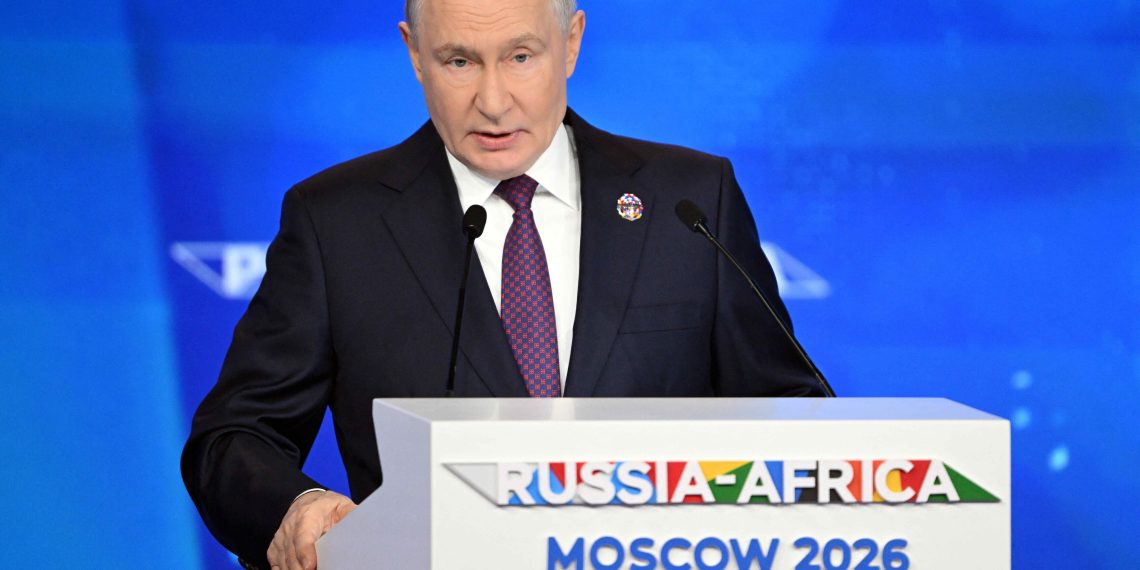
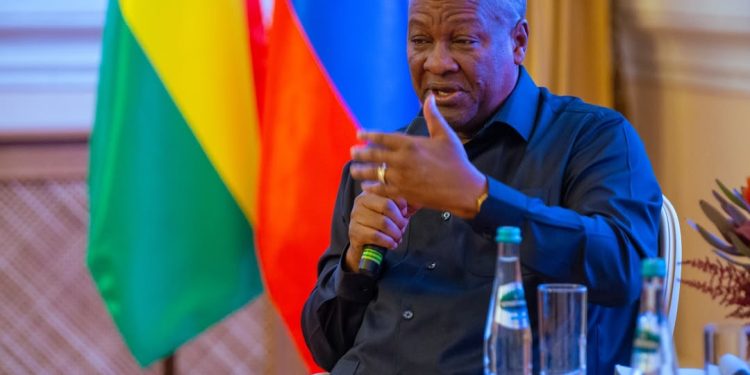
Speaking in Moscow ahead of a bilateral meeting with Russian President Vladimir Putin, Mahama said removing trade barriers would not be enough to boost trade among African countries without the infrastructure needed to move goods efficiently across borders.
“Even though we have passed what we call the African Continental Free Trade Area, which makes the whole of Africa one market, we cannot get the full potential of the AfCFTA because we do not even have the infrastructure for trading amongst ourselves,” he said.
He cited poor roads, inadequate railway connections and inefficient ports as some of the major obstacles limiting trade across the continent.
“The roads between countries are bad, there are no railways, and many countries don’t have ports that are in any good shape to receive goods from other countries,” he added.
Mahama identified Russia as a potential partner in addressing Africa’s infrastructure challenges, pointing to the country’s historical support for anti-colonial and anti-apartheid movements.
His comments highlight a major challenge facing the AfCFTA, which aims to create a single market covering more than 50 African countries. Although the agreement provides a framework for reducing tariffs and easing trade restrictions, businesses still face high transportation costs, delays at borders and unreliable logistics networks.
For many African businesses, these challenges can cancel out the benefits of lower tariffs. Manufacturers need reliable transport to move raw materials and finished products, while farmers require efficient roads, storage facilities and border procedures to reach markets in neighbouring countries.
Africa’s transport networks have historically been designed to move raw materials from inland production centres to coastal ports for export to overseas markets, rather than connect neighbouring economies.
Mahama previously highlighted this problem in February 2026, arguing that colonial-era trade patterns had left African countries poorly connected to one another.
“We were not meant to trade among ourselves. We were meant to trade with our colonisers, and so the logistics were not there,” he said.
The challenge is particularly relevant to Ghana, which hosts the AfCFTA Secretariat. The country’s ports at Tema and Takoradi could serve as important gateways for trade with landlocked countries such as Burkina Faso, Mali and Niger. However, this potential depends on reliable transport corridors, efficient border procedures and secure transit arrangements.
Railway connectivity is another area requiring attention. Although roads remain essential for short-distance transportation and final deliveries, regional railway networks could reduce the cost of moving bulk commodities, agricultural produce, fuel and manufactured goods over long distances.
However, such projects require cooperation between countries to ensure that railway lines, technical standards and operating systems are compatible across borders.
Improving existing infrastructure is equally important. Modern ports and highways cannot deliver their full economic benefits if goods are delayed by congestion, repeated inspections, excessive paperwork or incompatible customs systems.
AfCFTA implementation therefore requires coordinated border operations, electronic documentation and simpler transit procedures. These improvements could also benefit small-scale traders, particularly women and young people, who often face disproportionate costs and difficulties when moving goods across borders.
Financing the required infrastructure will demand substantial investment from African governments, development institutions and private investors. While Mahama has identified Russia as a potential partner, any agreements must be assessed on their commercial value, borrowing terms and long-term financial implications.
Regional cooperation will also be necessary because infrastructure projects can benefit several countries even when one government bears most of the construction costs.
Beyond building new roads, railways and ports, governments must provide adequate funding for maintenance to prevent existing transport corridors from deteriorating.
Efficient transport networks could help African businesses build regional supply chains, allowing raw materials to be sourced in one country, processed in another and sold across multiple markets. This would support industrialisation, value addition and job creation.
Ultimately, the success of the AfCFTA will depend on whether businesses can move goods across African borders quickly, safely and affordably.
Mahama’s warning underscores the need to match the continent’s ambition for a single market with practical investments in transport infrastructure, logistics and border management. Without these improvements, the AfCFTA risks remaining a strong legal framework whose economic benefits are constrained by the difficulty of trading across the continent.