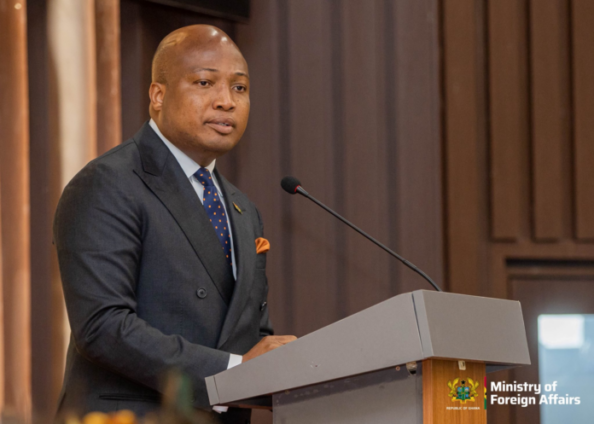


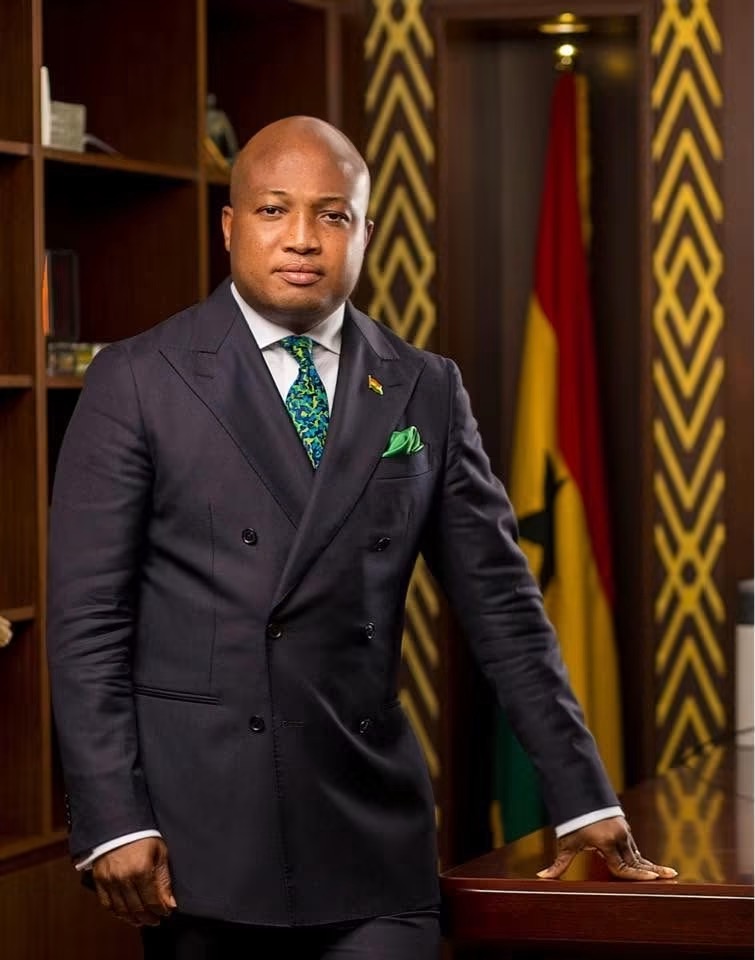
Investigative journalist Manasseh Azure Awuni has praised Foreign Affairs Minister Samuel Okudzeto Ablakwa and the Ministry of Foreign Affairs for their transparency in the ongoing scrutiny of Ghana’s evacuation of 1,964 citizens from South Africa.
In an article examining the JoyNews Research Desk’s findings on the evacuation exercise, Manasseh described the ministry’s proactive disclosure of documents as an example of transparency that other public institutions should emulate.
Manasseh recalled submitting a Right to Information (RTI) request to the Office of the President in December 2021 for details of President Nana Akufo-Addo’s foreign trips between May and September 2021, including the cost of the trips and the procurement of private jet services.
According to him, the presidency denied the request on security grounds, and the RTI Commission ruled in favour of the presidency in June 2022, effectively ending his attempt to obtain the information.
He questioned the consistency of the presidency’s position, noting that the same office later released details of Akufo-Addo’s ongoing trip to Belgium and Rwanda after Ablakwa raised concerns about the use of a chartered flight for the president’s trip to Germany.
Manasseh contrasted that experience with Ablakwa’s current role as Foreign Affairs Minister, arguing that the ministry had adopted a different approach by voluntarily providing JoyNews with documents relating to the South African evacuation.
The documents reportedly included receipts, invoices, lists of evacuees, their contact and passport details, and signed sheets relating to the GH¢5,000 reintegration allowance and GH¢500 transportation allowance.
He described the disclosure as an uncommon level of proactive cooperation by a state institution, adding that the ministry could have relied on privacy-related exemptions under the RTI law to withhold some of the personal information.
However, the JoyNews Research Desk identified discrepancies involving 100 of the 1,964 evacuees whose names and signatures it examined.
The reported discrepancies included names appearing twice with different signatures, some evacuees allegedly receiving the GH¢5,000 reintegration allowance without the GH¢500 transportation allowance, and others claiming that the money they received fell short of the stated amount.
Manasseh said the discrepancies could have resulted from clerical errors, misinterpretation of the available records or actual wrongdoing, including possible misappropriation of funds by individuals involved in the exercise.
He cited instances where some passport expiration dates were recorded as dates of birth, creating the impression that certain evacuees would be born in the future.
He also questioned whether differences in accommodation arrangements necessarily indicated wrongdoing, explaining that the GH¢142,000 allocated for hotel accommodation could not reasonably be expected to cover all 1,964 evacuees if each person’s accommodation cost about US$60.
Manasseh cautioned against treating every discrepancy as evidence of a scandal but stressed that the findings deserved serious attention and thorough investigation.
He also questioned Ablakwa’s categorical assertion that there were no ghost names and that every evacuee received the full GH¢5,500 package.
According to Manasseh, although the minister might have acted in good faith, he was not personally responsible for every stage of the evacuation process, including distributing money, collecting signatures and completing registration documents.
He argued that Ablakwa should have acknowledged the possibility of human error or misconduct by officials involved in the process, even if he was confident that he had not personally engaged in wrongdoing.
The Ministry of Foreign Affairs has invited JoyNews to submit its findings for further investigation, stating that it considers the allegations serious and is open to examining them.
Manasseh welcomed the ministry’s position, insisting that any amount of public money found to have been diverted into the wrong hands must be traced.
He also addressed the Minority in Parliament’s demand for accountability, suggesting that although its position could be influenced by partisan politics, the scrutiny should not be dismissed on that basis.
He said the NPP should be held to the same standard of transparency if it returns to power, arguing that political parties demanding accountability in opposition must be prepared to uphold the same principles when in government.
Manasseh concluded that transparency was the first step towards accountability and that the ministry’s willingness to open its records to scrutiny should be recognised without shielding any individual, including the minister, from investigation if evidence of wrongdoing emerges.