Guinea has introduced an immediate ban on the export of unrefined gold, marking a significant shift in its mining policy as the country moves to retain more value from its mineral resources within its borders.
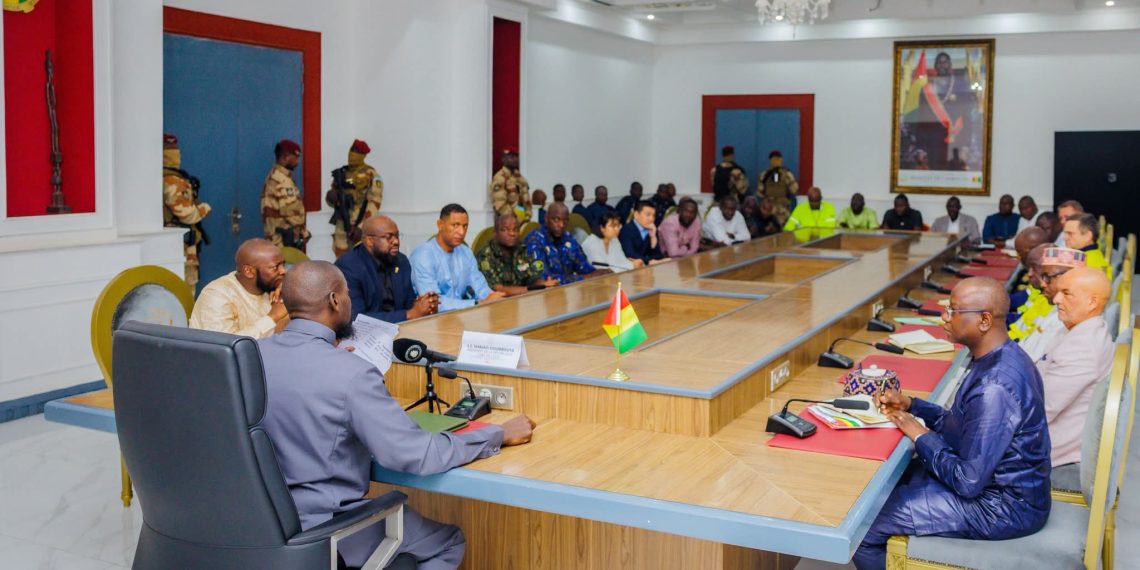
The directive, announced over the weekend, requires all gold produced in the country to be refined locally before it can be exported. It forms part of President Mamadi Doumbouya’s broader agenda to strengthen domestic processing and reduce dependence on the export of raw commodities.
Government officials argue that Guinea has for years lost substantial value by exporting minerals in their raw state. By insisting on local refining, authorities believe the country can expand industrial activity, create more jobs, improve tax revenue, and develop a stronger mining value chain.
Although Guinea is globally recognised for its vast bauxite reserves, gold also plays an important role in its mining sector. The new restriction signals that the government’s push for local beneficiation is extending beyond a single mineral.
In recent years, the administration has also pressured mining companies in the bauxite sector to invest in local refineries and related infrastructure, rather than focusing solely on extraction and export. The new gold policy follows the same direction.
At the heart of the policy is the belief that exporting raw minerals allows most of the value to be captured abroad through refining, trading, logistics, and industrial processing. Local refinement, the government argues, would help shift some of that value back into the domestic economy.
Supporters of the decision see it as a step toward economic transformation, particularly in a region where many resource-rich countries continue to rely heavily on exporting unprocessed commodities.
If effectively implemented, the policy could open up opportunities across several sectors, including refining, logistics, security, financial services, and technical mining support services. It could also strengthen oversight and improve traceability in the gold supply chain, an increasingly important requirement in global markets.
However, questions remain about whether Guinea currently has enough refining capacity to handle all domestically produced gold. If capacity falls short, the policy could lead to delays in exports and disruptions for miners and traders.
Industry players are also expected to seek clarity on key issues such as licensing procedures, pricing mechanisms, tax obligations, and compliance timelines. Without clear guidelines, the transition could create uncertainty in the sector.
There are also concerns among investors about the predictability of mining regulations. Sudden policy shifts, even when aimed at long-term development goals, can affect confidence and delay investment decisions if not carefully managed.
Another major concern is enforcement. Gold is easier to smuggle compared to bulk minerals, meaning overly restrictive or uncompetitive regulations could push some activity into informal channels, reducing government revenue instead of increasing it.
Analysts say the success of the policy will depend on how well the government balances regulation with commercial viability. Efficient refining systems, transparent pricing, and fair taxation will be key to ensuring compliance and maintaining investor trust.
The move also reflects a broader trend across Africa, where governments are increasingly pushing for greater control over natural resources and more domestic value addition. Many countries are seeking to move away from simply exporting raw materials toward building local industrial capacity.
While the approach is politically popular, experts warn that resource nationalism only delivers results when matched with infrastructure, investment, technical expertise, and stable policy frameworks.
For Guinea, the ban on raw gold exports represents a bold step in that direction. But its long-term success will depend on execution.
If the country can develop sufficient refining capacity and maintain a stable regulatory environment, the policy could significantly boost its mining sector and overall economy.
If not, it risks creating bottlenecks and uncertainty in one of its most important industries.
For now, the message from Conakry is clear: Guinea intends to move beyond being just an exporter of raw minerals and become a country that processes and adds more value to its natural resources at home.