

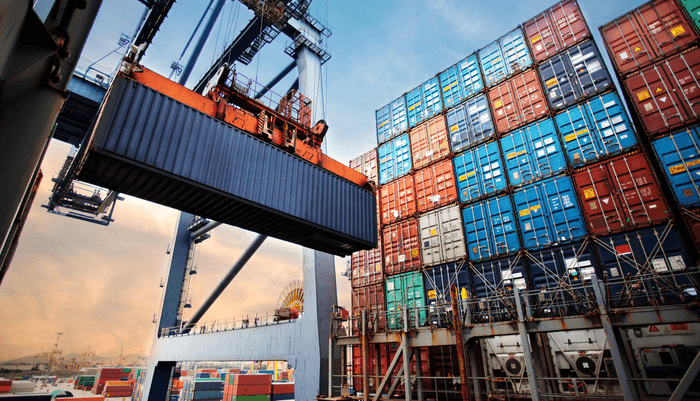
The Ghana Ports and Harbours Authority (GPHA) has introduced emergency measures at the Port of Tema as worsening congestion threatens to slow cargo movement, increase logistics costs and put additional pressure on businesses that rely on Ghana’s largest seaport.
GPHA said the congestion has been driven by a sharp increase in import volumes, rising movements of empty containers for export and worsening road traffic around the Tema port enclave. The combination has placed significant pressure on terminal capacity and the ability of operators to move containers efficiently.
The Authority said similar congestion is being experienced at ports across the West African sub-region, affecting the movement of both laden and empty containers. Key port stakeholders have therefore been placed on heightened operational alert as efforts intensify to restore normal cargo flows.
Working with shipping lines and terminal operators, GPHA is seeking to accelerate the evacuation of empty containers by increasing vessel calls and improving container transfer operations.
Additional trucks are also being deployed, while yard, storage and traffic-management arrangements are being adjusted to create more space and reduce bottlenecks.
The immediate goal is to prevent the congestion from developing into a wider disruption to trade.
Tema Port handles a significant share of Ghana’s imported consumer goods, industrial inputs, machinery and other essential products. Prolonged delays could therefore affect businesses far beyond the port environment.
When containers remain at terminals for extended periods, importers can incur higher demurrage, storage and transportation costs. These additional expenses can eventually move through the supply chain, increasing operating costs for manufacturers, retailers and distributors and potentially putting pressure on consumer prices.
The situation is therefore not simply a port-management challenge but an economic concern. Efficient cargo clearance is critical to working-capital management, inventory planning and production schedules for businesses that depend on imported raw materials and equipment.
GPHA has urged importers, clearing agents and cargo owners to speed up the clearance and evacuation of consignments already at the port.
The Authority said faster movement of existing cargo is necessary to create additional terminal space and allow incoming containers to be handled more efficiently.
“Prompt cargo evacuation remains essential to easing pressure on terminal space and supporting the continuous flow of trade through the port,” GPHA said.
The appeal highlights the fact that congestion cannot be resolved by the port authority alone. Even when terminal handling systems are functioning, containers that remain in the port longer than necessary can reduce available yard space and make it more difficult to process incoming cargo.
Responsibility therefore extends across the entire logistics chain, including GPHA, terminal operators, shipping lines, freight forwarders, clearing agents, truck operators and cargo owners.
The congestion has also renewed attention on the relationship between port capacity and landside infrastructure.
Ghana has invested significantly in Tema Port, but terminal expansion alone cannot guarantee efficiency if roads, truck movements, container depots and evacuation systems outside the port are unable to absorb rising cargo volumes.
The worsening traffic around the port enclave is particularly important. Delays affecting trucks entering or leaving terminals can slow container evacuation even when vessel and terminal operations remain relatively stable.
The situation raises a broader question for policymakers: is Ghana’s logistics infrastructure expanding quickly enough to keep pace with the growth in cargo volumes moving through its ports?
The question is becoming increasingly important as Ghana seeks to strengthen its position as a regional logistics hub and take advantage of opportunities created by the African Continental Free Trade Area (AfCFTA).
Port efficiency will be critical to whether businesses view Ghana as a competitive gateway for domestic and transit trade.
Tema Port serves not only Ghana but also parts of the West African hinterland. A sustained decline in turnaround times and reliability could therefore affect the country’s competitiveness relative to other ports in the region.
Importers and exporters consider more than tariffs and port charges when choosing trade routes. The predictability of vessel handling, cargo clearance and inland evacuation can be just as important.
A modern port can still impose significant hidden costs on businesses if congestion makes cargo movement unpredictable.
The current pressure also demonstrates how quickly strong trade volumes can become a challenge when supporting infrastructure fails to keep pace.
Higher imports can indicate stronger commercial activity, but when cargo accumulation exceeds available handling and evacuation capacity, rising logistics costs can undermine some of those economic gains.
GPHA’s emergency response is intended to restore that balance before temporary pressure develops into structural congestion.
Increasing vessel calls to evacuate empty containers should help free up yard space, while additional trucks and improved container transfer systems could accelerate the movement of cargo out of the terminal.
The focus on empty containers is particularly important because they occupy valuable yard space without directly contributing to cargo throughput. If empty containers accumulate faster than they are repositioned or exported, they can reduce the effective capacity available for incoming laden containers.
The economic cost of congestion can also build quickly.
Demurrage charges, storage fees, truck waiting times and delayed delivery schedules can all increase the cost of moving goods through the port.
For manufacturers operating on tight production schedules, delays in receiving imported inputs could disrupt production. Retailers and distributors could face stock shortages, while transport operators may incur additional fuel and labour costs because of longer waiting times.
GPHA said it will continue monitoring the situation and introduce additional measures where necessary. The Authority has also appealed to businesses and the public for patience and cooperation as the interventions are implemented.
The effectiveness of the measures will ultimately depend on how quickly they translate into faster container evacuation and the restoration of available yard capacity.
It will also be important to ensure that the pressure is not simply shifted from the terminals to roads, container depots or other parts of the logistics chain.
For Ghana, the wider lesson is that port competitiveness depends on the efficiency of the entire logistics system, not simply the size of a terminal or the number of vessels it can accommodate.
What matters most to businesses is the ability to move a container from ship to consignee quickly, efficiently and predictably.
That makes resolving the congestion at Tema an economic priority. Every additional day of delay can mean higher costs for importers, weaker supply-chain reliability and reduced competitiveness for companies that depend on the port.
GPHA’s emergency measures may ease the immediate pressure, but the bigger test will be whether Ghana can build enough resilience into its logistics network to prevent similar congestion from recurring as trade volumes continue to grow.