Former Finance Minister and Member of Parliament for Karaga, Dr Mohammed Amin Adam, has criticised Ghana’s gold purchase programme, arguing that despite a sharp rise in global gold prices, the initiative failed to deliver the expected financial benefits to the country.
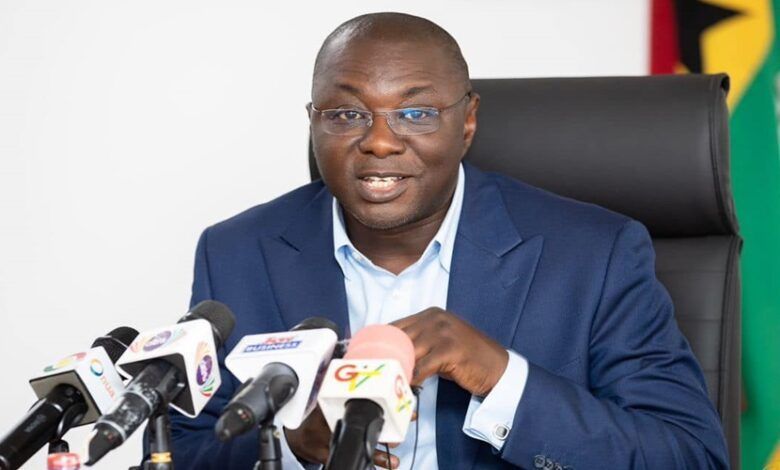
Addressing a press conference in Accra on Tuesday, September 1, Dr Amin Adam said gold prices rose by 62.9 per cent during the year, from an average of US$2,395 per ounce to US$3,441, yet Ghana’s gold purchase programme continued to record substantial losses.
According to him, three major costs contributed to the losses: exchange-rate differences, discounts offered to foreign buyers and handling fees.
Dr Amin Adam explained that the Bank of Ghana advanced cedis for gold purchases at the official interbank exchange rate, while the Ghana Gold Board paid miners using the higher rates available at forex bureaus.
“The Bank advanced cedis at the official interbank rate while GoldBod paid miners at the higher rate available at forex bureaus. The Bank absorbed that gap on every purchase,” he said.
He also questioned the discounts offered to foreign buyers, citing a transaction in October 2025 when Ghana sold gold at US$3,919 per ounce, compared with the world average price of US$4,054 per ounce.
He argued that the difference represented money Ghana failed to earn from its gold.
“A discount to foreign buyers… is money that never reached Ghana,” Dr Amin Adam stated.
The former Finance Minister also challenged GoldBod’s accounting treatment of a GH¢4.54 billion capital injection, arguing that the amount should not have been treated as revenue.
“Standard public sector and international accounting rules treat money put in by an owner as capital, not revenue, and GoldBod’s own statements describe it as revolving trade capital,” he said.
“It cannot be capital when that is convenient and revenue when there is something to celebrate.”
Dr Amin Adam further claimed that out of GH¢909.9 million, about GH¢827 million represented fee income, largely made up of service charges paid by the Bank of Ghana to GoldBod for the same gold purchase operations.
“Almost all of GoldBod’s real income was therefore a commission charged on a programme that lost the country GH¢22 billion,” he said.
He questioned how GoldBod could report a surplus while the Bank of Ghana, which provided funding for the operations, recorded a major loss.
“How does a gold buying operator record a surplus while the institution whose funds it is using records a loss?” he asked.
Dr Amin Adam is therefore calling for GoldBod’s 2025 accounts to be restated to remove the GH¢4.54 billion capital injection from its reported revenue.
According to him, the current treatment of the funds raises serious questions about the credibility of GoldBod’s reported surplus and whether the gold purchase programme has delivered the financial gains expected from Ghana’s rising gold production and record international prices.