

Ghana’s cocoa sector remained on a growth path in the first quarter of 2026, but the pace of expansion slowed sharply, indicating that last year’s strong recovery may be giving way to a more challenging phase.
According to provisional Gross Domestic Product (GDP) estimates released by the Ghana Statistical Service, cocoa output grew by 3.8% year-on-year during the first quarter of 2026. While the sector remained in positive territory, the figure marked a significant drop from the 23.1% growth recorded during the same period in 2025.
The slowdown suggests that the remarkable rebound witnessed in 2025, following a difficult period for the industry, is beginning to lose momentum.
Cocoa also played a smaller role in driving the country’s economic expansion. Its contribution to overall GDP growth declined to 0.9 percentage points, compared with 5.0 percentage points in the first quarter of 2025. Despite this, cocoa’s share of the economy edged up slightly from 1.4% to 1.9%.
The latest figures paint the picture of a sector that is still recovering but no longer delivering the strong growth that helped lift Ghana’s agricultural performance last year.
The moderation comes after one of the toughest periods in recent years for Ghana’s cocoa industry. Throughout 2024, cocoa production contracted for four consecutive quarters, falling by 27.1% in the first quarter, 21.4% in the second, 29.9% in the third and 12.8% in the final quarter.
The sector bounced back strongly in 2025, recording growth rates of 23.1% in the first quarter, 14.2% in the second and 28.1% in the third quarter. However, the recovery began to weaken towards the end of the year, with growth slowing to 3.0% in the fourth quarter before inching up slightly to 3.8% at the start of 2026.
Analysts say the sharp gains recorded in 2025 were partly driven by a low comparison base following the severe decline in production the previous year. With that effect fading, the industry’s underlying challenges are becoming more apparent.
Among the issues weighing on cocoa production are ageing farms, climate change, pests and diseases, illegal mining activities in cocoa-growing communities, smuggling, limited access to farm inputs and concerns over farmer incomes.
Although global cocoa prices have improved considerably in recent months, industry observers note that higher prices alone are unlikely to guarantee stronger production unless farmers receive timely support, improved incentives and sustained investment in farm rehabilitation.
The slowdown in cocoa production also contributed to weaker growth across the broader agriculture sector.
Agriculture expanded by 4.0% in the first quarter of 2026, down from 6.6% during the same period a year earlier. Crop production grew by 4.7%, compared with 6.7% previously, while improvements in forestry helped offset a sharp contraction in the fishing sector.
Even so, agriculture remained a key pillar of Ghana’s economy, accounting for 21.4% of GDP and contributing 13.5% to overall economic growth during the quarter.
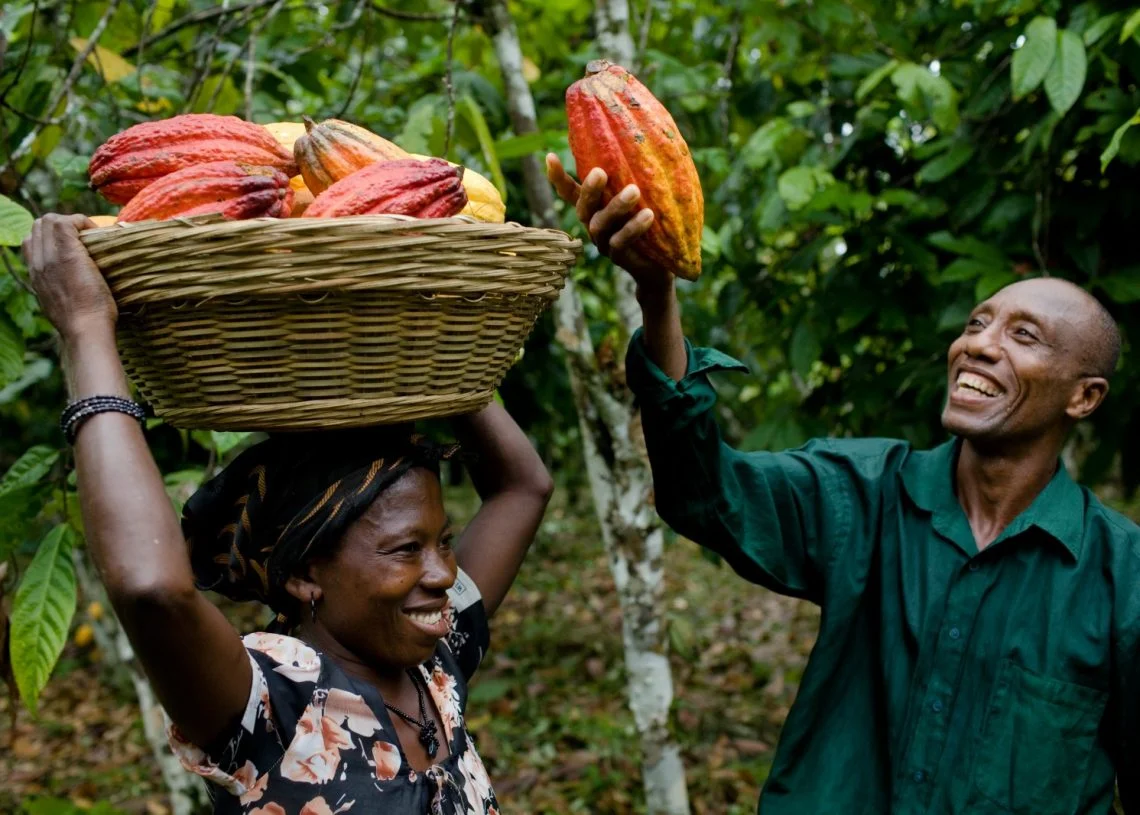
Cocoa continues to play a vital role in Ghana’s economy, supporting millions of rural livelihoods while generating export earnings and public revenue. A prolonged slowdown could therefore have implications for foreign exchange earnings, farmer incomes and the wider cocoa value chain.
The figures also come at a time when international cocoa prices have recovered after earlier declines, providing what many see as an opportunity to strengthen production. However, industry experts argue that Ghana must address long-standing structural problems if it hopes to translate favourable market conditions into sustainable growth.
Attention is also turning to reforms at the Ghana Cocoa Board, which continues to face pressure to strengthen its financing model, reduce dependence on offshore syndicated loans and provide greater support for farmers.
While the latest GDP figures confirm that Ghana’s cocoa sector has moved beyond the severe contraction experienced in 2024, they also show that the recovery remains fragile.
Going forward, sustained investment in farm rehabilitation, improved seedling distribution, climate adaptation, pest and disease control, fair producer pricing, local cocoa processing and stronger action against illegal mining will be critical to restoring long-term growth.
The first-quarter performance offers cautious optimism, but it also serves as a reminder that lasting recovery will depend on addressing the structural challenges that continue to limit Ghana’s cocoa industry.