

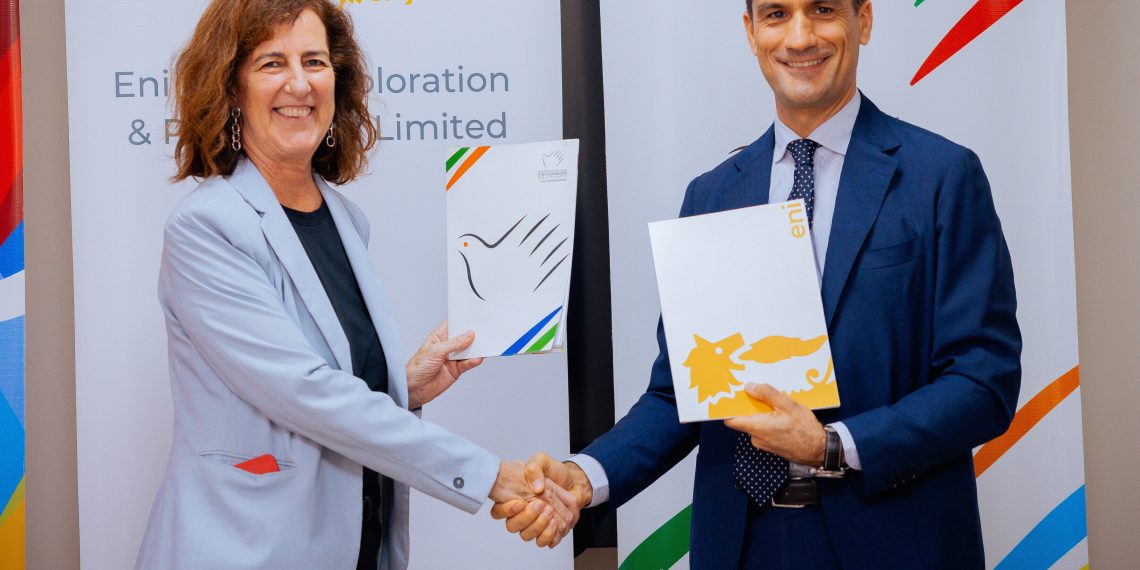
Eni Ghana has taken a significant step towards strengthening community development in Ghana after signing a Letter of Intent with the Italian Agency for Development Cooperation (AICS) to explore strategic partnerships focused on education, health, agriculture, water and sanitation initiatives.
The agreement, signed in Accra on June 15, 2026, establishes a framework for both institutions to work together in mobilising resources, sharing expertise and implementing projects aimed at improving livelihoods and building resilient communities, particularly in areas connected to Eni Ghana’s operations.
The partnership will focus on key sectors including education, technical and vocational education and training (TVET), agriculture and value-chain development, water, sanitation and hygiene (WASH), community health, nutrition, food security and broader economic diversification programmes. Both organisations have indicated that additional areas of cooperation could be introduced as development needs evolve.
Speaking at the signing ceremony, Managing Director of Eni Ghana, Maurizio Pinna, described the agreement as a reflection of the company’s commitment to creating lasting value in the communities where it operates.
He noted that collaborating with AICS would help align Eni Ghana’s development efforts with the United Nations 2030 Sustainable Development Agenda while expanding opportunities in areas such as vocational training, clean water access and community empowerment.
The collaboration is expected to combine Eni Ghana’s experience in community development with AICS’s development cooperation expertise, creating a more coordinated approach to social investment and sustainable development.
For Eni Ghana, the agreement builds on a growing portfolio of community initiatives that already support skills training, economic diversification, water and sanitation projects and improved access to energy. For AICS, the partnership strengthens Italy’s development cooperation efforts in Ghana, which has become increasingly important under Italy’s broader Africa-focused development strategy.
Eni has operated in Ghana since 2009 through offshore oil and gas exploration and production activities. The company currently produces about 40,000 barrels of oil equivalent per day and operates the Offshore Cape Three Points (OCTP) project with a 44.4 percent stake. Its partners in the project are Vitol, which holds 35.6 percent, and the Ghana National Petroleum Corporation (GNPC), which owns 20 percent.
The OCTP project remains one of Ghana’s most important energy assets, supplying a substantial share of the natural gas used for electricity generation. According to Eni Ghana, the project contributes roughly 70 percent of the country’s gas demand for power production, making it a key pillar of Ghana’s energy security.
Beyond its energy operations, the OCTP joint venture has invested in several community-focused programmes designed to improve livelihoods and support local economic growth. The new partnership with AICS is expected to deepen those efforts by introducing a more structured and long-term development approach.
AICS has steadily expanded its presence in Ghana in recent years. Its Ouagadougou office assumed technical responsibility for Ghana in 2021, followed by the establishment of an office in Accra later that year. Since 2024, Ghana has been recognised as a priority country for Italian Development Cooperation.
Italy’s cooperation strategy in Ghana focuses on three major areas: education and vocational training, health, and agri-food systems. These priorities closely align with the sectors outlined in the new agreement with Eni Ghana.
The emphasis on technical and vocational education is particularly relevant as Ghana seeks to equip more young people with industry-relevant skills and improve employment opportunities. Strengthening TVET programmes is increasingly viewed as a crucial pathway to addressing youth unemployment and supporting participation in sectors such as energy, agriculture, construction and manufacturing.
Agriculture and value-chain development are also expected to play an important role under the partnership. By supporting farmers, agribusinesses and local enterprises, the initiative could help improve food security, create jobs and reduce economic dependence on extractive industries in host communities.
Similarly, investments in water, sanitation and hygiene are expected to improve living conditions and public health outcomes. Access to clean water and proper sanitation remains a pressing challenge in many communities and has a direct impact on education, productivity and overall quality of life.
Development experts note that partnerships between private companies and development agencies are becoming increasingly important as corporate social responsibility evolves beyond one-off donations towards more strategic, measurable and sustainable interventions.
The collaboration between Eni Ghana and AICS reflects this growing trend, bringing together private-sector resources and international development expertise to deliver projects with long-term impact.
While the Letter of Intent marks the beginning of the partnership, its success will ultimately depend on effective implementation, strong community engagement, transparent monitoring and the sustainability of the projects undertaken.
If successfully executed, the collaboration could strengthen livelihoods, expand access to essential services and create new opportunities for skills development in communities connected to Eni Ghana’s operations.
For Ghana, the agreement highlights the growing importance of partnerships that combine economic investment with social development objectives. It also reinforces cooperation between Ghana and Italy in sectors that directly affect communities, young people, workers and local businesses.
As both organisations move from planning to action, stakeholders will be watching closely to see how the partnership translates into tangible improvements on the ground. For now, the agreement represents a promising step towards inclusive growth and sustainable development in Ghana.