

Criticism surrounding the Damang mine transition has intensified in recent weeks, particularly after IMANI Africa Vice-President Bright Simons argued that Engineers & Planners (E&P) and Damang Gold Mine Ltd had no legal authority to sell gold from the concession because the mining lease is yet to receive parliamentary ratification.
However, a review of parliamentary records, court documents and Ghana’s mining laws suggests the issue is far more complex than it has been presented in public debate.
At the centre of the controversy is Article 268 of the 1992 Constitution, which requires parliamentary ratification for agreements involving the exploitation of Ghana’s natural resources. While there is little dispute that ratification is mandatory, the more important legal question is whether the absence of immediate ratification automatically makes ongoing mining operations unlawful during a transition period.
Historical records suggest that has not been the practical reality in Ghana’s mining sector.
A 2018 writ filed at the Supreme Court challenged the legality of mining operations carried out without parliamentary ratification. The suit named the Attorney-General, the Minerals Commission and 37 mining-related companies, including major operators such as AngloGold Ashanti, Newmont, Golden Star Resources, Asanko Gold and others.
The plaintiffs sought declarations that mining companies operating without ratified leases had no lawful authority to exploit minerals and that revenues generated under such arrangements were unconstitutional.
The significance of that case lies in what it revealed: delayed ratification was not unique to Damang. It was a broader structural problem within Ghana’s mining governance framework that affected some of the country’s biggest and longest-running mining operations.
Parliamentary records reviewed from July 2020 further reinforce that point.
A report by Parliament’s Select Committee on Mines and Energy on the ratification of the “Asaase” mining leases disclosed that 14 mining leases had been laid before Parliament, with 11 of the companies already operating before ratification was completed.
The committee acknowledged that the situation was inconsistent with Article 268 of the Constitution and Section 5(4) of the Minerals and Mining Act, 2006 (Act 703). It subsequently urged the Ministry of Lands and Natural Resources and the Minerals Commission to ensure mining leases are ratified before operations begin.
The report effectively confirmed that delayed ratification had become an entrenched industry challenge rather than an isolated breach involving a single operator.
That context is important because it weakens claims that E&P and Damang Gold Mine Ltd are engaged in an unprecedented violation of Ghana’s mining laws.
For years, foreign-controlled mining firms extracted and exported gold while operating under leases that were either awaiting ratification or caught in delayed parliamentary processes. Yet those situations rarely generated the level of public outrage now directed at a Ghanaian-led operator managing the Damang transition.
At Damang itself, the situation became urgent after the extended lease of Abosso Goldfields Ltd expired on April 18, 2026.
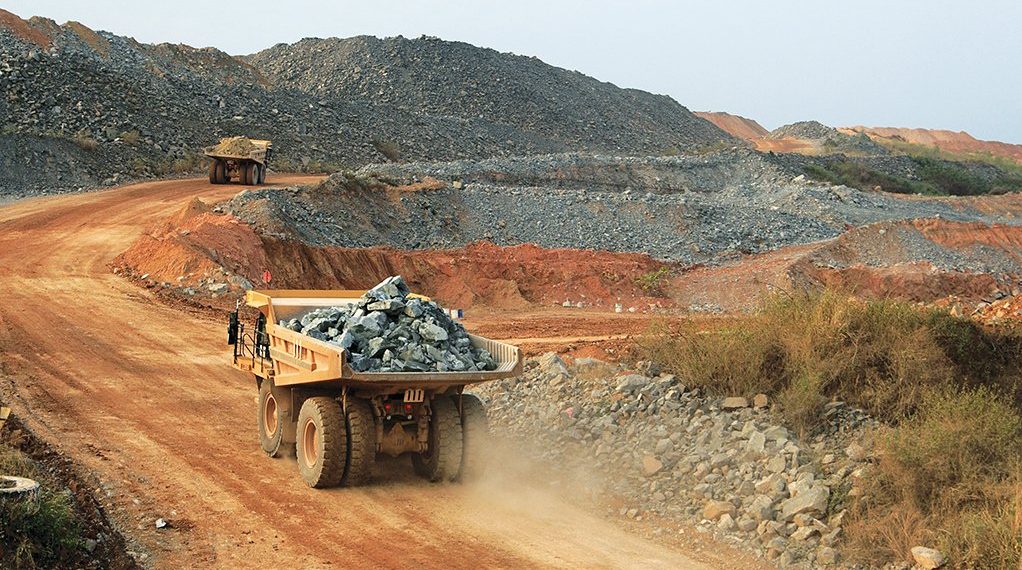
Once the lease expired, government faced a difficult choice. Allowing operations to halt entirely would have exposed the mine to serious safety, environmental and financial risks, while threatening the livelihoods of more than 1,000 workers and disrupting over 20 contractor businesses linked to the mine.
A producing mine cannot simply be abandoned without consequences.
Government therefore initiated a transition process aimed at maintaining operations, preserving jobs and protecting state revenues. Following a tender process, Damang Gold Mine Ltd was selected as lessee, with Engineers & Planners appointed as operator.
The transition was therefore not a random occupation of the concession but part of an effort to ensure operational continuity after the expiry of Abosso Goldfields’ rights.
The legal sequence is also central to the debate.
Under Section 40 of Act 703, a new mining lease cannot be granted over land already covered by an existing mineral right for the same resource. This meant government could only move forward with a new lease arrangement after the previous lease had expired.
Documents reviewed indicate that the required processes under Section 13 of the Minerals and Mining Act were followed, including recommendations by the Minerals Commission, ministerial approval and acceptance by the applicant before the mineral right was granted.
The operators also maintain that revenues generated from gold sales are being retained in Ghana pending parliamentary ratification and reconciliation processes, including the determination of the state’s share.
That detail is significant because the public debate has often been framed as though Ghana’s mineral wealth is being siphoned away unlawfully. Yet the information available suggests production has continued, workers have remained employed, contractors have stayed active and revenues are being kept locally while the ratification process is completed.
The Damang transition has therefore become more than a legal debate. It is increasingly being viewed as a test of whether Ghanaian mining firms will be treated with the same procedural flexibility and policy tolerance historically extended to foreign operators.
There is little doubt that parliamentary ratification must be completed as quickly as possible. Transparency and constitutional compliance remain essential.
But the broader issue is whether Ghana should abruptly shut down a strategic producing mine during a transition period, despite the economic, labour and operational consequences.
On the evidence available, Damang Gold Mine Ltd and Engineers & Planners stepped into a difficult situation at a critical time. Their intervention has kept operations running, protected jobs and sustained production while government works to regularise the lease process.