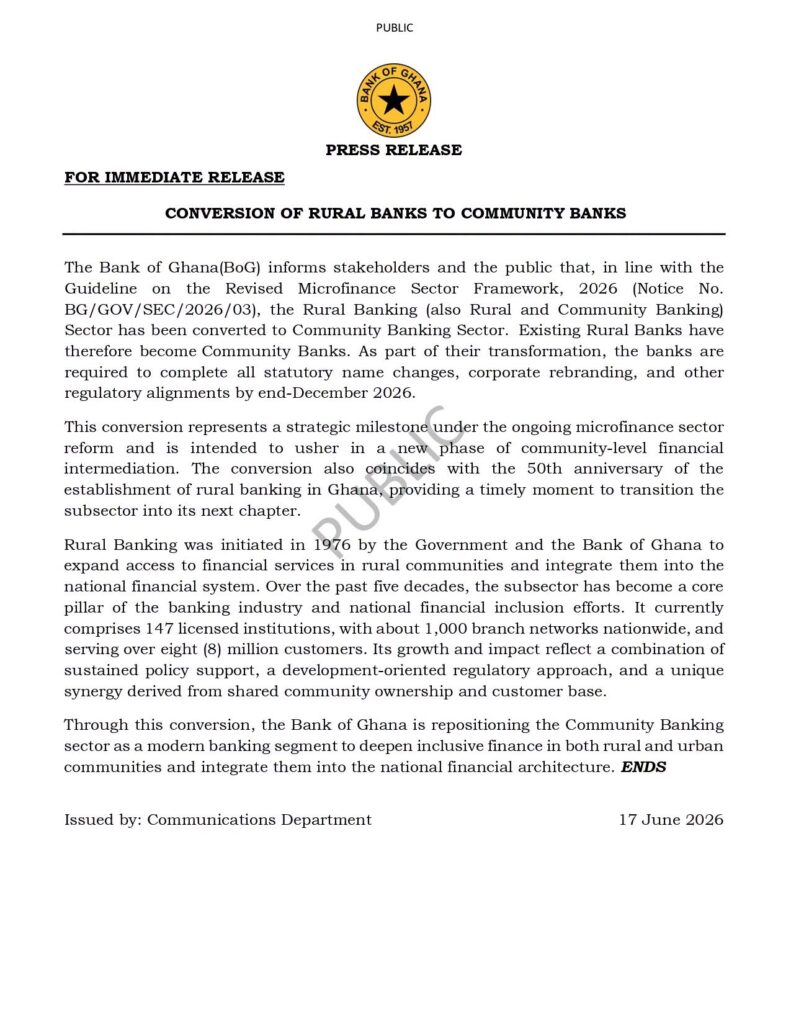


The Bank of Ghana (BoG) has officially transformed all Rural and Community Banks into Community Banks as part of a major reform aimed at modernising the country’s financial sector and expanding financial inclusion.
The change, announced under the Revised Microfinance Sector Framework 2026, affects all existing rural banks across the country and marks a significant milestone in Ghana’s banking landscape.
In a statement, the central bank directed all affected institutions to complete their statutory name changes, corporate rebranding, and other regulatory requirements by December 31, 2026.
According to the Bank of Ghana, the conversion is intended to reposition the sector to better meet the changing financial needs of communities across the country.
“The new Community Banking framework is designed to create a more modern and inclusive banking segment capable of meeting the evolving financial needs of communities while supporting broader economic development,” the BoG stated.
The reform comes at a symbolic moment as Ghana celebrates 50 years of rural banking. The rural banking model was introduced in 1976 by the Government of Ghana and the Bank of Ghana to extend financial services to underserved communities and integrate them into the formal financial system.
Over the past five decades, the sector has grown into a vital component of Ghana’s banking industry and financial inclusion agenda. Currently, the subsector consists of 147 licensed institutions operating nearly 1,000 branches nationwide and serving more than eight million customers.
The central bank described the conversion as a strategic step toward preparing the sector for future growth and ensuring that community-based financial institutions remain relevant in an evolving economic environment.
“The transition will deepen access to financial services, strengthen community-based banking, and enhance the integration of local economies into Ghana’s wider financial architecture,” the statement added.
The Bank of Ghana believes the new framework will help build a stronger, more inclusive banking system capable of supporting economic development in both rural and urban communities.