

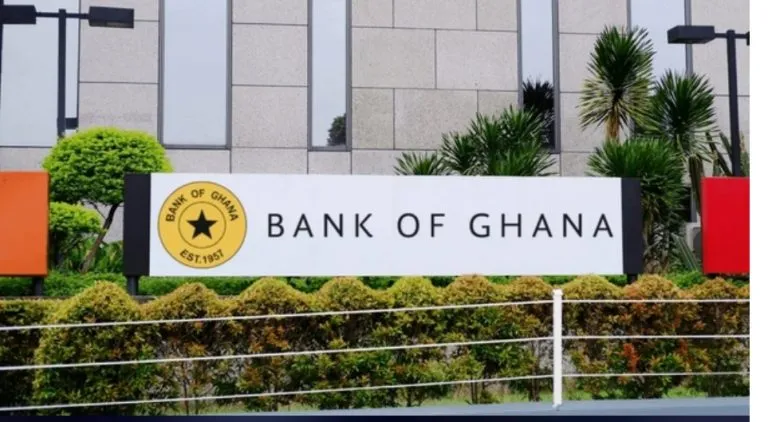
The Bank of Ghana has absorbed GH¢12.90 billion from the financial system through its latest 14-day central-bank bills auction, as it continues to manage short-term liquidity.
Results of Tender 877, conducted on August 31, showed that the central bank sold GH¢12.904 billion worth of the two-week securities at a weighted average annualised interest rate of 10.50%.
The auction recorded remarkably tight pricing, with successful bids clustered within a narrow range. Discount rates submitted ranged between 10.4577% and 10.4578%, while interest rates were concentrated around 10.50%.
The narrow range suggests that participating financial institutions had broadly similar expectations about the return required for investing their funds in the short-term Bank of Ghana instrument.
Unlike Treasury bills, which are issued by the government to finance its fiscal needs, Bank of Ghana bills are used by the central bank as part of its monetary policy and liquidity management operations.
The latest GH¢12.90 billion auction therefore represents a significant volume of money temporarily taken out of circulation for 14 days.
For banks and other financial institutions, the bills provide a short-term and relatively secure investment option for excess liquidity. For the Bank of Ghana, they offer a way to influence the amount of money circulating within the financial system.
The 10.50% interest rate is annualised, meaning investors will not earn 10.50% within the two-week period. Their actual return will reflect only the 14-day holding period.
The short maturity also means the liquidity effect is temporary. The funds will return to investors after two weeks unless the Bank of Ghana conducts further operations or investors choose to reinvest in subsequent instruments.
At almost GH¢13 billion, the scale of the latest operation highlights the importance of central-bank bills in Ghana’s wider money market and the Bank of Ghana’s ongoing efforts to manage liquidity conditions.
However, the tender results did not disclose the total value of bids submitted or the number of institutions that participated, making it difficult to determine whether the auction was oversubscribed.
The next Bank of Ghana bill auctions will therefore be closely watched to see whether similarly large amounts continue to be absorbed from the financial system.
That could provide a clearer indication of whether the August 31 operation was a one-off short-term adjustment or part of a sustained effort to manage excess liquidity within the banking sector