
The Government of Ghana and Organised Labour have agreed on a two-year public sector pay arrangement that will increase workers’ base salaries by 8% in 2027 and a further 10% in 2028.
The agreement, signed on Wednesday, October 28, 2026, covers the period from January 1, 2027, to December 31, 2028, and is expected to provide greater certainty for workers and government institutions in planning compensation over the next two years.
Under the agreement, public sector workers will receive a total remuneration adjustment of 9% in 2027. This comprises an 8% increase in base pay and a separate 1% allocation to Conditions of Service.
For 2028, workers will receive a 10% increase in base pay, calculated using their salary levels as of December 31, 2027.
The distinction means the full 9% adjustment for 2027 will not be added directly to workers’ basic salaries, as the remaining 1% will be applied through agreed Conditions of Service.
The two base-pay increases will result in a cumulative rise of 18.8% over the two years, excluding the separate Conditions of Service component.
For instance, a worker earning a base salary of GH¢1,000 at the end of 2026 would see the amount increase to GH¢1,080 in 2027 and GH¢1,188 in 2028.
The actual financial benefit will vary depending on employees’ salary grades, allowances and applicable Conditions of Service.
The agreement comes as government seeks to improve workers’ welfare while maintaining fiscal discipline and protecting the gains made in stabilising the economy.
For public sector employees, the increases are expected to help address the pressure of rising living costs and protect their purchasing power. For government, the challenge will be to finance the adjustments without putting excessive pressure on public spending or undermining fiscal consolidation.
Inflation will be a major factor in determining whether workers experience a meaningful improvement in their living standards.
The agreement takes into account the prevailing inflation rate of 5.2% and the government’s medium-term inflation projection of 8%, with a margin of two percentage points, for both 2027 and 2028.
If inflation averages 8% in 2027, the 8% base-pay increase would broadly preserve the purchasing power of workers’ salaries. However, if inflation rises to 10%, the increase would fall short of the rise in consumer prices, resulting in a decline in real base income.
The 10% increase scheduled for 2028 could provide a modest improvement in purchasing power if inflation remains around 8%. If inflation reaches 10%, the adjustment would broadly maintain workers’ purchasing power rather than improve it.
To address the possibility of a sharp increase in prices, the agreement includes a provision requiring the Public Services Joint Standing Negotiating Committee to reconvene if year-on-year inflation in December 2027 exceeds the government’s 8% midpoint projection by a factor of two.
On a literal interpretation, this would mean a review of the 2028 base-pay adjustment if inflation exceeds 16%.
However, the clause does not guarantee an additional salary increase. It requires the parties to return to the negotiating table to review the adjustment, leaving any final decision dependent on further discussions and the prevailing economic and fiscal conditions.
The provision may offer limited protection if inflation rises moderately above the projection, as increases to 11%, 13% or 15% could significantly erode workers’ purchasing power without reaching the specified threshold.
The agreement’s sustainability will therefore depend heavily on the government’s ability to maintain price stability while meeting its public sector wage commitments.
Beyond the direct salary increases, the settlement could also affect allowances, pensions and other benefits linked to base pay, potentially increasing the overall cost to the state.
Government will need to ensure that revenue mobilisation, payroll management and expenditure controls are strong enough to accommodate the additional costs without excessive borrowing or cuts to essential public services and infrastructure.
The number of public sector employees and the effectiveness of recruitment controls will also influence the final wage bill. Payroll audits, improved human resource systems and measures to eliminate irregular payments will remain important in managing expenditure.
The agreement also outlines plans to transition from the Fair Wages and Salaries Commission to an Independent Public Emoluments Commission as part of broader reforms to the public sector compensation system.
The proposed transition is expected to involve the development of a legislative framework, institutional arrangements, a National Emoluments Policy, a National Negotiations Policy and a performance- and productivity-linked pay framework.
Organised Labour is to be consulted quarterly on reforms affecting workers, while existing institutions, including the Fair Wages and Salaries Commission, will continue to perform their lawful duties until the necessary legislation transfers their responsibilities.
The planned reforms are intended to address longstanding concerns about salary disparities, inconsistent allowances, job classification and differences in remuneration among public sector employees performing comparable roles.
An independent commission could improve consistency and transparency in determining public sector pay, although its effectiveness will depend on the independence of its appointments, funding and decision-making processes.
The proposed productivity-linked pay framework will also require careful implementation, particularly in sectors such as education, healthcare, security and regulatory services, where performance can be difficult to measure using simple numerical targets.
The government and labour unions will need to establish fair and transparent performance measures that reflect the responsibilities and public value of different categories of work.
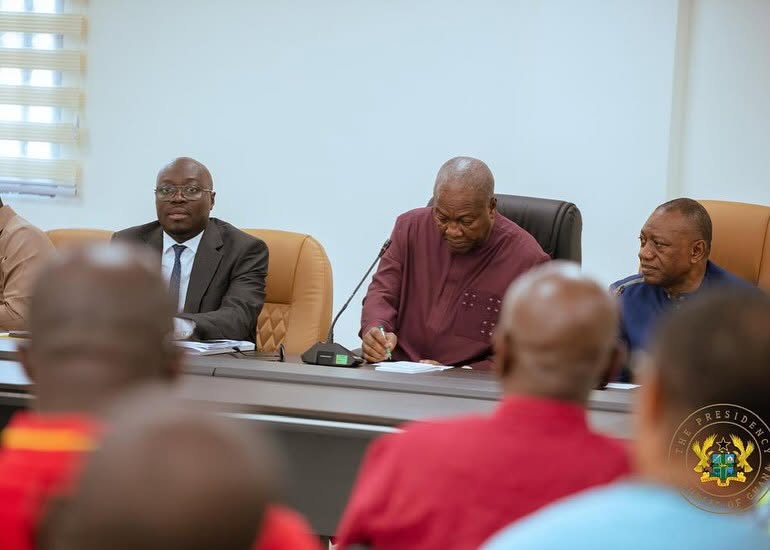
The agreement was signed by Fair Wages and Salaries Commission Chief Executive Dr George Smith-Graham and Trades Union Congress Secretary-General Joshua Ansah.
Finance Minister Dr Cassiel Ato Forson and Ghana National Association of Teachers General Secretary Thomas T. Musah witnessed the signing.
Both parties also committed to resolving disagreements over implementation through dialogue, established negotiation processes and lawful dispute-resolution mechanisms.
Attention will now turn to the timely implementation of the agreement, including payroll adjustments, the allocation for Conditions of Service and the provision of sufficient funds to meet the new salary arrangements from January 2027.
For workers, the key expectation will be that the agreed increases are reflected in their salaries without unnecessary administrative delays. For government, the priority will be to honour the settlement while maintaining control over public expenditure.
The two-year agreement provides an opportunity to make public sector pay negotiations more predictable. Its long-term success, however, will depend on whether the increases protect workers’ purchasing power, remain affordable for the state and contribute to a more effective public service.