

Foreign Direct Investment (FDI) inflows into Ghana rose sharply to US$2.62 billion in 2025, up from US$624 million in 2024, President John Dramani Mahama has announced.
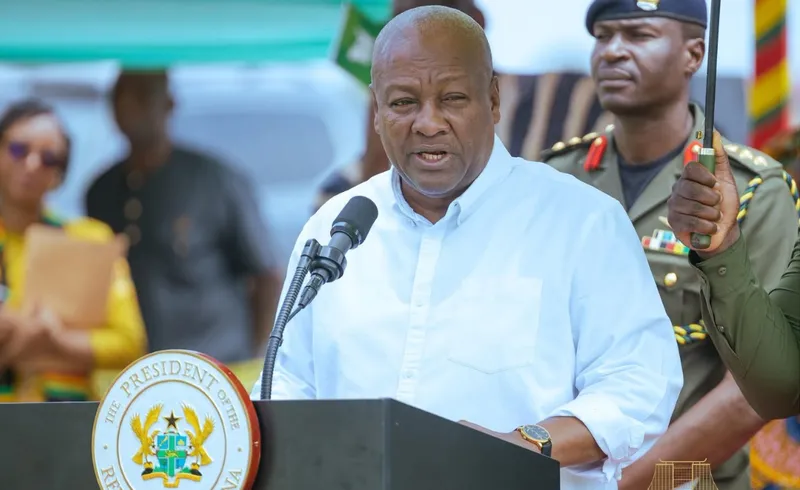
Speaking at the sod-cutting ceremony for the 1,238-acre Afienya Industrial Park, President Mahama attributed the increase to improving economic conditions and renewed investor confidence in the country.
He cited falling inflation, declining interest rates and a more stable cedi as key factors making Ghana an attractive destination for long-term investments.
“The stability of the Ghanaian economy is attracting strong interest from global investors,” he said, adding that the figures reflected growing confidence in the government’s leadership and its efforts to direct investment into viable sectors.
President Mahama also pointed to the Tema Export Processing Zone as an example of how industrial development can contribute to economic growth, exports and job creation.
According to figures from the Ghana Free Zones Authority (GFZA), the Tema zone has supported more than 80 industrial enterprises and generated over US$24 billion in cumulative export revenue over the past 30 years. It exported goods worth US$3.1 billion in 2025, while exports reached US$1.4 billion in the first half of 2026.
The zone has also sustained more than 78,000 direct jobs, with Ghanaians accounting for 98 per cent of the workforce.
Mr Mahama said the benefits of industrial development extended beyond export earnings, providing livelihoods for families in Tema, Ashaiman, Shai Hills and neighbouring communities.
He stressed the need to build on the Tema zone’s experience by ensuring that new industrial parks have reliable infrastructure, stronger links with local businesses and deliver lasting benefits to their host communities.
The President assured investors that the Afienya Industrial Park had been planned to address some of the challenges businesses face when setting up operations. He said the 1,238-acre site was free from land litigation and would be equipped with electricity, water, road access and digital infrastructure to enable businesses to establish factories more quickly.
“At Afienya, our goal is to translate industrial policy into tangible, practical opportunities for businesses and job seekers alike,” he said.
President Mahama added that the expansion of industrial infrastructure formed part of the government’s flagship New Economy Policy, scheduled for implementation in 2027.
The policy is expected to drive structural transformation, increase domestic value addition and strengthen Ghana’s position as an export hub under the African Continental Free Trade Area (AfCFTA).