

Ghana’s crude oil production has rebounded by about 30 per cent in 2026, offering renewed hope for an industry that has experienced years of declining output. The recovery follows fresh investment and the drilling of additional wells in the Jubilee and Tweneboa-Enyenra-Ntomme (TEN) fields.
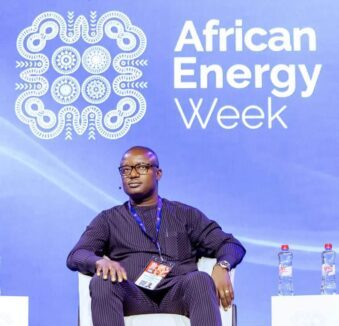
Minister for Energy and Green Transition, John Abdulai Jinapor, announced the increase at African Energy Week in Cape Town, attributing the improvement to renewed development activities supported by a US$2 billion agreement with Kosmos Energy and its partners.
“We have seen a continued systematic decline in oil output over the past five years. But this year, I am happy to announce that oil production has increased by about 30 percent,” he said.
The increase marks a significant shift for Ghana’s petroleum industry, which has struggled with ageing wells, maintenance interruptions and declining output from mature offshore fields.
Data from the Public Interest and Accountability Committee (PIAC) show that crude oil production fell from 71.44 million barrels in 2019 to 37.3 million barrels in 2025, extending a six-year downward trend.
Jubilee, Ghana’s largest producing oil field, recorded 22.21 million barrels in 2025, representing a 30.3 per cent decline, with average production of 63,280 barrels per day. The TEN field produced 5.83 million barrels, while Sankofa-Gye Nyame contributed 9.26 million barrels.
The latest recovery suggests that additional drilling and improved management can help restore output from existing fields, although sustaining the gains will depend on continued investment and effective reservoir management.
Under the agreement with Kosmos Energy and its partners, the licences for the Jubilee and TEN fields have been extended to 2040. The arrangement is expected to attract up to US$2 billion in additional investment, increase oil production and expand the supply of natural gas for electricity generation.
Ghana’s revised Jubilee development plan provides for up to 20 additional wells, while the partnership is considering another drilling campaign involving as many as 10 wells in 2027 and 2028.
Recent production figures offer some evidence of the improvement. Jubilee produced approximately 72,000 barrels per day in the second quarter of 2026, while two new wells, J76 and J77, began production in June and July. The J74 well had earlier recorded output of about 13,000 barrels per day.
Higher production could strengthen Ghana’s export earnings, increase foreign-exchange inflows and boost government receipts from royalties, taxes and its interests in the fields. Increased natural gas production could also support electricity generation and reduce reliance on more expensive imported fuels.
However, rising output does not automatically translate into higher government revenue. Earnings will depend on international crude oil prices, production costs, tax arrangements and the distribution of proceeds among the state and private partners.
The extension of the licences is expected to give investors the confidence to commit capital to projects that require substantial upfront spending and several years to deliver returns. Kosmos Energy Chief Executive Andy Inglis has said the extensions provide the long-term certainty needed for further investment in technology and gas development.
For Ghana, the challenge will be ensuring that the investment delivers measurable benefits to the economy and citizens. The agreement must be assessed against sustained production, government revenue, local participation, environmental protection and the availability of affordable gas.
Natural gas is particularly important because Ghana relies heavily on thermal power generation. Increased domestic gas supply could reduce exposure to imported liquid fuels, support electricity reliability and ease some of the financial pressures associated with power generation.
Nevertheless, additional gas will not necessarily result in cheaper electricity. Transportation limitations, payment arrears, inefficiencies within the power sector and costly supply agreements could prevent consumers and businesses from benefiting fully.
The government is also pursuing reforms to Ghana’s petroleum fiscal regime, with the Energy and Finance ministries backing proposals intended to make the industry more competitive. The reforms will need to strike a balance between attracting investment and protecting the country’s long-term share of its natural resources.
At the same time, Ghana is engaging major international energy companies, including Chevron, Shell, CNOOC and Petrobras, to attract investment beyond its existing producing fields.
These efforts are important because increased drilling at Jubilee and TEN cannot indefinitely compensate for the absence of major new developments. As the fields mature, Ghana will need to accelerate exploration, appraisal and the development of commercially viable discoveries to sustain production over the long term.
The 30 per cent rebound is therefore an encouraging development, but it does not mean the country’s petroleum challenges have been resolved. New wells can initially deliver strong production before output begins to decline, making continued investment and careful management essential.
Ghana’s immediate task is to sustain the gains, ensure that the country receives fair value from its petroleum resources and expand exploration to replace reserves being depleted.
The recovery demonstrates that renewed investment and greater certainty can improve performance in mature oil fields. Whether it marks the beginning of a lasting turnaround will depend on how effectively the government and industry partners maintain production, develop gas resources and secure new sources of oil.