

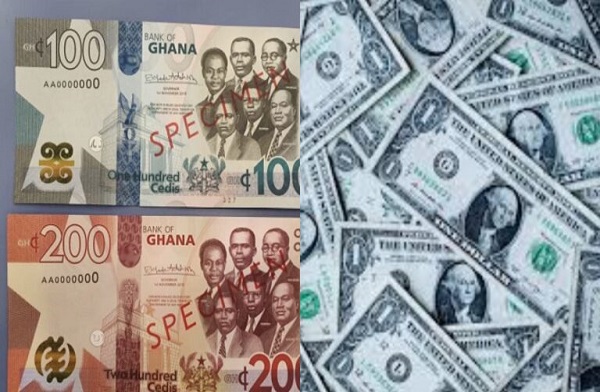
The Ghana cedi is entering the new trading week under renewed pressure as a sharp rise in global oil prices threatens to increase demand for US dollars to finance petroleum imports.
The cedi closed last week at GH¢11.4493 to the dollar on the buying side and GH¢11.4607 on the selling side, according to the Bank of Ghana’s interbank reference rate for September 11. This represented a weekly depreciation of about 1.23% against the US dollar.
The currency also weakened slightly in the final trading session of the week, with the Bank of Ghana’s dollar selling rate rising from GH¢11.4457 on September 10 to GH¢11.4607 on September 11.
Outside the interbank market, the pressure appears more pronounced. Licensed forex bureaux were quoting the dollar at about GH¢11.75 for buying and GH¢12.15 for selling on September 11. The retail selling rate was therefore about 6% higher than the Bank of Ghana’s interbank selling rate.
While the gap does not necessarily confirm a shortage of dollars, a sustained difference between official and retail rates can point to tighter foreign-exchange liquidity and stronger demand for readily available dollars.
The situation is becoming more significant as global oil prices climb sharply. Brent crude rose by more than 6% on September 10 to close at US$107.63 per barrel, while US West Texas Intermediate reached US$102.48 amid growing concerns over global supply disruptions linked to the Iran conflict.
For Ghana, higher crude and refined petroleum prices could translate into increased demand for foreign exchange because the country imports significant volumes of refined petroleum products.
If importers have to pay substantially more for the same volume of fuel, they will need more dollars to settle their international obligations. This could add pressure to the foreign-exchange market, particularly if dollar supply does not increase at the same pace.
The impact could also be felt at the pumps. The Chamber of Petroleum Consumers (COPEC) is projecting diesel prices to rise by 10.23% to GH¢19.07 per litre from Wednesday, while petrol is expected to reach GH¢16.26 per litre.
For the cedi, the key question this week will be whether increased demand from petroleum importers can be matched by dollar inflows from exporters, banks and the Bank of Ghana.
The oil shock is also affecting other emerging-market currencies. India’s rupee recorded its sharpest weekly decline in four months, falling by about 1.10%, while South Africa’s rand also weakened as higher oil prices and a stronger US dollar increased pressure on emerging markets.
For Ghana, a prolonged rise in oil prices could create a difficult combination of pressures. Higher petroleum import costs would increase demand for dollars, while any further depreciation of the cedi would make those imports even more expensive in local currency.
Higher fuel prices could then feed into transport, logistics, agriculture, construction and other sectors, increasing the risk of renewed inflationary pressures.
The cedi’s 1.23% weekly decline, on its own, does not suggest a disorderly currency adjustment. The Bank of Ghana also retains tools to manage liquidity and intervene in the foreign-exchange market when necessary.
However, the combination of a weaker cedi, a sizeable gap between interbank and retail dollar rates, and Brent crude trading above US$107 per barrel presents a risk that will be closely watched as the new trading week begins.
The immediate test will be whether oil prices remain around the US$105–US$110 range and whether petroleum importers step up dollar purchases. If both persist, pressure on the cedi could intensify.