


Ghana’s ambition to raise renewable energy’s share of its national electricity mix to 7 percent by 2027 is coming into sharper focus, as a growing pipeline of solar projects moves from planning stages toward execution. However, the pace of delivery remains a key concern.
At present, the country has about 280 megawatts of installed renewable energy capacity, contributing roughly 5 percent to total electricity generation. While this reflects steady progress in the energy transition, it also highlights the gap Ghana must close within a short timeframe to meet its target.
A major driver of current optimism is the 200-megawatt Dawa Industrial Enclave Solar Park, which is expected to play a central role in reshaping the country’s renewable energy landscape. The project forms part of a broader national plan to add about 1,400 megawatts of renewable energy capacity under the National Energy Transition Framework.
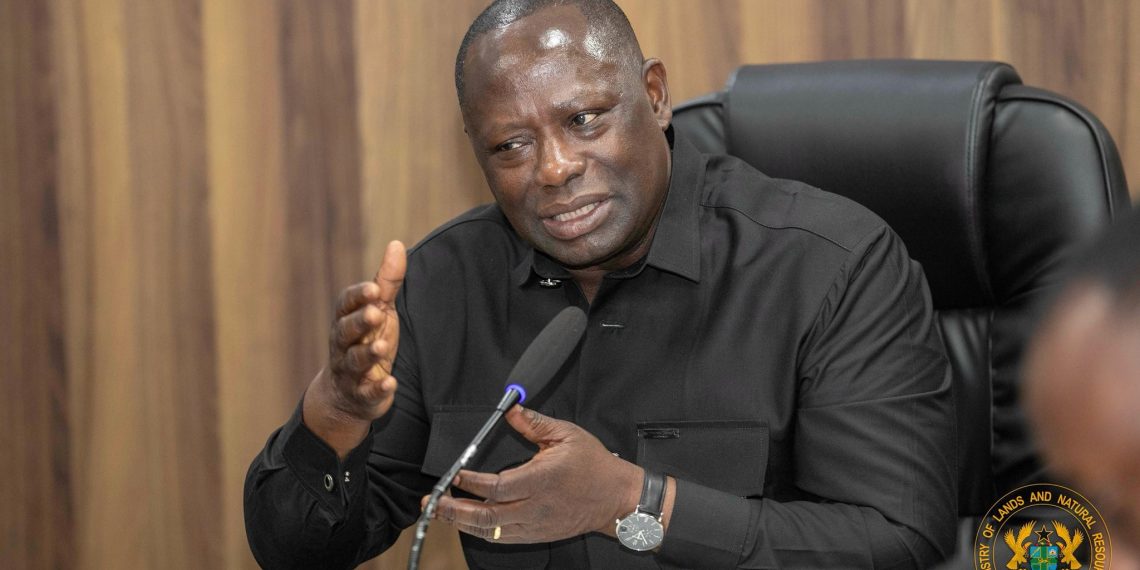
Energy and Green Transition Minister John Abdulai Jinapor recently broke ground for the initial phase of the project in November. The facility is designed to supply power directly to industries within the enclave, improving reliability while reducing dependence on conventional generation sources.
Government plans also point to a long-term expansion of the Dawa project to as much as 1,000 megawatts, positioning it among the largest renewable energy developments in the country if fully realised.
Beyond its energy contribution, the project is expected to support industrial growth by providing more stable and potentially cleaner electricity to manufacturing and processing companies. This is seen as critical for attracting investment into industrial zones and strengthening Ghana’s industrial base.
The broader energy transition strategy reflects a balancing act. Rather than abandoning conventional power sources, Ghana is working to diversify its energy mix in a way that improves security of supply while supporting affordability and industrial growth.
Speaking at the Africa Energy Forum in Cape Town, Mr Jinapor stressed that Africa’s energy transition must reflect the continent’s development priorities, including expanding access, supporting industry, and promoting cleaner cooking solutions. He also noted that climate action should align with job creation and poverty reduction.
Alongside Dawa, several other projects are contributing to gradual progress. The Bui Power Authority’s floating solar installation on the Black Volta currently generates about five megawatts and is expected to expand to 65 megawatts. In northern Ghana, a 50-megawatt solar plant in Yendi is already feeding power into the national grid, helping diversify generation sources.
Private sector participation is also growing. LMI Holdings is advancing plans to develop up to 1,000 megawatts of renewable energy capacity within the Dawa Industrial Enclave by 2030, signalling increasing investor confidence in the sector.
Taken together, these developments indicate that Ghana’s renewable energy transition is moving beyond policy statements into real infrastructure deployment. However, experts caution that meeting the 7 percent target by 2027 will depend heavily on execution speed.
Key challenges remain, including financing constraints, transmission capacity limitations, grid integration issues, land acquisition delays, and regulatory bottlenecks. These factors could slow the conversion of announced projects into operational capacity.
The Ministry of Energy and Green Transition is currently finalising an updated Renewable Energy Master Plan covering 2026 to 2030, with an estimated cost of about 3.4 billion US dollars. The plan is expected to strengthen coordination and provide a clearer roadmap for scaling renewable energy.
However, analysts argue that planning alone will not be enough. Ghana’s past experience with energy targets shows that implementation and institutional coordination are often the real determining factors.
Energy policy experts also stress the need to look beyond installed capacity figures. According to Benjamin Boakye of the Africa Centre for Energy Policy, renewable energy expansion should be linked to local manufacturing, skills development, and technology transfer to maximise economic benefits.
This perspective highlights a broader opportunity. Beyond increasing electricity generation, Ghana could use renewable energy expansion to develop domestic capacity in solar assembly, battery storage, engineering services, and technical training.
There is also potential to integrate solar power into industrial parks, agro-processing zones, mining operations, and emerging electric mobility systems. However, this will require careful planning around storage and grid stability, given the intermittent nature of solar energy.
Financing remains another critical issue. Renewable energy projects depend on long-term investment, stable tariffs, and reliable off-taker arrangements. Without improvements in the financial health of the power sector, private investment could slow.
Ultimately, Ghana’s path to achieving its 2027 renewable energy target will depend less on announcements and more on how quickly projects are completed and connected to the grid.
At 5 percent renewable energy contribution, the country is clearly moving forward. But bridging the remaining gap to 7 percent will require stronger coordination, faster execution, and sustained commitment from both the public and private sectors.