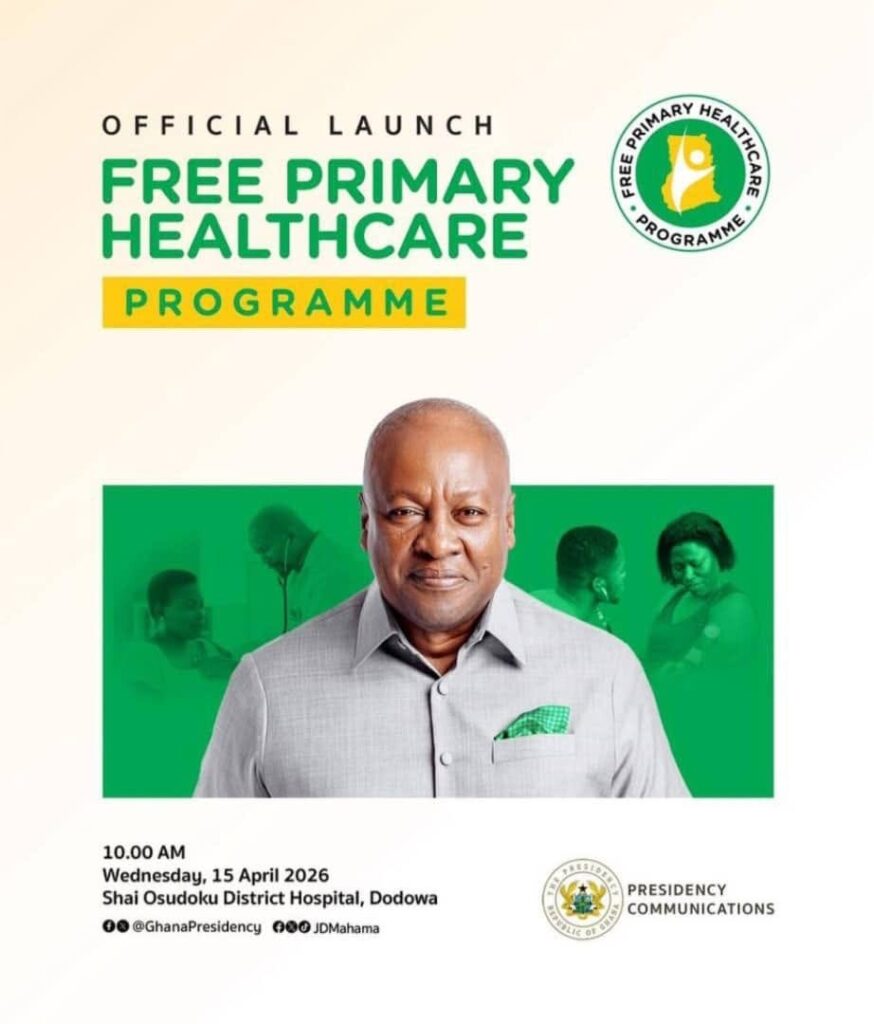


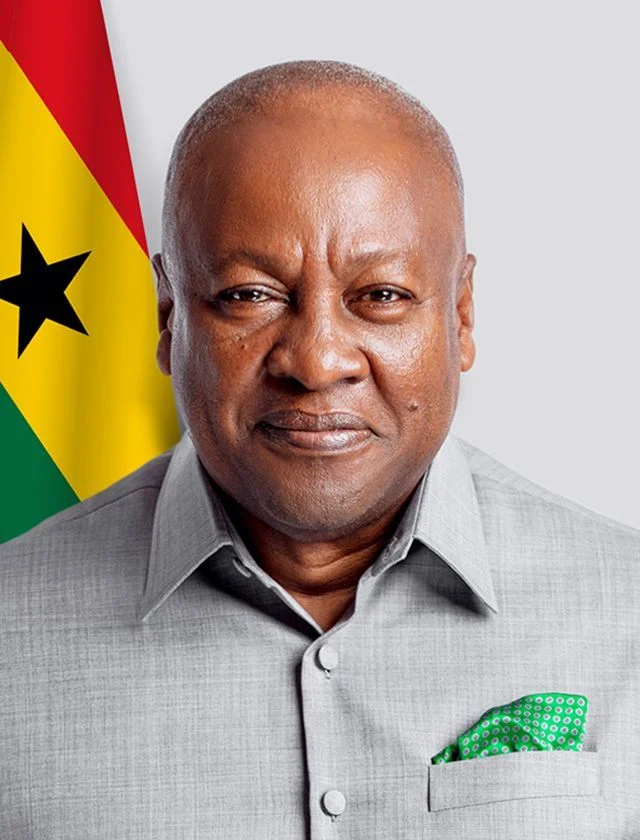
President John Dramani Mahama is set to roll out the government’s flagship Free Primary Healthcare Programme today, Wednesday, April 15, in a major step toward achieving Universal Health Coverage in Ghana.
The initiative, which forms a key part of the President’s social contract with Ghanaians, will begin with an initial phase covering 150 underserved districts over the next two months. It is designed to ensure that every citizen, regardless of location, has access to quality and essential healthcare services.
At the heart of the programme is a shift in focus from treating illness to preventing it. Health Minister Kwabena Mintah Akandoh explained that the concept is built on early detection and prevention, aiming to reduce the burden of disease before it escalates into serious health complications.
The programme is estimated to cost GH¢1.2 billion annually and will see the deployment of about 350 healthcare kiosks across the country. These facilities will be strategically located in busy areas such as markets and lorry parks to make healthcare more accessible to the public.
Speaking during a visit to the Mega Warehouse in Tema on Tuesday, April 14, the Minister outlined the features of the kiosks. Each facility will be equipped with water, solar power, sanitation facilities, a pharmacy, consulting rooms, a waiting area, and a detaining space to support basic healthcare delivery.
Beyond infrastructure, the Ministry of Health has begun distributing more than 24,000 pieces of essential medical equipment nationwide to strengthen CHPS compounds and health centres.
The scope of the programme goes beyond affordability. It includes routine health screenings for conditions such as hypertension, diabetes, obesity, and cancers, as well as antenatal and postnatal care, immunisations, and treatment for common illnesses like malaria and respiratory infections.
It will also provide education on family planning, menstrual hygiene, and safe water practices, backed by a structured referral system to ensure patients who require advanced care are directed to appropriate facilities.
According to Mr. Akandoh, the broader goal is to build a healthcare system that prioritises prevention, reduces avoidable deaths, and improves overall health outcomes across the country.