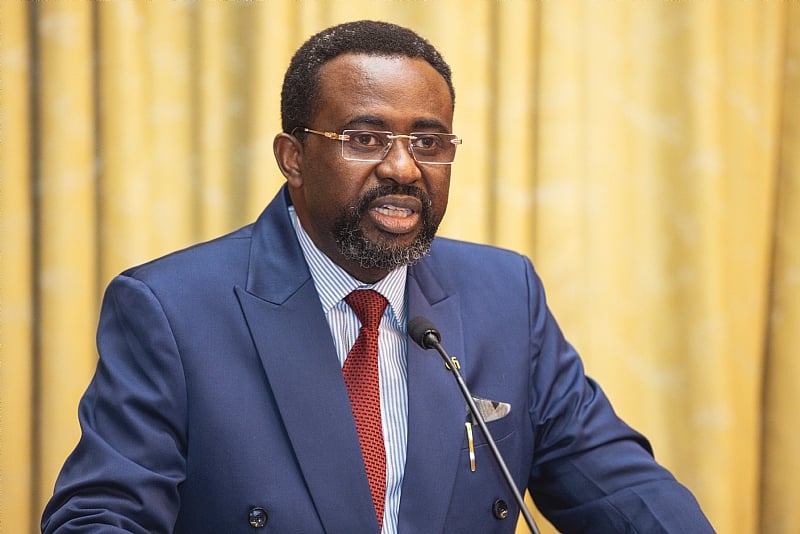
The Governor of the Bank of Ghana, Dr. Johnson Pandit Asiama, has called on the International Monetary Fund (IMF) to adopt a more decisive and flexible approach in supporting African economies facing mounting economic challenges.
Speaking at the Meeting of Governors of the African Consultative Group on April 14 at the IMF Executive Board Room in Washington, Dr. Asiama stressed that the scale and complexity of the crises confronting Africa require more than gradual policy adjustments.
According to him, many African economies are operating under severe strain, driven by rising debt levels, tight global financial conditions, recurring climate shocks, and structural limitations. These pressures, he noted, have been further worsened by the spillover effects of the ongoing conflict in the Middle East, which continues to fuel inflation and weaken external balances.
While acknowledging the IMF’s ongoing efforts, the BoG Governor argued that the Fund’s current debt resolution processes and financing tools are too slow and rigid to effectively respond to today’s realities.
A major part of his intervention focused on the need to reform the global sovereign debt restructuring system. He urged the IMF to play a stronger coordinating role in ensuring faster and more predictable debt treatments under the G20 Common Framework. He also emphasised the importance of holding private creditors more accountable and ensuring fair burden-sharing across all parties.
Dr. Asiama further pointed out that delays in debt restructuring have become a problem in themselves, prolonging uncertainty, discouraging investment, and delaying economic recovery in many countries.
He also called for improvements in the design of IMF-supported programmes, suggesting that delays caused by creditor coordination challenges should not be treated the same as domestic policy failures by borrowing countries.
Beyond debt restructuring, the Governor appealed for broader reforms in the IMF’s support systems. These include increasing access to concessional financing, making better use of Special Drawing Rights (SDRs), and ensuring that funding mechanisms such as the Resilience and Sustainability Trust are more responsive and accessible to countries facing both financial and climate-related vulnerabilities.
He highlighted the growing need for readily available emergency financing, especially as external shocks continue to expose fragile economies to sudden balance-of-payments pressures.
In essence, Dr. Asiama’s message was clear: the IMF must evolve from a cautious crisis manager into a more proactive and adaptable institution capable of responding quickly to overlapping global shocks.
He also underscored the importance of continued IMF support in building institutional capacity across African economies, particularly in areas such as domestic revenue mobilisation, public financial management, financial regulation, and resilience against emerging risks like cyber threats and cryptocurrency-related vulnerabilities.
His remarks reflect a broader consensus among African policymakers, who are increasingly pushing for faster debt resolutions and a more flexible global financial system to support sustainable economic recovery across the continent.