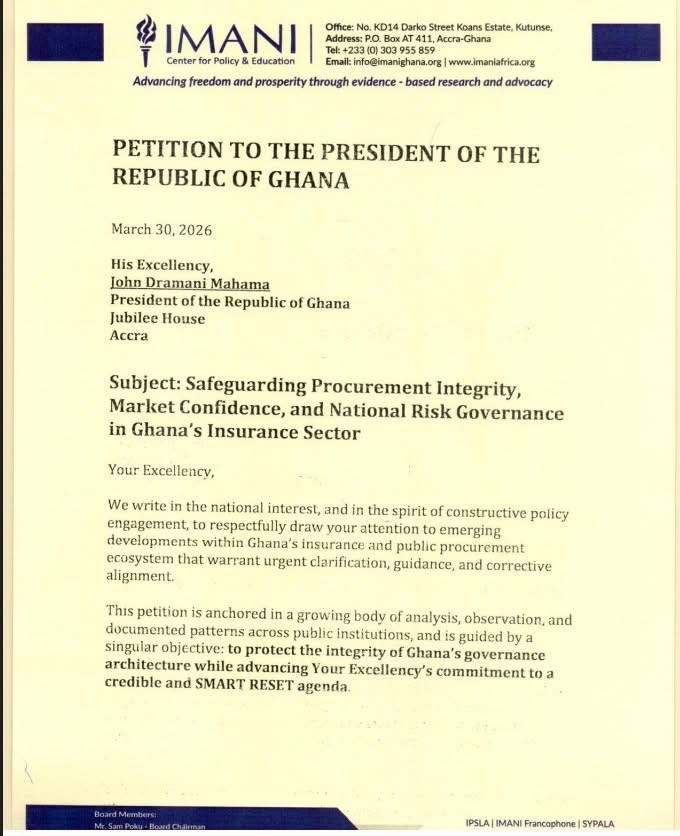

Policy think tank IMANI Africa has petitioned President John Dramani Mahama, raising alarm over what it describes as growing “legal and procurement risks” in the way state institutions are selecting insurance providers.
In a petition dated March 30, 2026, and acknowledged by the Office of the President on April 1, IMANI’s Founding President, Franklin Cudjoe, argued that insurance procurement within the public sector must strictly adhere to the Public Procurement Act, 2003 (Act 663).
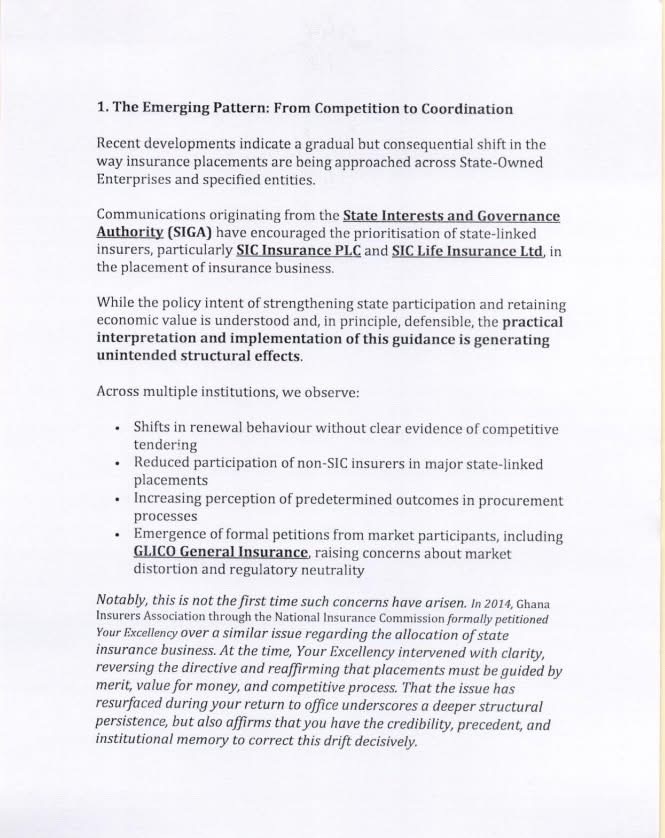
According to him, the process “is not a discretionary exercise,” warning that recent developments suggest that what may appear as policy guidance is gradually becoming operational instruction. In his view, this shift risks introducing bias into the system, particularly in favour of state-owned insurers.
At the centre of the concerns is a December 2025 directive issued by the State Interests and Governance Authority (SIGA), which urged State-Owned Enterprises (SOEs) to prioritise SIC Insurance PLC and SIC Life for their insurance needs.
IMANI argues that the directive is already reshaping procurement patterns across major state institutions. The think tank warns that this could lead to reduced competition and foster the perception that outcomes are predetermined.
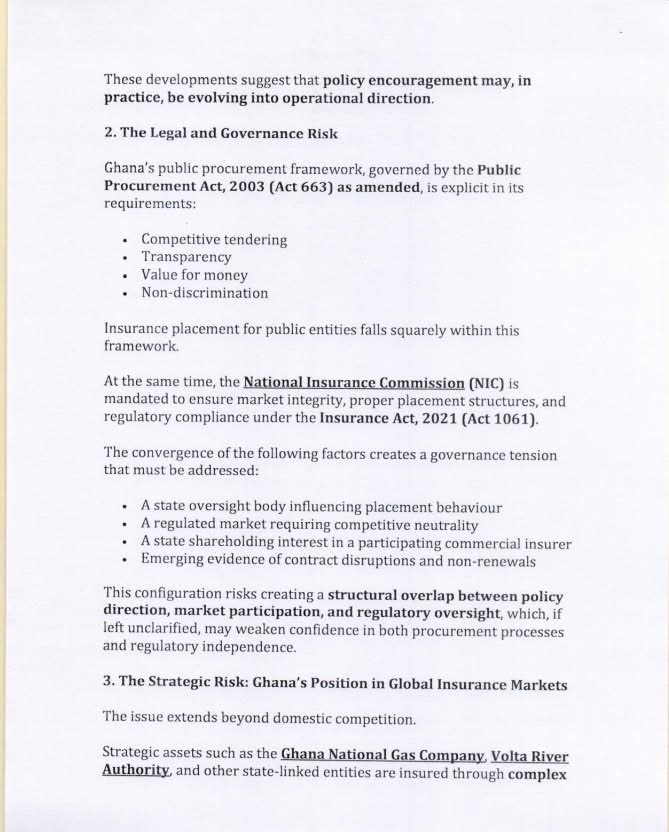
“This configuration risks creating a structural overlap between policy direction, market participation, and regulatory oversight,” the petition cautioned.
The petition highlights the Ghana National Gas Company as a key case study. According to IMANI, the company appears to have shifted from a competitive insurance placement model to what it describes as a more directed allocation approach.
Previously, GLICO General Insurance Ltd managed a structured insurance programme for Ghana Gas, supported by A-rated international reinsurers. However, the arrangement reportedly ended in December 2025, with a new insurer taking over from January 1, 2026.
IMANI says the transition raises critical unanswered questions, including whether a competitive tender was conducted, whether existing contracts were lawfully terminated, and whether Ghana’s international reinsurance obligations were taken into account.
“Financial systems of this nature operate on trust, predictability, and contractual sanctity. Any perception of instability introduces long-term cost,” the petition stated.
The think tank warns that such uncertainties could have broader implications for Ghana’s financial credibility, potentially resulting in higher reinsurance costs, reduced underwriting capacity, and stricter conditions for insuring major national infrastructure.
Further concerns were raised over claims by GLICO regarding third-party involvement in the reinsurance process—particularly actors who may hold both regulatory influence and commercial interests. If substantiated, IMANI notes, such practices could breach provisions of the Insurance Act, 2021 (Act 1061) governing authorised placement structures and market conduct.
In its petition, IMANI ultimately calls on President Mahama to intervene to safeguard transparency, protect competition, and ensure strict compliance with Ghana’s procurement and insurance laws.