


Ghana is losing an estimated GHS 5.7 billion each year due to inefficiencies and heavy reliance on tomato imports, the Chamber of Agribusiness Ghana (CAG) has revealed, calling for urgent reforms to transform the country’s tomato sector.
According to the Chamber, the annual losses — equivalent to about 1.2 per cent of Ghana’s Gross Domestic Product (GDP) — are driven by excessive importation of fresh tomatoes and tomato paste, high post-harvest losses, weak value-addition systems, and missed employment opportunities across the value chain.
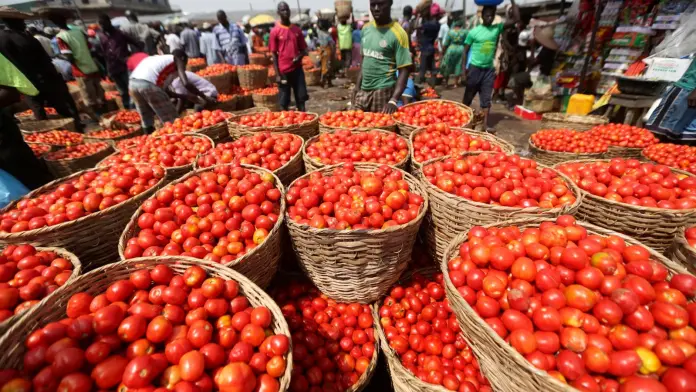
At the unveiling of a National Tomato Production Strategy (2026–2030) in Accra, CAG disclosed that Ghana spends between GHS 650 million and GHS 760 million every year importing tomatoes. At the same time, the country loses up to GHS 250 million worth of locally produced tomatoes annually due to poor storage facilities, inadequate cold-chain systems, and logistical bottlenecks.
Chief Executive Officer of the Chamber, Anthony Morrison, described the situation as “devastating,” stressing that the country is losing not only scarce foreign exchange but also thousands of potential jobs.
“We’re not just losing money; we’re losing an entire generation’s employment opportunities. The recent security incident involving Ghanaian tomato traders is a wake-up call,” he said, referencing risks associated with cross-border sourcing.
The proposed five-year strategy requires an estimated GHS 3.2 billion investment and is expected to create approximately 200,000 jobs, particularly for young people. The jobs would span farming, processing, cold storage management, logistics, and agribusiness entrepreneurship.
If successfully implemented, CAG projects the strategy could reduce tomato paste imports from over USD 100 million to about USD 20 million by 2030. The Chamber also estimates potential annual savings of GHS 600 million in import costs, tax revenue generation of up to GHS 220 million, and total economic gains exceeding GHS 5 billion each year.
As part of the rollout plan, CAG intends to present the strategy to government for endorsement, establish a national steering committee, and begin constructing initial cold storage facilities by the second quarter of 2026. The Chamber also pledged emergency support for families affected by recent cross-border trading incidents.
CAG is urging government and key stakeholders to support the initiative, arguing that strengthening domestic production and processing remains the most sustainable route to food security, job creation, and reduced vulnerability to external shocks within Ghana’s tomato value chain.