

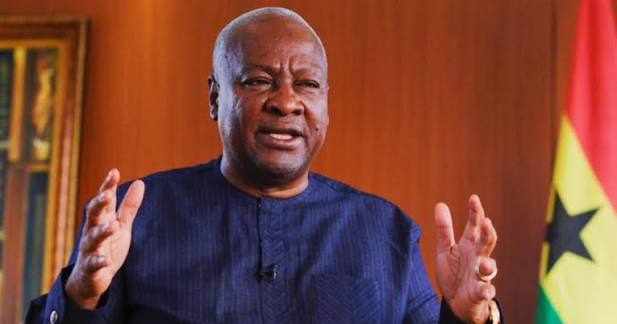
President John Dramani Mahama has identified the revival of the Volta Aluminium Company (VALCO) as a key part of efforts to restore Tema’s industrial strength, expand local manufacturing and position Ghana as a producer of value-added goods for domestic, African and international markets.
The proposed rehabilitation forms part of a broader industrial strategy involving energy infrastructure, port expansion, industrial parks and export-oriented production.
During a working tour of Nestlé Ghana Limited, Three Dreamers Manufacturing Company and Kasapreko PLC in Tema, President Mahama pointed to renewed activity within the industrial enclave as a sign of recovery in the country’s manufacturing sector.
“The ports of Tema have expanded. Tema Oil Refinery is back at work again. We’re working on reviving VALCO. The industrial enclave is progressing, and many industries like Nestlé existing in the Tema enclave are expanding their production,” he said.
The revival of VALCO could play a significant role in Ghana’s ambition to build a stronger aluminium industry. Although the country has substantial bauxite resources, it has struggled to establish an integrated value chain linking mining, refining, smelting and the production of finished aluminium goods.
A commercially viable VALCO could supply raw materials to industries producing construction materials, packaging, electrical equipment and transport components. This could reduce reliance on raw mineral exports, create jobs and enable Ghana to retain a greater share of the value generated from its natural resources.
However, restoring the company’s operations will require more than repairing ageing equipment. Aluminium smelting consumes large amounts of electricity, making reliable power supply and competitive tariffs essential to its long-term survival.
Without affordable energy, modern technology and sufficient working capital, increased production could worsen the company’s financial difficulties. The government must therefore ensure that any revival plan is commercially sustainable and does not place an excessive burden on the national budget or electricity sector.
The proposed restructuring of VALCO’s relationship with the Ghana Integrated Aluminium Development Corporation will also be crucial. Aligning the smelter with the country’s wider aluminium development strategy could strengthen links between raw material production and downstream manufacturing, provided the arrangement delivers clear accountability, disciplined investment and realistic production targets.
President Mahama’s visit to Tema also coincided with the commissioning of an expanded evaporated milk production line at Nestlé Ghana’s factory. The investment has increased annual production capacity from approximately 12,960 tonnes to nearly 30,000 tonnes, representing an expansion of more than 130 per cent.
Another major component of the government’s plan is the proposed 120-hectare Tema Integrated Industrial Park, which is expected to be located near VALCO and the Tema Port.
The location could attract manufacturers, aluminium processors, warehouses and service providers, allowing businesses to benefit from shared infrastructure, improved logistics and proximity to the country’s largest port. It could also strengthen Ghana’s position as a manufacturing hub serving regional markets under the African Continental Free Trade Area (AfCFTA).
However, the success of the industrial park will depend on more than its location. Investors will need dependable utilities, transparent land allocation, efficient customs procedures and access to affordable long-term financing.
Although AfCFTA offers Ghanaian businesses access to a wider African market, manufacturers must still compete on price, quality, production capacity and delivery times. Access to regional markets alone cannot overcome high operating costs or unreliable infrastructure.
Ultimately, Tema’s industrial recovery should be measured by increases in factory output, employment, exports, capacity utilisation and the amount of value added locally, rather than the number of projects announced.
VALCO will be a major test of that ambition. If the government can secure competitive electricity, attract investment and connect the smelter to downstream manufacturers, its revival could help transform Ghana’s mineral resources into a stronger foundation for industrial growth.
Without these conditions, however, VALCO could remain a recurring industrial ambition that promises significant economic benefits but struggles to achieve lasting commercial viability.