


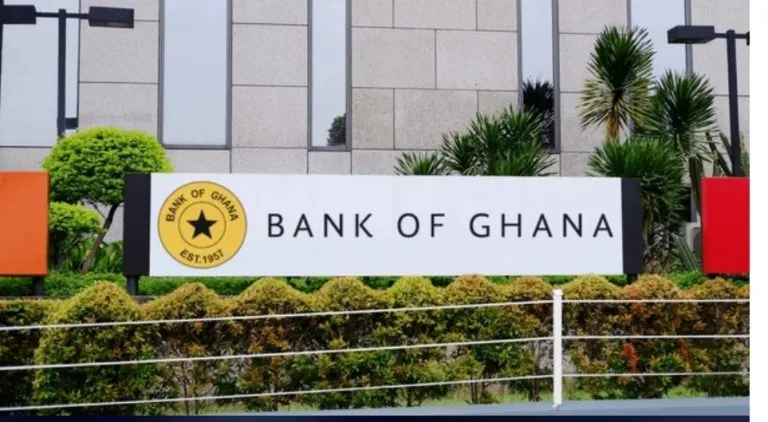
The Bank of Ghana (BoG) is introducing a new regulatory framework for the microfinance sector to strengthen financial institutions, protect depositors and address inconsistencies in supervision.
Under the revised framework, existing savings and loans companies seeking to transition into microfinance banks have until December 31, 2026, to meet a minimum capital requirement of GH¢50 million. New entrants into the microfinance banking market will, however, be required to provide at least GH¢100 million.
Second Deputy Governor of the Bank of Ghana, Matilda Asante-Asiedu, said the reforms were designed to eliminate regulatory arbitrage, improve governance and ensure that institutions carrying out similar activities operate under consistent regulatory standards.
Speaking at the inauguration of Advans Ghana’s new head office, she explained that the new framework would replace the existing Tier 1-to-Tier 4 structure with four categories: microfinance banks, community banks, credit unions and last-mile providers.
Microfinance banks will operate as deposit-taking institutions serving individuals, groups and micro, small and medium-sized enterprises (MSMEs).
Mrs Asante-Asiedu said the previous system had created gaps that allowed institutions performing similar functions to operate under different supervisory requirements.
“Fragmentation has allowed uneven supervision and regulatory arbitrage to persist,” she said, adding that the revised classifications would ensure institutions of the same category were held to the same standards.
The new capital requirement presents a significant challenge for some existing savings and loans companies, particularly smaller institutions that may struggle to raise the required funds before the deadline.
To address this, the central bank has outlined several options for institutions that cannot meet the requirement independently. They may raise additional capital, merge with other financial institutions, be acquired by stronger operators or transfer their assets and liabilities to qualified institutions through an orderly process. Those unable to continue may also exit the market voluntarily.
“The aim is a sector in which every institution is strong enough to protect its depositors and keep serving its clients,” Mrs Asante-Asiedu said.
The available options point to possible consolidation within the sector, with mergers and acquisitions potentially creating better-capitalised institutions with broader operational networks. However, the process will also require careful management to prevent a reduction in access to financial services, particularly for underserved communities and small businesses.
The reforms follow longstanding concerns about weak capital positions, governance challenges and inconsistent supervision across Ghana’s microfinance and specialised deposit-taking industry.
Beyond capital requirements, the Bank of Ghana is also placing greater emphasis on the competence and accountability of boards and management teams. Mrs Asante-Asiedu stressed that responsibility for the safety and soundness of financial institutions must begin with their boards.
She also sought to assure investors that the new framework would be implemented fairly and consistently, with clear requirements and a defined path for institutions to achieve compliance.
The central bank expects the changes to restore public confidence, strengthen financial inclusion and attract fresh investment into the subsector while encouraging greater local participation and ownership.
Mrs Asante-Asiedu commended Advans Ghana for its commitment to meeting the new capital requirements and acknowledged the support of its parent group, Advans Group. She urged other international shareholders to provide similar support to their Ghanaian subsidiaries ahead of the deadline.
“We encourage other foreign shareholders to show a similar level of commitment to support their Ghanaian subsidiaries as all institutions work towards the end-of-year deadlines, for capital and for non-performing loans alike,” she said.
Advans Ghana was incorporated in November 2007 and received its Bank of Ghana licence in October 2008. The institution has since expanded to more than 20 branches across several regions, providing financial services to low-income customers and MSMEs.
Its offerings include the MyAdvans GH application, AdvansHER and the Shea Business Empowerment Programme.
Mrs Asante-Asiedu said Advans Group’s decision to hold its annual Group Board Week in Accra reflected confidence in Ghana’s financial system and wider economy.
However, the effectiveness of the reforms will depend on more than institutions meeting the new capital thresholds. Stronger balance sheets must be supported by sound governance, transparent ownership, effective risk management and responsible lending practices.
The Bank of Ghana will also need to ensure that consolidation does not leave small businesses and communities with fewer options for accessing credit and other financial services.
For savings and loans companies seeking to become microfinance banks, the path is now defined: raise the required capital, merge with or be acquired by another institution, transfer operations to a qualified operator or exit the market.
With the December 31, 2026, deadline approaching, the coming months will be crucial in determining which institutions can meet the new standards and remain part of Ghana’s restructured microfinance sector.