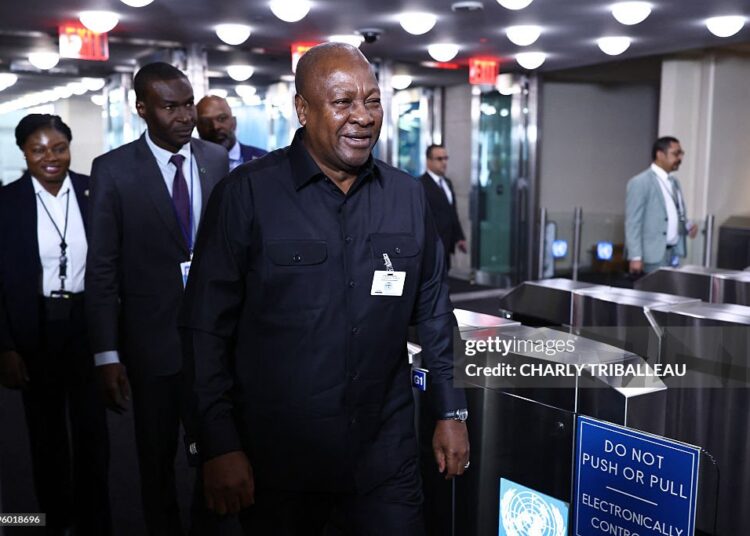


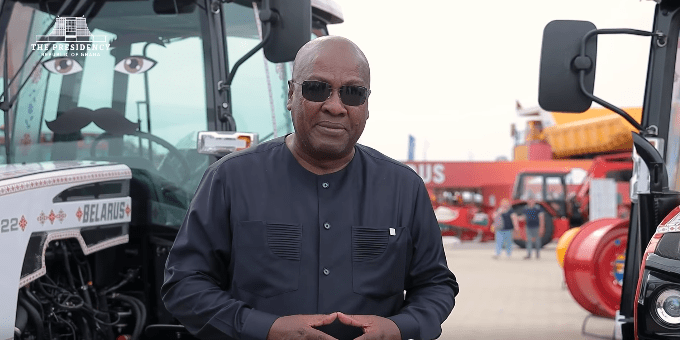
President John Dramani Mahama has announced that a delegation of Belarusian mining equipment manufacturers will visit Ghana next week as part of efforts to attract industrial investment and strengthen the country’s mining value chain.
The planned visit follows engagements at the maiden Ghana-Belarus Business Forum in Minsk, where President Mahama promoted Ghana as a stable and strategic gateway for companies seeking opportunities in West Africa and the broader African market.
The delegation is expected to explore opportunities in mining equipment manufacturing, industrial engineering, construction machinery, technology transfer and partnerships with local Ghanaian firms.
According to President Mahama, discussions with Belarusian manufacturers have already yielded agreements in principle aimed at supporting Ghana’s mining, construction and infrastructure sectors through the supply and possible local production of heavy-duty machinery.
The development comes as Ghana seeks to deepen industrialisation within its mining sector by increasing local value addition and reducing reliance on imported equipment. While mining remains one of the country’s largest sources of foreign exchange earnings, much of the machinery and specialised technology used by the industry is sourced from abroad.
Government believes stronger collaboration with Belarusian firms could help create a local ecosystem for equipment assembly, maintenance, servicing, spare parts production and technical training.
Industry experts argue that the real value of such partnerships lies not only in the importation of machinery but also in the transfer of skills and technology that can support long-term industrial development. Establishing local assembly plants and service centres could create skilled jobs, strengthen engineering capacity and reduce operational costs for mining companies.
President Mahama also highlighted Ghana’s strategic position as host of the African Continental Free Trade Area (AfCFTA), noting that investors who establish operations in the country would gain access to a continental market of more than 1.4 billion people.
The initiative aligns with government’s planned US$10 billion five-year “Big Push” Infrastructure Programme, which is expected to drive investment in roads, railways, ports, energy and manufacturing. The programme is designed to improve connectivity, lower business costs and enhance Ghana’s attractiveness as an investment destination.
For Belarusian companies with expertise in mining machinery and industrial engineering, Ghana’s expanding infrastructure and mining sectors present opportunities for long-term participation in the economy.
The proposed collaboration also supports government’s broader agenda of promoting industrialisation, technology transfer and value addition. For decades, Ghana’s mining sector has faced criticism for exporting raw minerals while importing most of the equipment and specialised services required to operate the industry.
A successful partnership could help reverse that trend by encouraging foreign manufacturers to establish local operations and build domestic capacity rather than simply supplying equipment from overseas.
However, analysts caution that the benefits will depend largely on the structure of any agreements reached. They argue that Ghana must secure commitments on local participation, skills development, technology transfer, financing and after-sales support to ensure meaningful economic impact.
Without such provisions, the partnership could result in little more than a new source of imported machinery.
President Mahama assured investors that Ghana offers political stability, investor protection, a transparent regulatory environment and guarantees for the repatriation of profits.
The upcoming visit by the Belarusian manufacturers is expected to include meetings with government agencies, mining companies and private-sector stakeholders to discuss potential investment opportunities and joint ventures.
If the engagements lead to local assembly plants, technology transfer and job creation, they could significantly strengthen Ghana’s mining value chain and support the country’s ambition of becoming a regional industrial hub. The challenge now is ensuring that the discussions translate into lasting industrial assets and not simply increased equipment imports.