
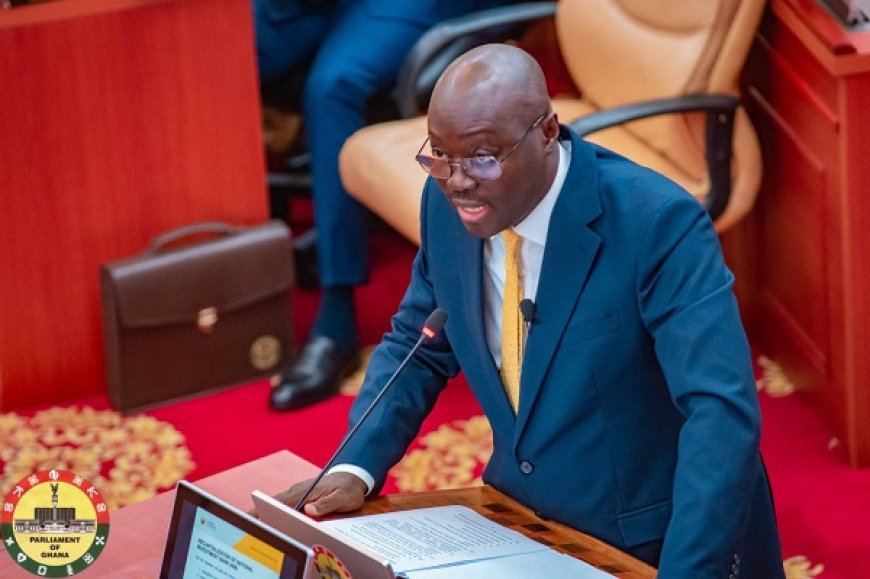
The Institute for Economic Research and Public Policy (IERPP) has called on the government to provide clearer data and address what it describes as unresolved gaps in the 2026 Mid-Year Budget Review presented to Parliament.
The policy think tank said although it recognises improvements in some key economic indicators, including lower inflation, relative stability of the cedi and a decline in the debt-to-GDP ratio, the review did not provide a complete picture of the factors behind these gains.
According to IERPP, a credible assessment of the economy requires more than highlighting achievements; it must also account for outstanding questions and areas where information remains unclear.
In a statement, the Institute urged government to provide additional details on its fiscal position and offer transparency on major policies and financial commitments.
IERPP criticised the absence of updates on some of the government’s flagship initiatives, particularly the 24-hour economy and Nkonko-Nkitinkiti.
The Institute noted that the 24-hour economy programme, which was promoted by the NDC while in opposition as a major intervention to address unemployment, received GH¢110 million allocation in the 2026 budget.
However, it said the Mid-Year Budget Review failed to indicate how many jobs had been created, the number of workers currently engaged, or the companies participating in the initiative.
It also raised concerns about the lack of information on Nkonko-Nkitinkiti, a programme allocated GH¢245 million to support local poultry production, create jobs and reduce reliance on imported poultry products.
“By distancing itself from these flagship policies, the government has left Ghanaians in the dark. Citizens deserve transparency and accountability, not silence, on the true state of these initiatives,” IERPP said
The Institute also questioned the presentation of Ghana’s debt situation, arguing that focusing mainly on the debt-to-GDP ratio does not provide the complete picture.
The Mid-Year Budget Review reported that Ghana’s debt-to-GDP ratio declined from 61.8% at the end of 2024 to about 45% by June 2026.
However, IERPP said a ratio alone does not show whether the actual debt stock has increased or decreased, since economic growth or currency movements can affect the calculation.
The group pointed to Bank of Ghana data showing that public debt increased from GH¢663.4 billion in January 2026 to GH¢720.8 billion in May 2026, representing an increase of about GH¢57 billion within five months.
IERPP argued that both the debt ratio and the absolute debt figures should be presented together to give citizens a clearer understanding of the country’s financial position
The Institute further raised concerns about the omission of a recently approved loan facility of about US$1 billion from the Mid-Year Budget Review.
It said Parliament’s approval of the facility was not adequately reflected in the government’s debt narrative, despite the review being intended to provide a comprehensive update on the country’s finances.
According to IERPP, any discussion about debt sustainability must include new borrowing commitments and explain how they affect Ghana’s overall debt trajectory.
The group also questioned the government’s explanation of the “no-loan” policy associated with Free Senior High School (Free SHS).
IERPP acknowledged that the government allocated GH¢1.8 billion from domestic resources to fund the programme in 2026, consistent with its position that recurrent Free SHS costs are not financed through loans.
However, it pointed to the US$300 million World Bank/IDA credit facility approved for education infrastructure, including school construction, rehabilitation and upgrades.
The Institute said while the government maintains that the loan supports only infrastructure and not operational costs, citizens deserve clarity on what exactly is covered by the “no-loan” promise.
IERPP also questioned the circumstances surrounding the freezing of the Contingency Fund following an Accra High Court garnishee order.
The government had indicated that GH¢350 million was reallocated from the Contingency Vote for flood relief after the Contingency Fund became unavailable due to the court order.
The Institute described the development as a serious issue that required more explanation, arguing that a national emergency fund being frozen should not be treated as a minor detail.
“What liability was large enough to freeze money set aside for national emergencies?” IERPP asked, adding that Ghanaians deserve to know why the fund was unavailable during a crisis.
The Institute concluded that while the government’s economic gains should be acknowledged, transparency on unresolved issues is necessary to build public confidence in the country’s fiscal management.