

Ghana’s proposed US$270 million investment in artificial intelligence (AI) could strengthen the country’s digital capabilities and protect sensitive government information from exposure to foreign platforms. However, the success of the initiative will depend on how effectively the government manages the investment, secures public data and ensures that the technology delivers practical benefits.
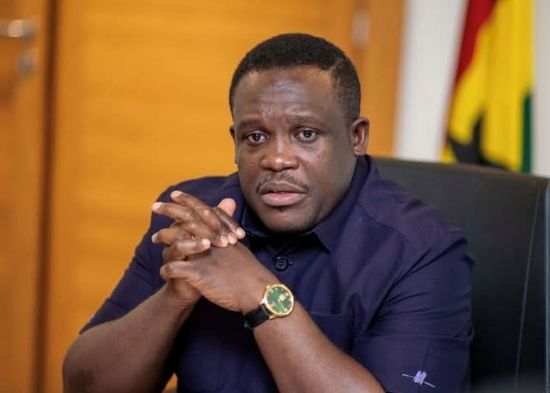
Minister for Communications, Digital Technology and Innovations Samuel Nartey George disclosed the plan during JoyNews’ Digital Economy Forum on AI and the Ghana Economy. He said US$250 million would be invested in infrastructure and computing capacity, while US$20 million would serve as seed capital for an artificial intelligence fund.
The initiative includes plans to develop a national language-processing model, known as “Ghana Chat”, which would allow public institutions to use AI tools without routinely sending government information through foreign platforms.
Mr George raised concerns about the handling of confidential government information, revealing that analysts working in ministers’ offices had been entering classified memoranda and other sensitive official documents into AI platforms such as ChatGPT and Claude.
“That for me represents a critical national risk because memos, government material, critical government sensitive data is being fed into these systems,” he said.
The minister’s concerns highlight the challenges of enforcing data protection policies when public officials continue to use external AI tools in their daily work.
Ghana has passed legislation addressing data residency, but Mr George argued that such measures would have limited impact if government workers continued to rely on foreign AI models to process official information.
“We have a residency law that we’ve passed, but it’s useless if the government system itself is using a foreign AI model to do processing,” he said.
A locally controlled AI system could help address these concerns by giving the government greater control over where information is stored, who can access it and how it is used. It could also reduce the risk of sensitive information being exposed through platforms operating outside Ghana’s direct control.
However, developing a platform locally does not automatically guarantee security. The government will need to examine the technology behind Ghana Chat, including its computing infrastructure, software, cybersecurity systems and dependence on foreign suppliers.
Questions must also be answered about what the government means by local control. The physical location of servers, ownership of the technology, control of encryption keys and management of data will all determine how much independence the system can provide.
The financial implications of the project also require careful consideration. An investment of US$270 million is substantial, particularly as Ghana continues to address competing needs in healthcare, education, energy and transport.
The government will need to provide details of the funding arrangements, procurement process, implementation schedule and long-term operating costs. AI infrastructure requires reliable electricity, cooling systems, maintenance and regular upgrades to keep up with rapidly changing technology.
Energy supply will therefore be an important factor in determining whether the investment is sustainable. High-performance computing facilities consume significant amounts of electricity and generate heat that must be managed effectively. The government must explain how it intends to meet these requirements without placing additional pressure on the country’s power supply.
The proposed US$20 million AI fund could also play a major role in ensuring that the investment produces tangible results. While infrastructure provides the technical foundation, businesses, researchers and public institutions will need to develop useful applications that address Ghana’s needs.
The fund should operate through a transparent and competitive process, with clear criteria for selecting beneficiaries. Projects should be assessed on their potential to create jobs, develop local technology, generate revenue and solve practical problems rather than on political connections.
Potential areas of application include agriculture, healthcare, education, taxation, customs administration and financial services. AI tools could also improve access to public information in Ghanaian languages, making government services more accessible to people who are less comfortable using English.
Mr George acknowledged that Ghana Chat would initially be less capable than established platforms such as ChatGPT and Claude.
“The more you use it and the more you teach it, the more the machines learn, the better the system will get,” he said.
However, the performance of an AI model depends on more than how frequently it is used. The quality and accuracy of its training data, the expertise of its developers and continuous testing will be essential to improving its reliability.
Poor-quality or incomplete data could cause the system to produce misleading information or reproduce existing biases in public institutions. The government must therefore establish clear rules for data classification, anonymisation, retention and lawful use before sensitive information is incorporated into AI systems.
Public officials also need immediate guidance on the use of existing AI platforms. Developing Ghana Chat will take time, but the risks associated with entering confidential government information into unauthorised systems already exist. Clear restrictions, approved tools and staff training should form part of the government’s immediate response.
There are also concerns about accountability and the potential misuse of a government-controlled AI system. Without appropriate safeguards, such technology could be used for excessive surveillance, discriminatory profiling or automated decisions that citizens cannot easily challenge.
Independent oversight and clear rules will be necessary to ensure that AI is used responsibly, particularly when decisions affect access to public services or citizens’ rights.
Ultimately, the success of the US$270 million investment should not be judged by the amount of computing equipment purchased or the number of officials trained. It should be measured by improvements in public service delivery, reduced administrative costs, stronger protection of confidential information, job creation and the development of useful local technology.
Ghana has legitimate reasons to strengthen its control over sensitive government data and reduce unnecessary dependence on foreign AI platforms. However, the project must be supported by transparent spending, strong cybersecurity measures and clear accountability.
If properly managed, the initiative could strengthen Ghana’s digital capacity and create opportunities for local innovators. Without effective oversight and measurable targets, however, the country risks committing substantial public funds to an expensive system that fails to deliver the promised benefits.