

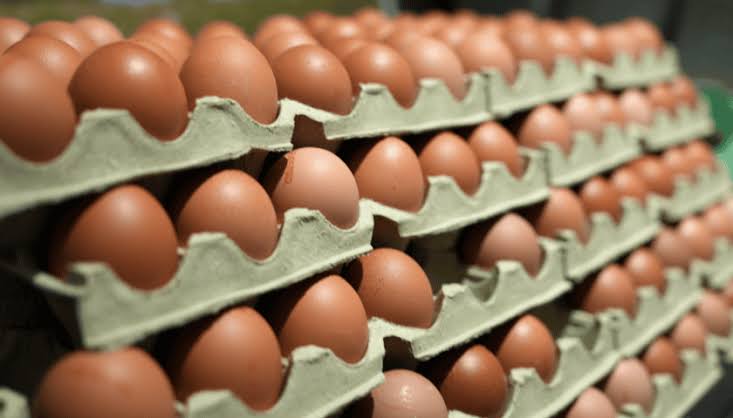
Ghana has started exporting eggs to Burkina Faso in an effort to ease a growing surplus that has left poultry farmers struggling to find buyers for their produce.
Minister for Food and Agriculture Eric Opoku said the exports began after President John Mahama directed the agriculture and trade ministries to negotiate access to the neighbouring country’s market.
According to Mr Opoku, Ghanaian officials encountered more than 20 trucks loaded with eggs at the border during the negotiations. The trucks were subsequently cleared to enter Burkina Faso, paving the way for exports to begin.
“Immediately after our negotiations, they allowed all of them to enter, and since then, Ghana has been exporting eggs to Burkina Faso,” he said.
Despite the opening of the new market, the minister acknowledged that exports alone would not be enough to absorb Ghana’s existing egg surplus. The government is therefore considering introducing eggs into meals served under the Ghana School Feeding Programme to create a reliable market for local producers while improving children’s nutrition.
The Ministry of Food and Agriculture is working with the Ministry of Education to explore the implementation of the proposal.
Mr Opoku disclosed the measures during an inspection of a poultry, meat and feed-processing facility under construction at Bechem in the Ahafo Region.
The facility is expected to strengthen Ghana’s poultry industry through processing, storage and distribution. It will have separate processing lines for broilers and layers, with a combined capacity of 6,000 birds per hour, alongside three cold rooms, a hatchery and a feed mill.
Under the proposed arrangement, the government intends to establish contractual partnerships with poultry farmers in the Ashanti, Upper East and neighbouring regions. Farmers will receive birds from the hatchery and supply mature birds to the factory for processing and distribution.
Two trucks are also being procured to transport the facility’s packaged and branded products to the market.
Mr Opoku said construction was about 50 per cent complete, adding that outstanding payment certificates had been settled after earlier delays. The contractor expects the facility to begin operations by the end of the first quarter of 2027.
While the start of egg exports to Burkina Faso provides an additional outlet for Ghanaian producers, the persistent surplus highlights the need for a more coordinated approach to poultry production and marketing.
Reliable markets, institutional purchasing arrangements, processing facilities and effective distribution networks will be critical to ensuring that increased production translates into sustainable incomes for farmers rather than unsold produce and financial losses.