

The government has moved to calm growing fears within Ghana’s mining industry, insisting it has no blanket policy to nationalise mining assets despite increasing debate over resource control, local participation and the future of strategic mineral leases.
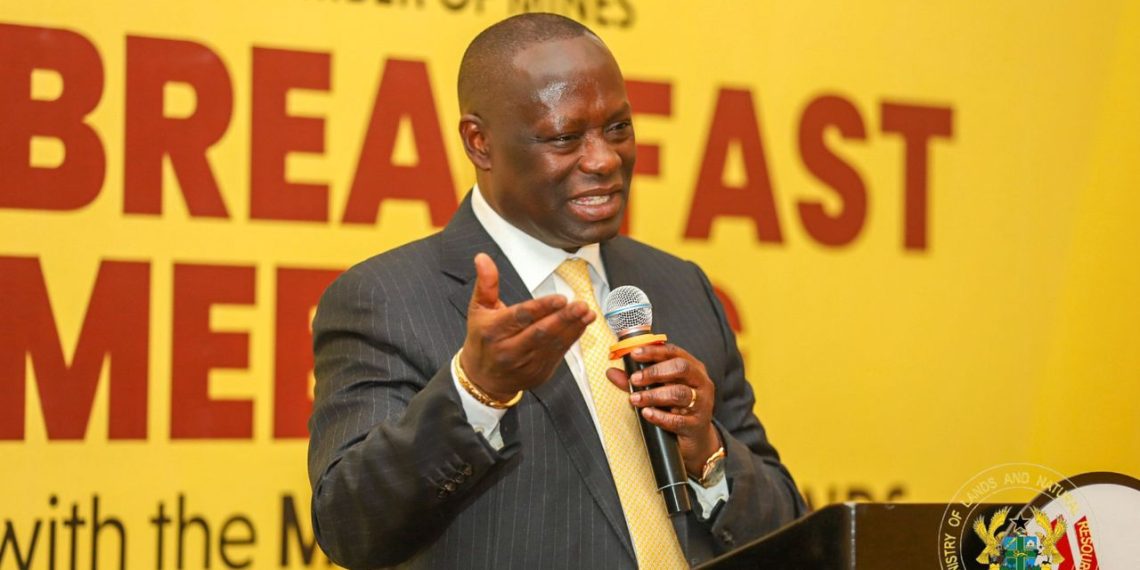
Speaking at the Ghana Chamber of Mines Breakfast Meeting in Accra on Monday, the Minister for Lands and Natural Resources, Emmanuel Armah-Kofi Buah, assured investors that Ghana remains committed to a stable and transparent mining environment that supports long-term investment.
According to him, the government’s priority is to maintain a mining sector that is predictable, rules-based and attractive to both local and foreign investors.
“The government of Ghana is committed to a mining industry that continues to attract investments,” Mr Buah stated. “We are committed to an industry that is predictable, transparent and rules-based.”
His comments come at a time when concerns are growing within the extractive industry over disputes involving mining leases, licensing arrangements, regulatory approvals and expectations around local ownership. These developments have fuelled speculation that Ghana may be shifting towards a more aggressive state-controlled mining policy.
However, the minister rejected suggestions that the government intends to take over mining assets across the board.
“The government of Ghana has not fashioned out a blanket policy of nationalising anything, but we deal with issues on a case-by-case basis,” he explained.
Mr Buah stressed that while government wants greater value from the country’s natural resources, it is not seeking to undermine investor protections or create uncertainty within the industry.
Across Africa, several resource-rich countries are pushing for stronger local benefits from mining as global demand for gold and critical minerals continues to rise. Governments are increasingly under pressure to ensure mining contributes more to jobs, industrialisation, skills development and community growth.
In Ghana’s case, the government says it wants investors who are willing not only to make profits, but also to contribute to local expertise, technology transfer and value addition.
“Our goal is to partner with investors who come to Ghana with the understanding that they are going to have a good return on their investment, but they will also leave behind expertise and help add value to our industry,” the minister added.
Industry players, however, continue to emphasise the importance of consistency in policy implementation. Mining companies and financiers argue that uncertainty around lease renewals, ownership structures and regulatory decisions could affect investor confidence in Ghana’s mining sector.
The Chief Executive Officer of the Ghana Chamber of Mines, Dr Kenneth Ashigbey, also stressed the need for stronger collaboration between multinational mining firms and indigenous Ghanaian operators rather than policies that could discourage investment.
According to him, Ghana’s mining future should focus on partnerships, supplier development, technology transfer and capacity building instead of exclusionary ownership models.
The mining sector remains one of Ghana’s biggest sources of export earnings, foreign exchange and government revenue. However, concerns over environmental damage, illegal mining, local content and community benefits continue to dominate public debate.
Mr Buah’s remarks suggest the government is attempting to strike a balance between protecting investor confidence and ensuring Ghana gains more long-term value from its mineral resources.
For now, the government’s position appears clear Ghana is not pursuing blanket nationalisation, but it also wants a mining industry that creates stronger local benefits, deeper participation and sustainable economic transformation.