


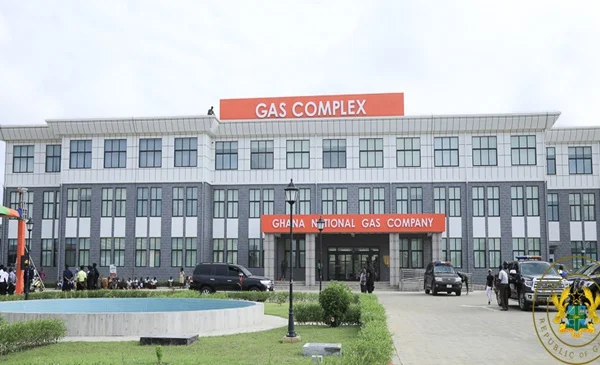
The Public Utilities Regulatory Commission (PURC) says sustained profitability and improved efficiency at the Ghana National Gas Company could eventually contribute to lower electricity costs for consumers.
According to PURC Executive Secretary Dr Shafic Suleman, Ghana Gas’ recent financial performance is encouraging, but the real benefit will depend on whether the company continues to invest in infrastructure, improve efficiency and strengthen the reliability of domestic gas supply.
Dr Suleman made the remarks in Takoradi during an industrial tour of Ghana Gas facilities by PURC commissioners and management.
He commended the company for its recent performance and urged management to maintain the momentum.
“The profits you saw them declare have been indicated. It’s an indication of their performance. I mean, over the last one and a half years, it means that they’ve performed so well, and we are giving them credit for that,” he said.
Ghana relies heavily on natural gas to power its thermal generation plants. A more reliable and efficient gas supply can therefore help reduce the pressure on power producers to rely on more expensive alternative fuels.
Dr Suleman said this makes the financial health and operational stability of Ghana Gas important to the wider energy sector.
He urged the company to maintain its profitability while continuing to invest in its operations.
“I’m sure if they keep on investing, it will end up reducing the cost of utility provision, and that’s so if Ghana Gas maintains its current work ethics and also maintains profitability, in the long run the cost of power will also reduce,” he said.
However, PURC’s position does not mean that profits at Ghana Gas will automatically translate into lower electricity tariffs.
Electricity prices are influenced by several components of the energy value chain, including generation, fuel supply, transmission and distribution. Any reduction in the cost of gas is therefore only one part of the broader equation.
The key, according to PURC, is how Ghana Gas uses its stronger financial position.
Investment in processing facilities, pipelines and other infrastructure could improve gas supply to power producers, reduce operational inefficiencies and minimise disruptions that may force generators to use more expensive fuels.
Such improvements could eventually reduce the cost of electricity generation and ease pressure on consumers.
The potential benefits also extend beyond household electricity bills.
Lower and more reliable power costs could help manufacturers, miners and other energy-intensive businesses reduce operating expenses, improve production planning and become more competitive.
For this reason, Dr Suleman said maintaining Ghana Gas as a stable and profitable state-owned company should be considered a national economic interest.
“So it’s in the interest of all Ghanaians that Ghana Gas is operational. Ghana Gas is profitable going forward,” he said.
The long-term test, however, will be whether the company’s profitability translates into measurable improvements across the energy sector.
Consumers will ultimately be looking for more affordable and reliable electricity, while businesses will want lower and more predictable energy costs.
PURC’s message is therefore not that Ghana Gas’ profits will immediately reduce electricity tariffs. Rather, sustained profitability gives the company greater capacity to invest, improve efficiency and strengthen the gas-to-power system.
For Ghana, the real measure of Ghana Gas’ success will be whether its financial gains are converted into stronger infrastructure, more reliable gas supply and, ultimately, lower costs for powering the economy.