

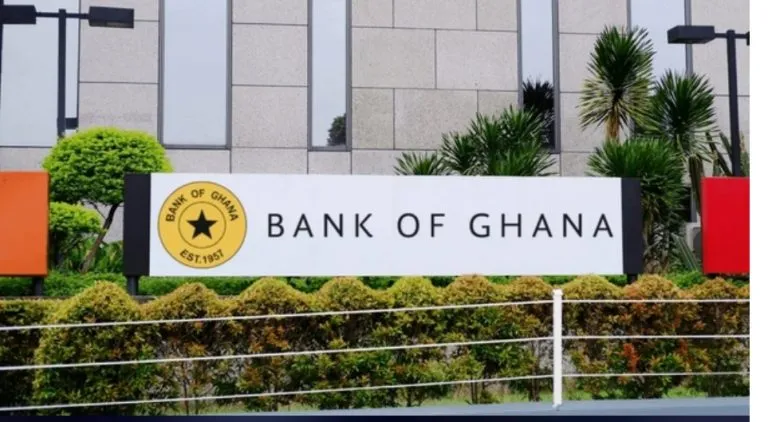
The Bank of Ghana (BoG) has identified 20 mobile loan applications operating without the required regulatory licence and warned banks, specialised deposit-taking institutions and payment service providers against facilitating transactions for the affected lenders.
In a public notice dated August 3, 2026, the central bank said it had continued to observe entities providing digital loans to Ghanaians through online and mobile platforms without authorisation, despite an earlier warning issued to operators in the sector.
According to the Bank, the activities of the identified lenders contravene the Directive for Digital Credit Service Providers issued in September 2025, as well as other laws and regulatory requirements governing financial services in Ghana.
The 20 applications named by the BoG are Adamfo Loan, Agyapacredit, Amanfi Loan, Arco Cash, Aya Lend, Bucks Now, CediGo, CGrab, DumboCash, FCash, GH Loans, GH Loans Pro, Hasty Credit, Newgry Money Tree, Omanpesa, PoPoCedi, Ready Money, Sika Tap, Sikapa Loan and Zigwe Loan.
The central bank said its concerns go beyond the licensing status of the operators, pointing to issues involving customer information, consumer rights and compliance with established financial-sector standards.
“The operations of these entities constitute significant violations of customer data privacy, consumer protection, and established regulatory standards,” the Bank said.
The warning comes as digital lending continues to grow in Ghana, with consumers increasingly turning to smartphones, mobile money and other digital platforms for quick access to short-term loans.
While digital lenders can offer faster and more convenient access to credit than traditional financial institutions, the BoG noted that the model can also expose consumers to risks when operators function outside regulatory oversight.
These risks may include the misuse of personal information, aggressive debt-collection practices, excessive charges and unclear loan terms.
The central bank has therefore extended its warning to regulated financial institutions that provide the infrastructure through which digital lenders receive and transfer funds.
“Banks, Specialised Deposit-Taking Institutions (SDIs), and Payment Service Providers (PSPs) are also cautioned against facilitating or processing transactions on behalf of unlicensed loan providers,” the Bank said.
The directive could have a significant impact on unlicensed digital lenders, many of whom depend on bank accounts, mobile money platforms and payment service providers to disburse loans and receive repayments.
By warning regulated institutions against processing such transactions, the BoG is effectively seeking to limit the ability of unlicensed operators to use Ghana’s formal financial and payments infrastructure.
Banks and payment companies may consequently need to strengthen their due diligence and monitoring of businesses involved in digital lending to ensure that they are properly licensed before providing payment or settlement services.
The latest notice forms part of the BoG’s wider efforts to bring Ghana’s rapidly expanding digital credit market under a clear regulatory framework. The central bank previously issued a notice on unlicensed Digital Credit Service Providers and introduced its Directive for Digital Credit Service Providers in September 2025.
The regulator has also urged members of the public not to engage with unlicensed loan providers and encouraged anyone who identifies such activities to report them to the Bank’s Fintech and Innovation Department.
The BoG said it would continue working with other state institutions to identify and investigate unlicensed operators and take appropriate enforcement action.
“The Bank of Ghana will continue to collaborate with relevant state institutions to identify, investigate, and take appropriate enforcement action against such entities in order to safeguard consumers and uphold the integrity and stability of the financial sector,” it said.
For consumers, the Bank’s warning serves as a reminder that the availability of a loan application on a smartphone does not necessarily mean that the operator is authorised to provide financial services in Ghana.
The central bank’s latest move signals a more targeted phase of enforcement in the digital lending sector, with the regulator seeking to ensure that innovation and financial inclusion do not come at the expense of consumer protection, data privacy and the stability of Ghana’s financial system.