
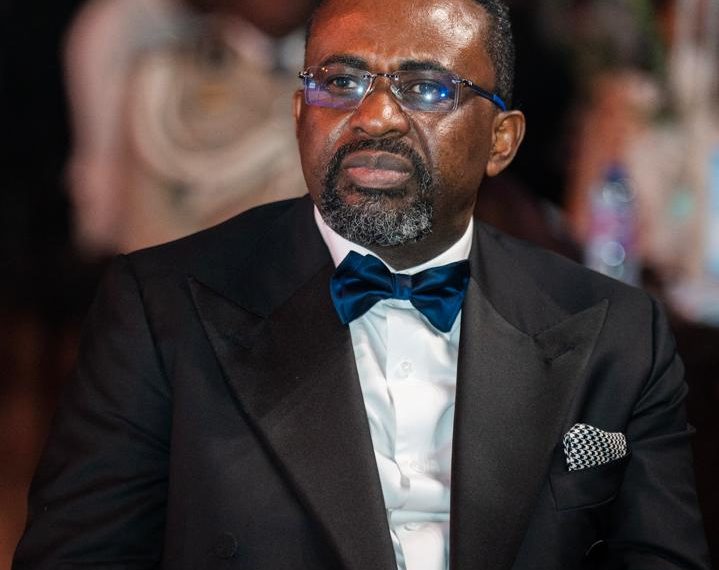
Bank of Ghana Governor Dr Johnson Pandit Asiama has defended the Monetary Policy Committee’s decision to maintain the policy rate at 14% since May 2026, explaining that the move was necessary to protect recent gains in inflation control while supporting economic recovery.
Speaking before Parliament’s Committee on Economy and Development on November 6, Dr Asiama said the first half of the year was a period of consolidation for the economy, following significant improvements in inflation and exchange-rate stability in 2025.
He explained that although inflation had declined sharply, emerging price pressures and renewed depreciation of the cedi required the Bank to adopt a cautious approach rather than continue cutting interest rates.
The Bank reduced the policy rate by 2.5 percentage points, from 18% to 15.5%, in January before cutting it further to 14% in March. However, the committee maintained the rate at 14% during its May, July and September meetings.
Dr Asiama said inflation, which dropped to 3.2% in March, began rising in subsequent months, reaching 5.3% in June and 5.5% in October. He attributed the increase partly to higher international oil prices, utility tariff adjustments and other domestic price changes.
Although inflation remains below the Bank’s medium-term target range of 6% to 10%, the Governor said the committee considered it important to preserve the progress made and allow previous rate reductions to have their full impact on the economy.
He stressed that the policy rate serves as an important tool for managing borrowing costs and maintaining confidence in the Bank’s commitment to price stability.
Despite the decision to hold rates, borrowing conditions have improved considerably. The average lending rate declined from 27% in June 2025 to 15.6% in June 2026, while the 91-day Treasury bill rate fell from 14.7% to 5.3% over the same period.
Private-sector credit growth also increased to 41.2% in June 2026, indicating that lower interest rates were beginning to translate into improved access to financing for businesses and other productive activities.
However, the Governor cautioned that the Bank must ensure the expansion in credit does not create fresh inflationary pressures, particularly amid uncertainties surrounding the exchange rate and imported energy costs.
Developments in the external sector have also influenced the Bank’s policy direction.
Ghana recorded a trade surplus of US$8.81 billion and a current account surplus of US$5.1 billion in the first half of 2026, supported by export earnings and other external inflows. Gross international reserves stood at US$12.94 billion at the end of June, providing approximately five months of import cover.
However, the cedi depreciated by about 7.9% against the US dollar during the first half of the year. Dr Asiama attributed the pressure partly to demand for foreign exchange to finance energy imports and dividend payments, as well as uncertainty surrounding the conflict in the Middle East.
The depreciation followed a 40.7% appreciation of the cedi against the dollar in 2025.
Reserve levels also came under pressure, falling to US$11.07 billion, equivalent to 4.2 months of import cover, at the end of August. The position improved to US$12.05 billion, representing 4.5 months of import cover, by September 22.
The Bank is seeking to increase gross international reserves to cover 15 months of imports by 2028 under the Ghana Accelerated National Reserve Accumulation Programme, which became operational in April.
Dr Asiama said rebuilding the country’s foreign-exchange buffers remains a priority, particularly as demand for imports, dividend payments and other external transactions continues to place pressure on available reserves.
As part of efforts to improve liquidity management, the Bank also replaced the dynamic cash reserve ratio with a uniform 20% requirement held in cedis in June. The adjustment allows banks to use some existing investments in open market operation bills to meet their reserve requirements, reducing the Bank’s sterilisation costs.
The Governor further disclosed that the Bank had introduced a more predictable approach to foreign-exchange interventions, including pre-announced intervention windows, clearer rules-based triggers and improved communication about its reserve objectives.
He said exchange-rate volatility during the first half of 2026 was lower than in the corresponding periods of the previous four years, despite the cedi’s depreciation.
Meanwhile, Ghana’s banking sector continued to record improvements. Total banking assets increased by 30.7% to GH¢502.4 billion, while the capital adequacy ratio stood at 20.4%.
The non-performing loans ratio also declined from 23.1% in June 2025 to 16.1% in June 2026, falling further to 15.7% in August.
Dr Asiama described the banking sector as resilient, although he emphasised the importance of sustaining the improvements recorded.
He also pointed to fiscal developments as an important factor supporting the country’s economic stabilisation efforts. The overall fiscal deficit was estimated at 0.4% of GDP in the first half of the year, below the 2% target for the period, while public debt stood at approximately 45% of GDP.
The Governor maintained that the Bank would continue to assess economic conditions before making further adjustments to the policy rate.
He said future decisions would depend on inflation trends, exchange-rate developments, global economic conditions and the pace of reserve accumulation.
For businesses and households, the prospect of further reductions in borrowing costs will therefore depend on whether the recent gains in economic stability can be sustained without renewed pressure on prices and the cedi.