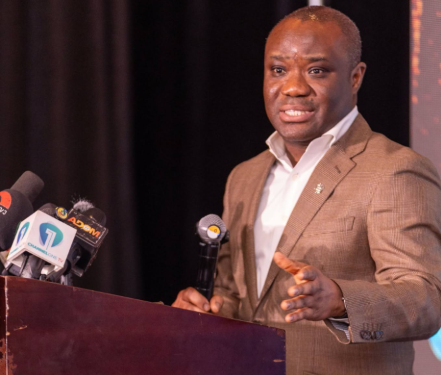


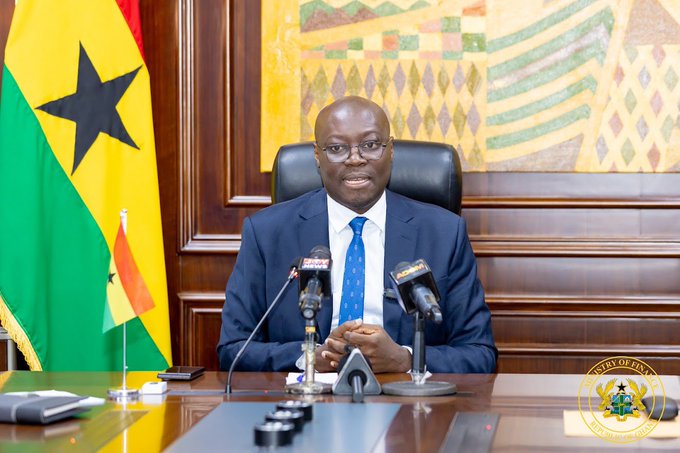
Finance Minister Dr Cassiel Ato Forson has said Ghana’s ability to maintain stable and predictable economic policies will be critical to achieving an investment-grade credit rating, a move he believes could lower borrowing costs and open up new financing opportunities for businesses.
Speaking at a New Economy engagement in Accra, Dr Forson explained that the government’s economic programme is aimed at strengthening the country’s financial position and creating the conditions needed to attract long-term investment.
He said achieving investment-grade status would also help revive Ghana’s corporate bond market, allowing businesses to raise funds from investors rather than relying heavily on traditional bank loans.
“If we are able to get to investment grade, we would have laid the foundation for corporate bonds and others to take off,” he said.
According to the Finance Minister, Ghana must demonstrate that it can sustain economic stability and maintain consistent policies to build investor confidence.
Dr Forson recalled the challenges faced by the domestic bond market during the 2022 economic crisis, when government debt restructuring disrupted the financial sector and affected local banks’ access to credit lines.
He said the government had since made progress in restoring confidence, noting that Ghana’s credit rating had improved to B, with the next ambition being investment-grade status.
The proposed US$10 billion New Economy programme is expected to play a significant role in that ambition, with the government positioning it as a major investment drive to stimulate growth and strengthen key sectors of the economy.
However, achieving the target will depend on how effectively the programme is implemented and financed. Investors will be looking for clear spending priorities, credible financing arrangements and assurances that projects will deliver measurable economic benefits.
Ghana’s recent economic performance provides some grounds for optimism. The economy grew by 6.2 per cent year-on-year in the first half of 2026, while the International Monetary Fund (IMF) projects full-year growth of 5.7 per cent. Inflation also stood at 5.5 per cent in October, below the Bank of Ghana’s target band.
The IMF has, however, stressed the need for proper project appraisal, competitive procurement processes and strict expenditure controls to ensure that investments under the New Economy programme deliver value for money without threatening debt sustainability.
It has also highlighted the importance of improving domestic revenue mobilisation, public financial management and oversight of state-owned enterprises, particularly in the energy and cocoa sectors.
Beyond government borrowing, the proposed investment-grade target could have important implications for Ghanaian businesses. A stronger credit profile could encourage more investors into the country and help create a deeper financial market where companies can access long-term funding for expansion, equipment and other projects.
But a sovereign credit upgrade alone will not guarantee the growth of a corporate bond market. Businesses will also need strong corporate governance, transparent financial reporting and credible repayment records to attract investors.
There are also concerns about policy consistency and the government’s ability to deliver on its economic commitments. The Institute for Energy Policies and Research (INSTEPR), in a statement issued on November 8, urged the government to account for its previous policy commitments and explain how the New Economy programme would differ in implementation from the 24-Hour Economy initiative.
The 2027 Budget, expected to provide further details of the US$10 billion programme, will therefore be an important opportunity for the government to outline its financing strategy, investment priorities and measures to ensure accountability.
Ultimately, Ghana’s ambition to attain investment-grade status will depend on its ability to sustain economic stability, strengthen public institutions and translate investment commitments into productive growth.