

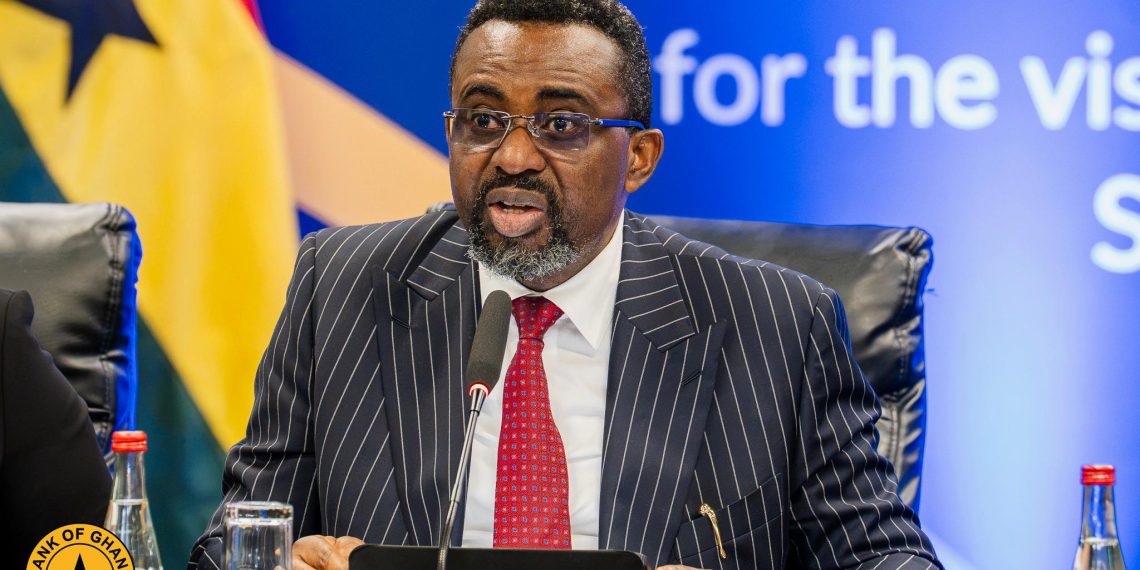
Bank of Ghana Governor Dr Johnson Pandit Asiama has called for greater use of technology, data and financial innovation to improve access to affordable and responsible credit for micro, small and medium-sized enterprises (MSMEs), women and smallholder farmers.
He said Ghana must now shift its focus from simply expanding access to financial services to ensuring that households and businesses are financially secure and able to build long-term resilience.
Speaking at a Financial Health Leadership Roundtable in Accra on Wednesday, Dr Asiama said the country had made significant progress in digital finance through mobile money, digital payments and fintech innovation. However, he noted that access to financial services alone does not guarantee improved financial wellbeing.
The roundtable was held during a visit to Ghana by Queen Máxima of the Netherlands, the United Nations Secretary-General’s Special Advocate for Financial Health.
Dr Asiama explained that financial health depends on several factors, including the ability to save, manage risks, access insurance, invest and obtain credit on fair and sustainable terms.
He described responsible credit as an important tool for helping households improve their livelihoods and businesses expand their operations, create jobs and drive economic growth.
“Credit, when appropriately designed and delivered, enables households to invest in their futures and gives businesses the capital required to grow, innovate and create jobs,” he said.
The Governor identified MSMEs as a critical part of Ghana’s economy, noting that despite their contribution to employment, livelihoods and innovation, many continue to struggle to secure financing.
He expressed concern that some businesses with the potential to grow are denied credit because of unfair lending mechanisms, calling for a review of how financial institutions assess borrowers.
“Too often, credit is unavailable to businesses with potential simply because of unfair mechanisms,” he said.
Dr Asiama believes technology and better use of data could help address some of these challenges by giving lenders a clearer understanding of borrowers and creating opportunities for businesses that may not meet traditional lending requirements.
He stressed, however, that expanding access to credit must go hand in hand with responsible lending practices to ensure that borrowers can meet their repayment obligations without falling into financial difficulty.
He also called for greater attention to the financing needs of women and smallholder farmers, who continue to face challenges in accessing the capital needed to support their economic activities.
Beyond lending, the BoG Governor urged stakeholders to strengthen savings, insurance, investment opportunities and financial literacy as part of efforts to improve the financial wellbeing of Ghanaians.
He challenged participants at the roundtable to move beyond discussions and identify practical measures that could make financial services more useful and accessible to households and businesses.
The meeting brought together representatives from financial institutions, government, regulators and development organisations to explore ways of improving financial health through collective action.
Dr Asiama said collaboration among these stakeholders would be essential in addressing existing barriers and ensuring that financial innovation delivers meaningful benefits.
He maintained that Ghana’s progress in digital finance had provided a strong foundation, but the next phase of development must focus on whether people and businesses are becoming more financially resilient.
“If we leave this room with a clear set of priorities, this Roundtable will have achieved its purpose,” he said.
He urged stakeholders to use the discussions to develop concrete commitments that would improve access to productive credit and strengthen the financial security of households and businesses across the country.