
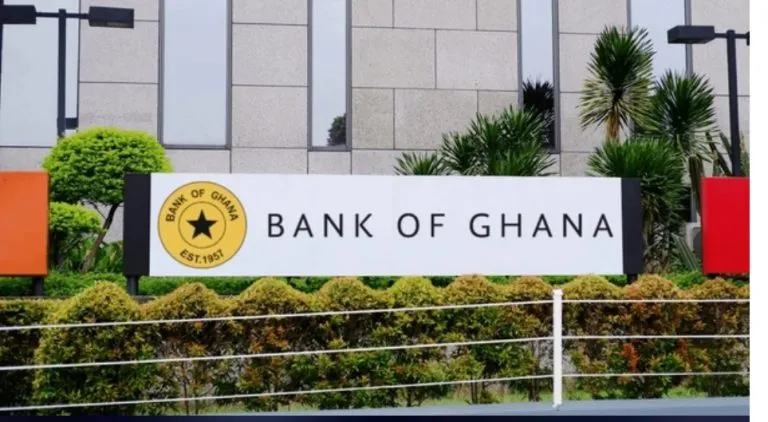
The Bank of Ghana (BoG) absorbed a combined GH¢18.88 billion from the financial system through two sales of 14-day central bank bills conducted on October 19 and 21, 2026, as it continued efforts to manage short-term liquidity in the banking sector.
The latest sale, conducted on October 21 under Tender 884, saw the central bank allot GH¢8.13 billion in bills at a weighted average interest rate of 10.50 per cent, slightly higher than the rate recorded at the previous auction.
The October 21 allotment was GH¢2.63 billion lower than the GH¢10.76 billion sold on October 19, representing a decline of approximately 24.45 per cent.
Despite the reduction in the amount absorbed, interest rates remained virtually unchanged. The weighted average discount rate edged up from 10.4540 per cent on October 19 to 10.4560 per cent on October 21, while the weighted average interest rate increased from 10.4962 per cent to 10.4982 per cent.
The marginal adjustment suggests that pricing remained stable across the two operations, even as the volume of bills sold declined.
However, the auction results do not provide the total value of bids submitted, the amount rejected or a stated target for the sale. It is therefore unclear whether the lower allotment reflected reduced demand from participating institutions, a decision by the Bank of Ghana to absorb less liquidity, or a combination of both factors.
The distinction matters because the amount sold does not necessarily represent the full demand for the bills. Without details of the bids received and rejected, the figures alone cannot establish whether liquidity conditions in the banking system have eased or tightened.
The two operations nevertheless demonstrate the scale of the central bank’s short-term liquidity management, with GH¢18.88 billion absorbed within three days. The impact, however, is temporary because the bills mature after 14 days. The funds could return to the financial system unless the Bank renews the instruments or conducts further liquidity-absorption operations.
Bank of Ghana bills are monetary policy instruments used to manage liquidity and are different from government Treasury bills, which are primarily issued to finance government expenditure. Through its own bills, the central bank temporarily withdraws cedi funds from participating financial institutions.
Such operations can help limit excess liquidity in the banking system, influence short-term money-market conditions and support the transmission of monetary policy. Managing surplus funds is also important to the Bank’s efforts to contain inflationary pressures and maintain stability in the foreign exchange market.
The weighted average interest rate of approximately 10.50 per cent remains below the Bank of Ghana’s 14 per cent monetary policy rate. However, the difference does not necessarily indicate a conflict in monetary policy, as the policy rate guides the broader monetary stance while the bill rate reflects the pricing of a specific short-term liquidity operation.
The latest increase of 0.20 basis points is too small to indicate a significant shift in market conditions. A clearer assessment would require results from subsequent auctions, alongside information on bidding volumes, rejected bids and the Bank’s intended level of liquidity absorption.
For commercial banks, the 14-day bills offer a short-term avenue for placing surplus funds. For the central bank, the relatively short maturity allows it to adjust liquidity conditions without committing funds to longer periods. However, frequent maturities also mean that withdrawn liquidity can return to the system if the operations are not renewed.
Attention will now turn to subsequent auctions to determine whether the Bank maintains allotments around GH¢8 billion, returns to levels above GH¢10 billion or reduces its absorption of liquidity further. The movement of yields and the availability of fuller auction data will also help clarify the direction of short-term money-market conditions.
For now, the latest results point to a substantial but smaller withdrawal of liquidity at virtually unchanged interest rates, leaving open the question of whether the lower allotment reflects changing liquidity needs or normal variation between auctions.